Growth led, then the 5% 10-year took the floor: a rate-shock rotation under thin breadth
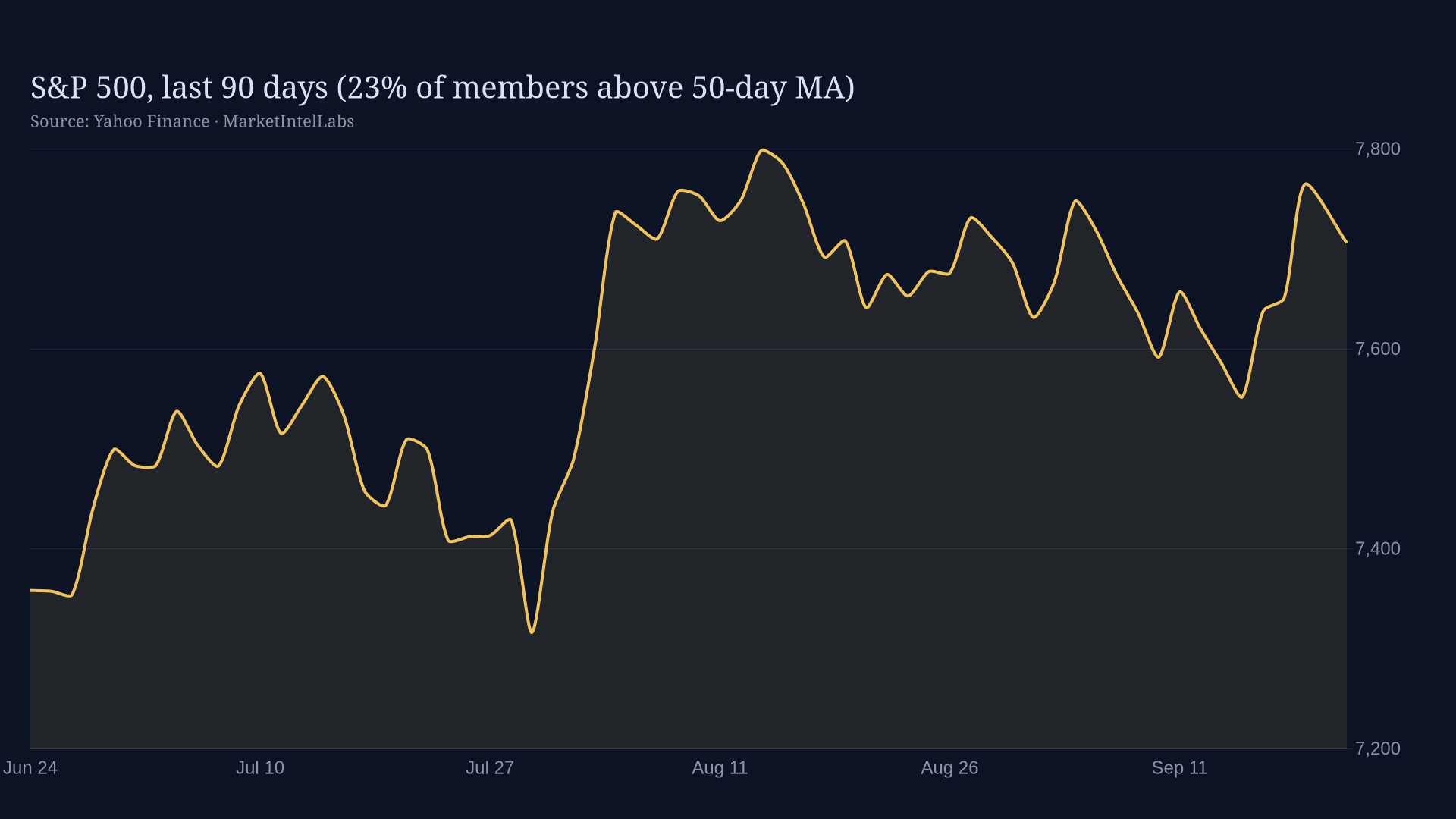
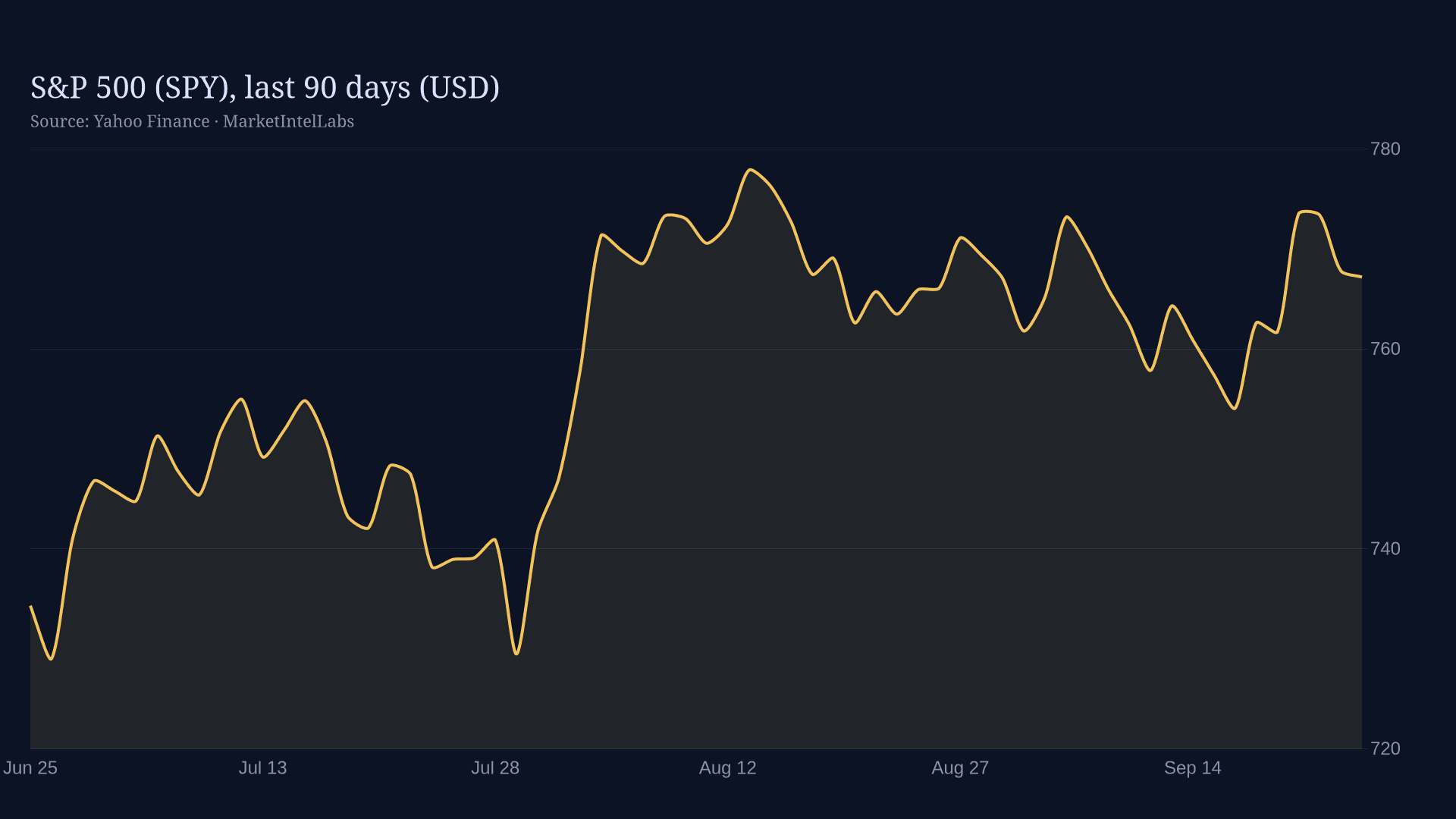
SPY closed Thursday up 0.72% at 767.18, but a 5% 10-year yield drove a rate-shock rotation under thin breadth ahead of the Sept 30 core PCE print.
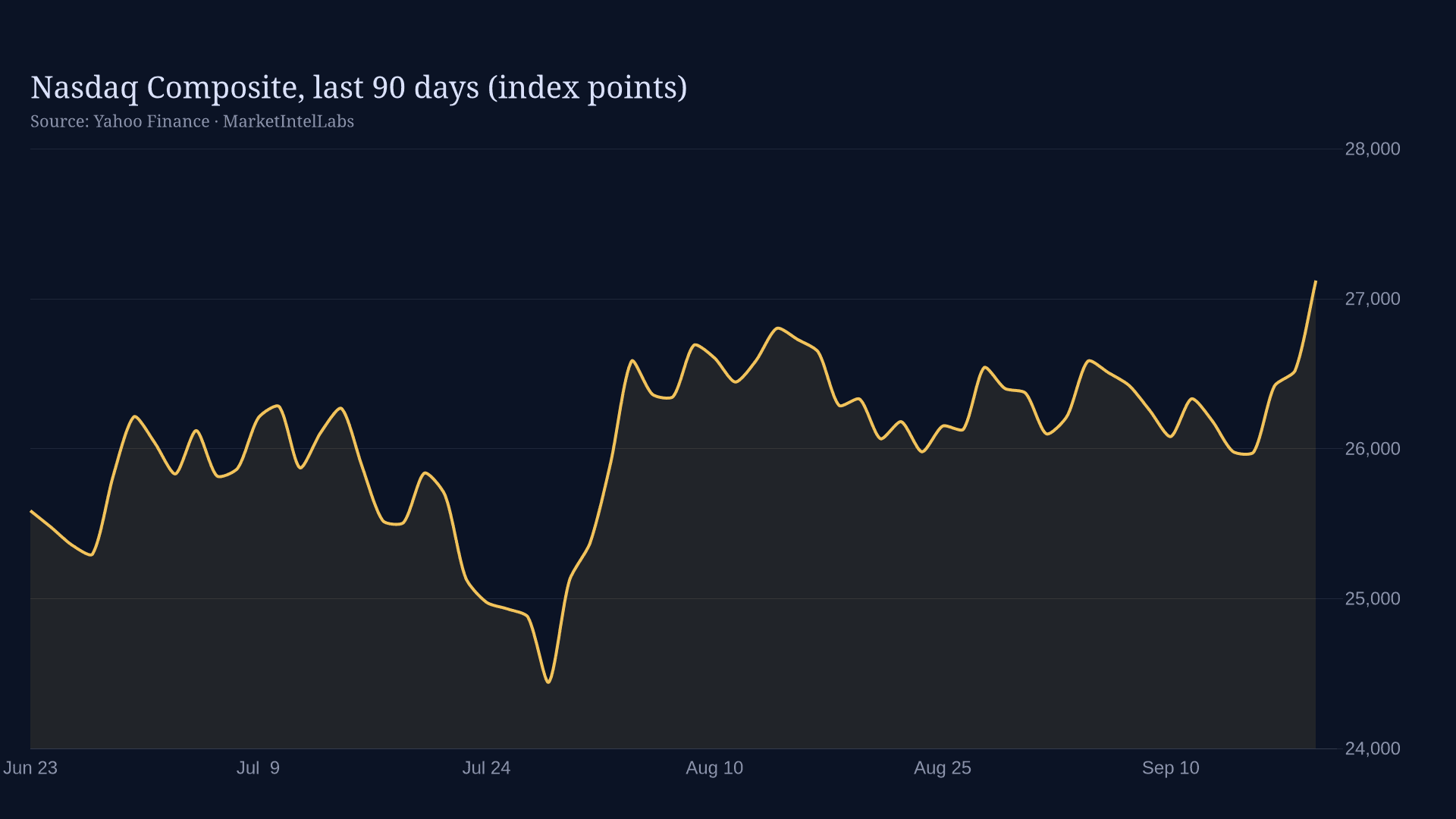
27,068.72
+129.35 (+0.48%) vs Sep 24
As of Sep 25, 2026 · Updated each business day · Source: Nasdaq OMX daily close, via FRED
Previous
26,939.37
Sep 24, 2026
One year ago
22,384.70
+4,684.02 (+20.93%) since
52-week high
27,244.28
Sep 22, 2026
52-week low
20,794.64
Mar 30, 2026
The daily closing level of the Nasdaq Composite, the index of more than 3,000 stocks listed on the Nasdaq exchange, dominated by technology and growth companies.
It is the market's most rate-sensitive major index: growth stocks are valued on distant earnings, so the Nasdaq moves most when Treasury yields shift. It is also where the AI capital-expenditure cycle is being priced.

SPY closed Thursday up 0.72% at 767.18, but a 5% 10-year yield drove a rate-shock rotation under thin breadth ahead of the Sept 30 core PCE print.

SPY fell 0.72% to 767.81 as advance share broke to 23%, a thin tape under a resilient index. Small caps and utilities led the decline while energy rose.

Initial claims Thursday, then Sept 30 core PCE, GDP and Micron Q4 decide a narrow market trading with VIX at 14.21. What the three prints mean for equities.

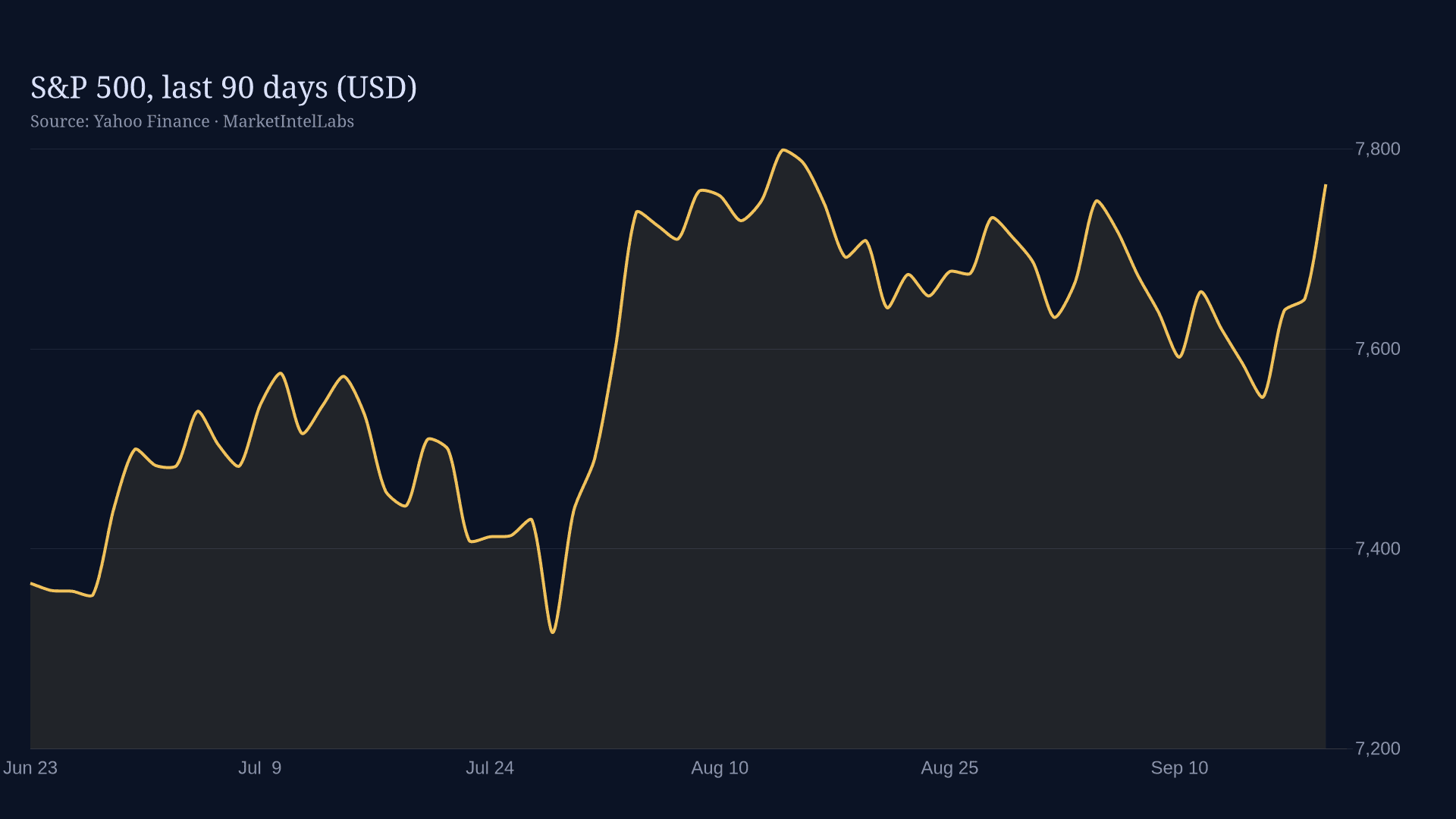
The Nasdaq 100 hit a record 30,732.40 while the S&P 500 closed flat at 7,764.64. Thin, chip-led market breadth: why narrow records are the real tension.