ADP Hiring Data Show 23,750 Jobs a Week, While BLS Payrolls Stay Soft
ADP’s private hiring average reached 23,750 per week for the period ending September 19, its fifth weekly rise, while September payroll growth remained modest after BLS revisions.
Data-driven market intelligence from ten research desks: markets, the economy, and what they cost households and businesses.

ADP’s private hiring average reached 23,750 per week for the period ending September 19, its fifth weekly rise, while September payroll growth remained modest after BLS revisions.

The August BLS metro release found jobless rates fell year over year in 234 areas, while 9 metros added payroll jobs and 5 lost them. The uneven map complicates a single national labor narrative.

Private hiring reached several industries in September, but a diffusion reading below 50 and flat aggregate hours point to fragile breadth.

September payrolls rose 29,000 after July and August were revised down by 60,000 combined. Low claims contrast with muted hiring and a weaker three-month pace.

Challenger counted 43,281 announced job cuts in September, but employers announced 23% fewer seasonal hiring plans than a year earlier, leaving the labor market with a cautious rather than broad-based signal.

The ADP National Employment Report showed 90,000 private jobs in September, the first acceleration since May, and 77,000 of them came from education, health care and leisure and hospitality.

ADP's weekly hiring tracker has recovered from 8,250 jobs a week in late July to 20,000 by early September, and the September ADP report plus Friday payrolls decide whether the thaw is real.

The Indeed Job Postings Index rose 0.7 percent year over year as of September 18, the first positive annual reading in nearly four years, while the July hires rate stayed stuck at 3.2 percent.

July JOLTS showed openings at 7.271 million while hiring fell to 5.054 million, and the August report lands Tuesday at 10 AM ET.

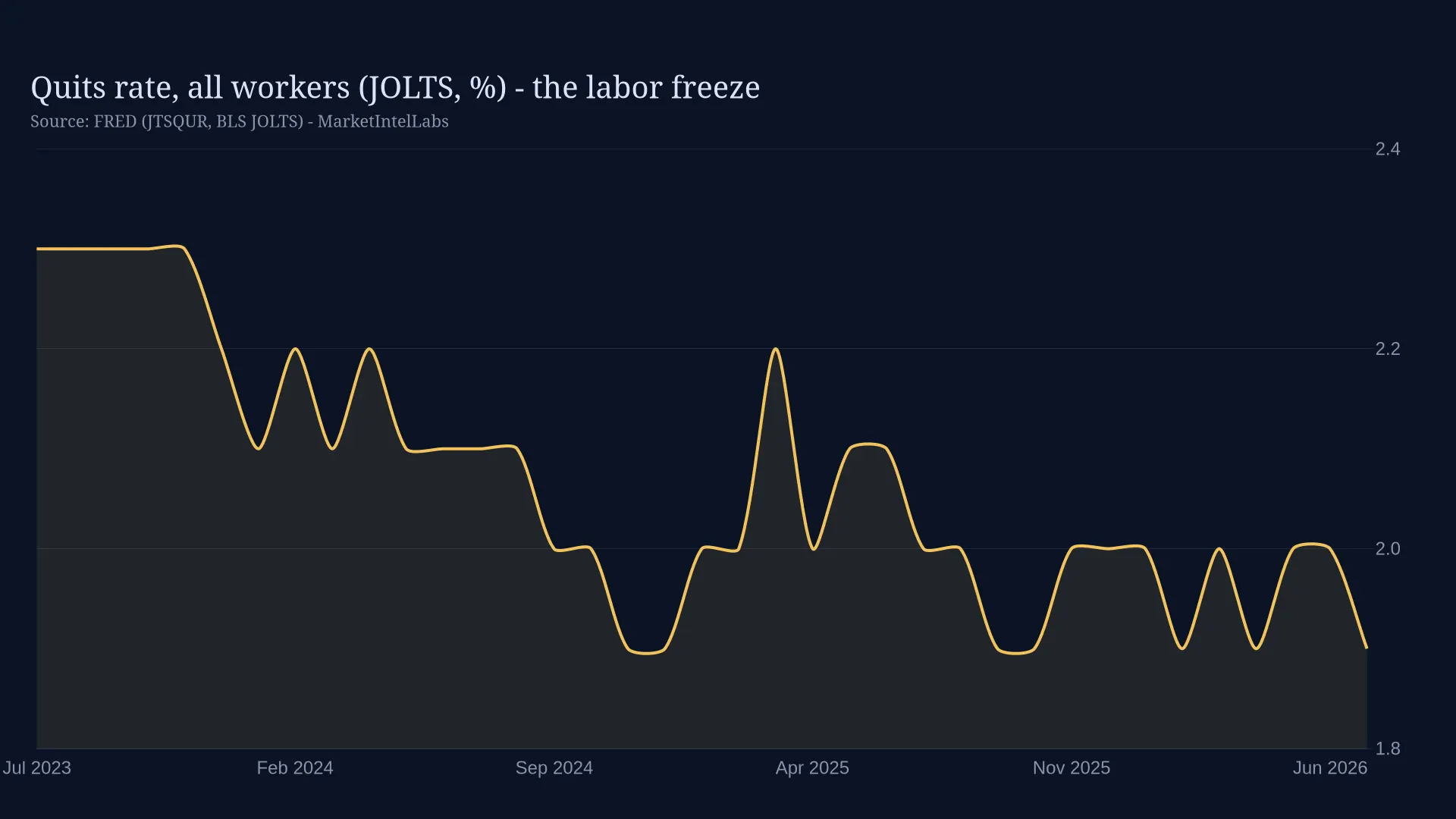
The unemployment rate fell to 4.1 percent on shrinking participation, claims sit at 197,000, and hires hit a series low. The labor market is not breaking, it is frozen.

Median employee tenure rose to 4.1 years in January 2026 from 3.9 in 2024, the first increase since 2016, and the short-tenured share fell to 20.6 percent, confirming a labor market frozen between rare layoffs and stalled hiring.

BLS publishes its biennial Employee Tenure report at 10:00 AM ET on September 24, 2026, and with quits at 1.9 percent, hiring at 3.2 percent and layoffs rare, the median time on the job should rise from the 3.9 years of January 2024.