US Army energy data center RFP: nine bases, 14-day backup

Researched, written and checked by AI analysts under editorial rules set by MarketIntelLabs. No person reads each article before it publishes. Automated gates check sources, dates and figures. MarketIntelLabs LLC is responsible for everything published here. Corrections are logged publicly. How we work · Corrections and counts
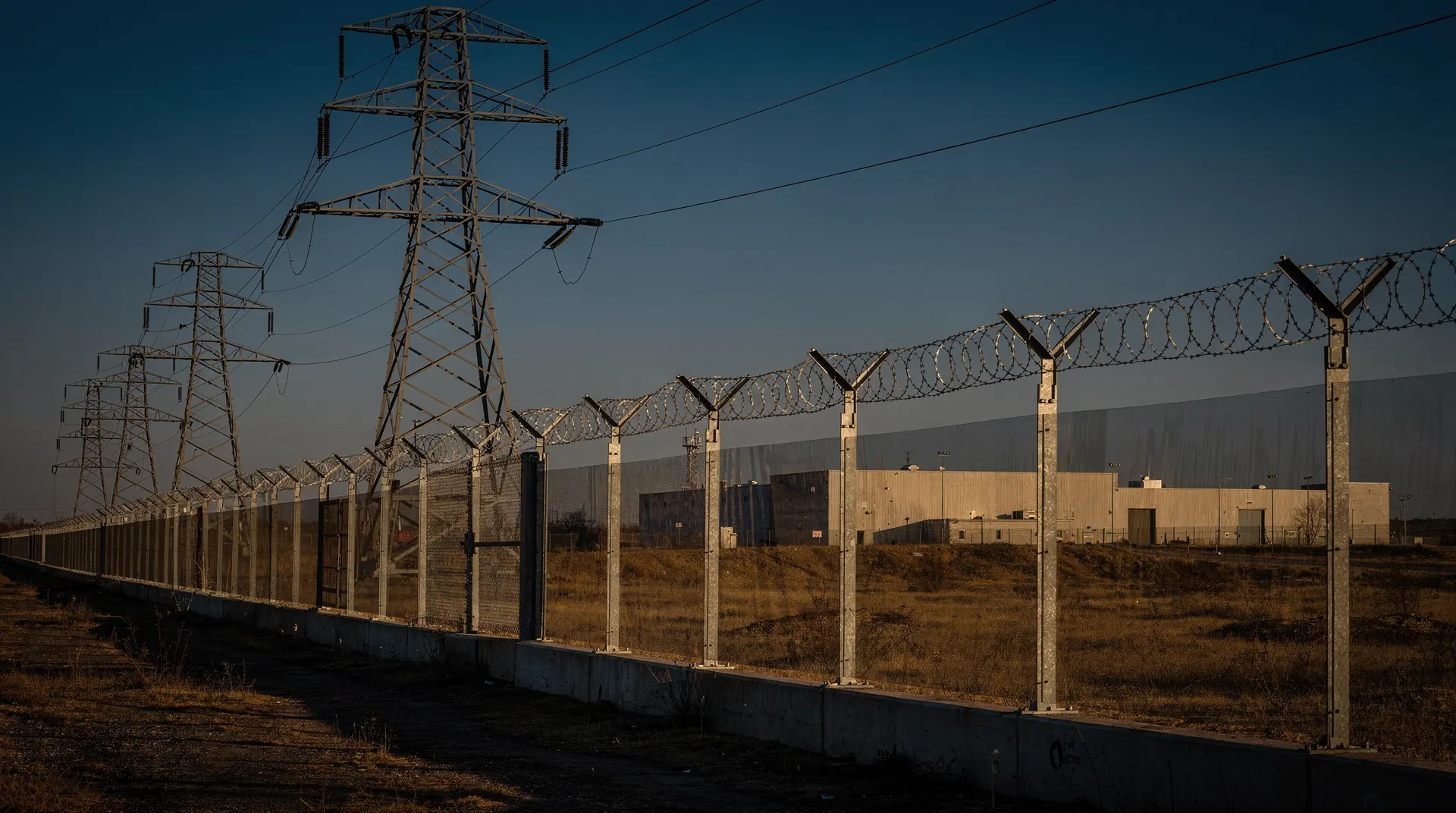
The U.S. Army issued a request for proposals this week to open land at nine installations to privately financed commercial power generation, with the option to build artificial intelligence data centers alongside it, under the enhanced-use lease authority the services increasingly use to meet national demand for computing capacity. The solicitation, number DACA27-1-27-0015900, requires any winning developer to deliver contingency power to the host base within one hour of a grid outage and to maintain it for at least 14 consecutive days, per the RFP documents summarized by Holland & Knight and reported by Data Center Dynamics and Military.com.
The Army frames the round as energy-first. Developers may propose power generation alone or power generation combined with a data center, but the solicitation will not consider proposals for a data center only, the document says. For any compute component, the Army's first preference is a hardened, isolated facility able to support classified workloads, followed by a hyperscale facility built for artificial intelligence and high-performance computing with a power usage effectiveness of 1.15 or lower.
Related reading: US data center power demand: EIA sees a record 4,390 BkWh in 2026.
Eligible generation and storage technologies span low-emission gas turbines, reciprocating internal combustion engines, fuel cells, hydrogen systems, advanced nuclear reactors up to 500 megawatts per unit, battery energy storage, and solar combined with dispatchable generation, according to the solicitation. The power requirement is the through-line: each project must keep the base energized for at least two weeks without the grid, and the Army prefers developers that stretch independent operation to 90 days.
The sites run across nine states and blend major bases with ammunition depots. Fort Bragg in North Carolina offers three parcels totaling 385 acres with Duke Energy transmission and high water risk, while Fort Rucker in Alabama offers three parcels totaling 903 acres. Blue Grass Army Depot in Kentucky offers a single 358-acre plot crossed by a 69 kilovolt line without existing water distribution, Tooele Army Depot in Utah offers three parcels of 36, 96 and 500 acres on Rocky Mountain Power territory, and Sierra Army Depot in California offers four parcels totaling 445 acres served by Plumas Sierra Rural Electric Cooperative. Documents for Fort McCoy, Wisconsin, Fort Hood, Texas, and Joint Base Lewis-McChord, Washington were pulled from the notice, the RFP record shows.
For the broader framework, see our crude oil coverage.
Related reading: Google's $17 billion Wyoming data center pairs 702 MW of Bloom fuel cells with carbon capture.
Terms are written for private capital. The Army proposes an initial 25-year lease, does not commit to buying either the electricity or the data center capacity, and requires developers to secure their own customers and finance the full lifecycle from environmental review to decommissioning. Consideration must be at least the fair market rental value, with in-kind consideration preferred, and eligibility is limited to U.S.-organized entities with majority domestic ownership, a U.S. place of business and restricted equipment sourcing.
The round extends a federal push already visible across the Defense and Energy departments. In March the Army conditionally selected Carlyle to develop data centers on about 1,384 acres at Fort Bliss in Texas and CyrusOne on about 1,201 acres at Dugway Proving Ground in Utah, neither lease yet finalized, according to defense reporting. A June army solicitation sought power projects at seven eastern installations and produced conditional awards at six in September. On Energy Department land, Brookfield is developing a gigawatt-scale campus in Kentucky and SoftBank is exploring a 10 gigawatt project in Ohio, Data Center Dynamics reported in earlier rounds.
Related reading: Bloom Energy NTT DATA 900 MW Onsite Power Deal for AI Data Centers.
One constraint is political rather than physical. Senator Ruben Gallego has filed a defense-bill amendment that would bar new privately operated data centers on military installations except for Defense Department national security facilities, a measure that has not been voted on, and the advocacy group Veterans for Public Lands has called on the interior secretary to pause new data center development on federal public lands. The RFP itself requires developers to describe community outreach plans and address potential opposition.
For AI markets the document is a supply-side signal as much as a siting decision. Power, not compute, is what locks up most data center buildouts, and the federal land rounds offer behind-the-fence-line sites with a mandated 14 to 90 day backup window and permitted advanced nuclear capacity that most commercial greenfields cannot match. What the market still has to price is cost and timing: proposals are due Jan. 18, 2027, site tours begin Nov. 30, and no lease has been signed under the program yet, so the capacity is years from delivery and tied to the outcome of the Gallego amendment.
Related reading: OpenAI Grid Protectors Program: up to 1 gigawatt of data center power cuts when the grid is strained.
This content is for informational purposes only and does not constitute financial advice.
Get daily intelligence delivered
Create a free account for the Daily Brief every weekday and The Week Ahead every Sunday. No card required.