Bloom Energy NTT DATA 900 MW Onsite Power Deal for AI Data Centers

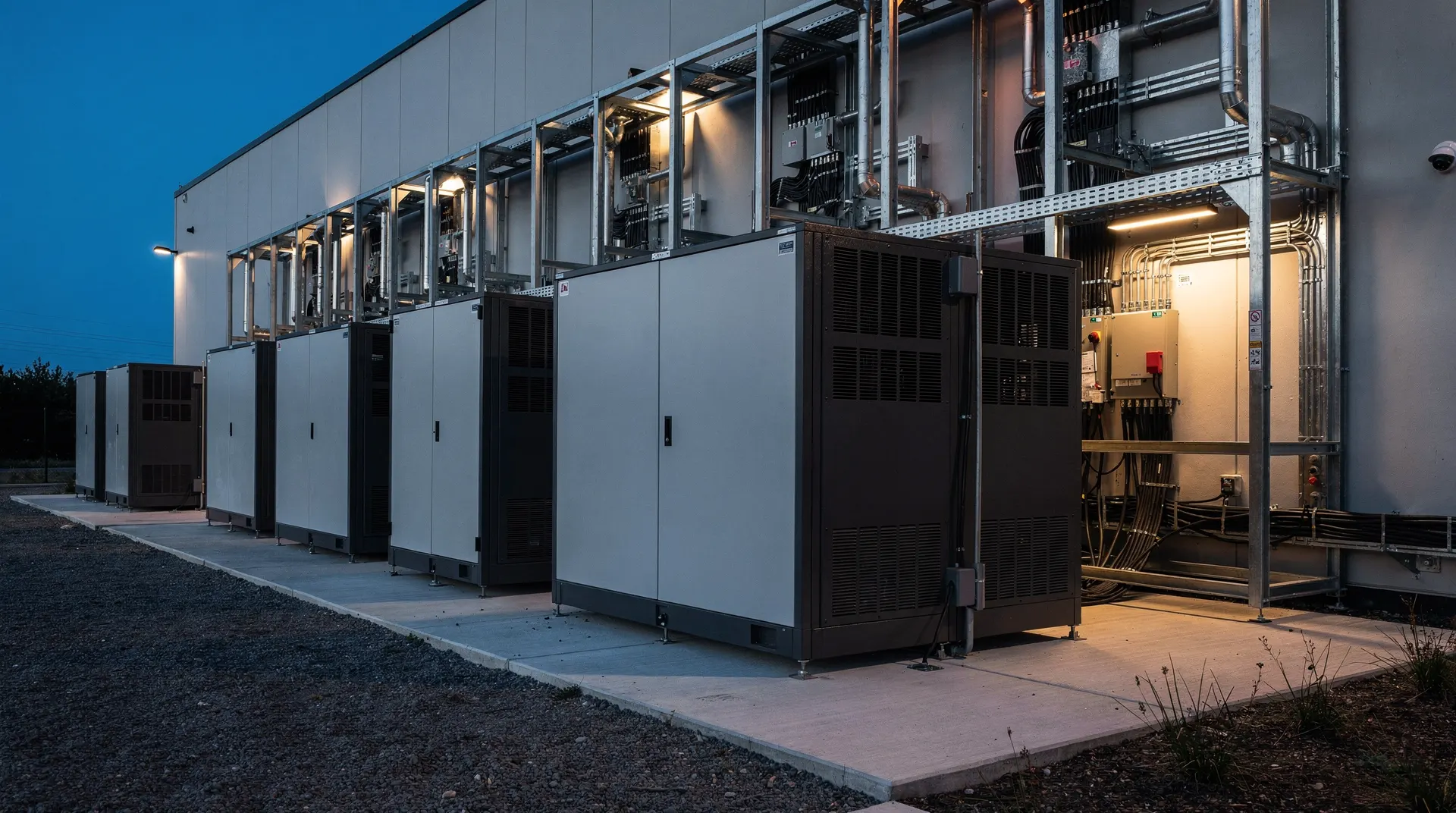
NTT DATA has agreed to deploy 900 megawatts of Bloom Energy (NYSE: BE) onsite fuel-cell power across its data center projects in multiple markets, the companies announced on Thursday, November 5. It is Bloom's largest international project to date, and the first shipments are scheduled to begin in 2027.
The number matters because it attacks the constraint that has come to define the AI buildout. Grid interconnection queues stretch for years in much of the United States and Europe, and a data center cannot monetize compute it cannot power. Bloom's fuel cells generate electricity without combustion, deploy in modular phases, and can be sized up as workloads get denser, so megawatts can arrive in lockstep with the rows of servers rather than behind a transmission upgrade.
Related reading: Google Locks In 702 MW of Fuel-Cell Power From AEP for Its AI Data Centers.
NTT Global Data Centers, the unit of NTT DATA signing the agreement, framed it as a way to open capacity faster in markets where the grid is the bottleneck. Doug Adams, the unit's CEO, is quoted in the release saying the pace of clients building AI capabilities exceeds what the grid alone can always match and that speed to power has become a deciding factor in delivering capacity where and when it is needed. The structure matters as much as the volume: the relationship is designed to extend beyond the initial 900 MW across NTT DATA's global data center portfolio and to reach gigawatt scale.
The two counterparties are both heavyweight names in their lanes, which is worth stating plainly. NTT DATA bills itself as a 30-plus-billion-dollar business and technology services leader working with 75 percent of the Fortune Global 100, part of NTT Group, which the release says invests more than 3 billion dollars a year in research and development. Bloom Energy is a Silicon Valley fuel-cell maker with more than 2,000 employees that manufactures its systems in the United States and counts Fortune 500 data centers, semiconductor plants and utilities among its users. An agreement between a top global data center operator and a leading onsite-power vendor is one of the clearest signs yet that hyperscale-class AI capacity is now being financed through dedicated power relationships rather than left to whatever the grid delivers.
For the broader framework, see our crude oil coverage.
Related reading: Google Malaysia data center investment hits $15 billion for 2027 and 2028.
For investors reading the deal for what it prices, the relevant signals are the scale of committed capacity, the 2027 shipment start, and the phased expansion clause. A 900 MW commitment spread across several projects gives Bloom a long-dated revenue runway in an international market where it has been a smaller player, which is why the company described it as its largest international project to date. The flip side is execution: the release frames shipment timing, the megawatt draw and any further expansion as forward-looking, and a strategic framework of this size can be built out slowly, with actual revenue recognition tied to how fast each phase comes online.
The counterparty quality deserves notice too. NTT Global Data Centers runs capacity across the world's major markets, so the agreement hands Bloom a distribution footprint it has not always had abroad. That is the bull case: a tier-one anchor customer with a global rollout calendar behind it. The bear case is that Bloom's shares have been extraordinarily volatile, with several 20-plus-percent drawdowns since September as investors weighed the company's record top-line growth against negative operating cash flow and scrutiny of its results and accounting, coverage that Bloom has pushed back against, saying it categorically rejects the claims. Bloom traded near $170 in Thursday's session as of midday, down about a quarter from Wednesday's close, on the day the company was announcing its largest-ever international win, a reminder that the market is pricing the stock on near-term cash generation, not only on the backlog.
Related reading: Amazon AEP X-energy SMR Deal Targets 960MW Nuclear Power for Indiana Data Centers.
What is dated next is the build calendar. Initial Bloom shipments start in 2027, so the first meaningful revenue contribution lands on the far side of the current fiscal year, and the gigawatt-scale expansion across NTT's portfolio will be disclosed as individual projects are confirmed. The metrics worth following are how much of the 900 MW anchors into specific named markets on a fixed timeline and how quickly Bloom's book-to-bill converts the framework into recognized revenue. Onsite power has become the market's answer to the one thing AI monetization cannot outrun, and this deal is a large, dated proof that the largest operators are now paying for the right to turn it on faster.
Related reading: Vertiv closes $1.45B UtilityInnovation Group acquisition to speed AI data center power.
This content is for informational purposes only and does not constitute financial advice. Past performance is not indicative of future results. Consult a qualified financial advisor before making investment decisions.
Get daily intelligence delivered
Create a free account for the Daily Brief every weekday and The Week Ahead every Sunday. No card required.