Google Malaysia data center investment hits $15 billion for 2027 and 2028

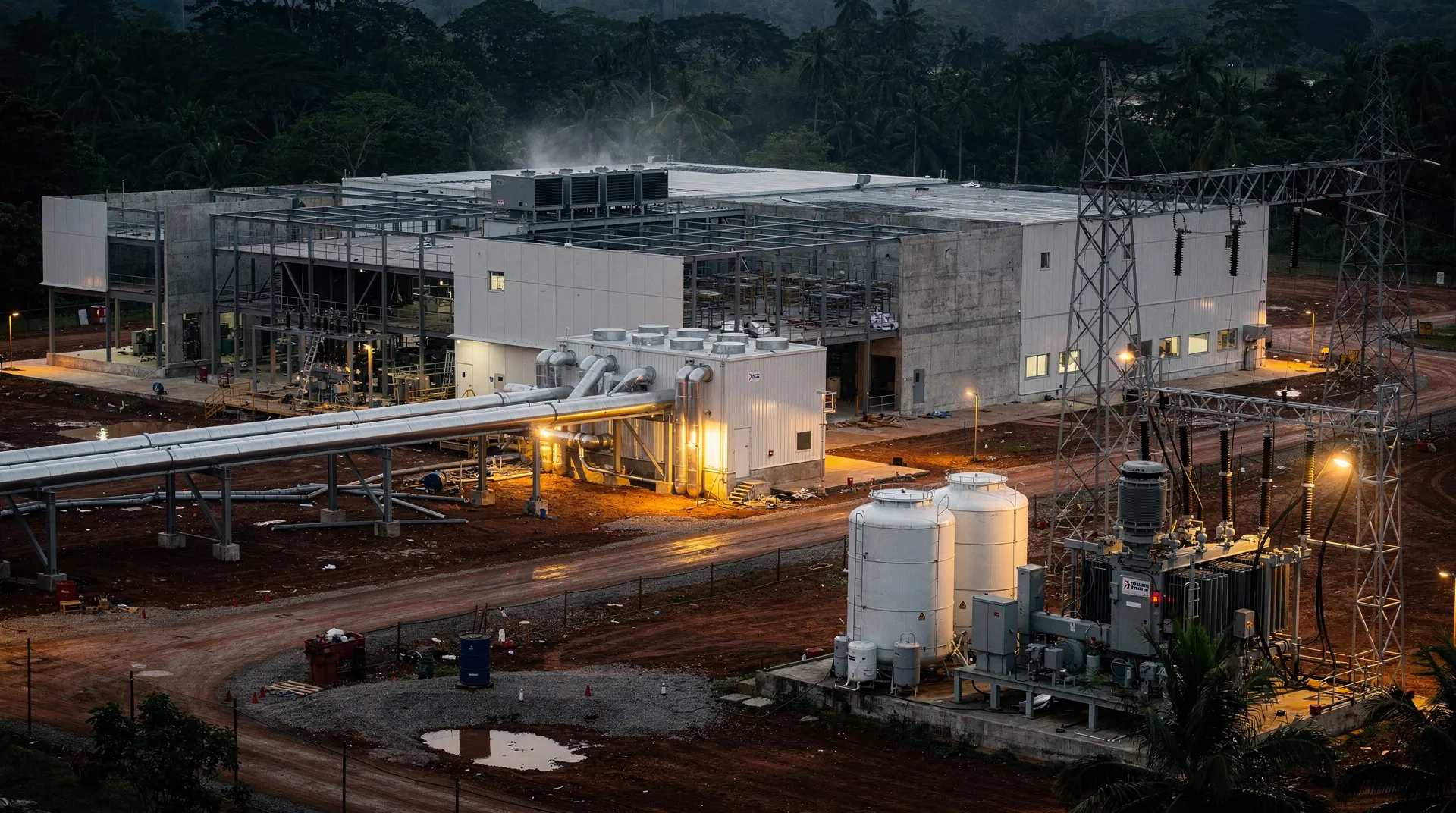
Alphabet's Google will spend $15 billion on Malaysian data center infrastructure during 2027 and 2028, a single-market pledge that stands out even in a quarter of record hyperscaler capital plans. The figure, reported by Bloomberg on November 4 and confirmed by Google's own project details, covers new computing hubs plus the water and power work needed to run them. For an AI markets reader the number matters less for its size than for what it signals: the biggest cloud seller is still spending through its backlog, and Southeast Asia keeps absorbing a larger share of the build.
The announcement lands as the AI data center cycle broadens beyond the three big US regions. Google broke ground on its first Kuala Lumpur area campus in October 2024, and the first 100 MW phase of that site is scheduled to finish this year. The new plan extends the build to Elmina Business Park in Selangor and adds fresh campuses in Selangor and the state of Negeri Sembilan, according to the November 4 report. At Port Dickson in Negeri Sembilan, where Google bought 389 acres of land in May 2025, the planned data center is expected to reach between 500 MW and 1 GW, with Gamuda Engineering handling the engineering and infrastructure works.
Related reading: Google Locks In 702 MW of Fuel-Cell Power From AEP for Its AI Data Centers.
What the money buys
Most of the disclosed detail sits outside the buildings. Google says the investment will support more than 9,000 local jobs a year across technicians, mechanical and electrical engineers, logistics and security managers. It also ties the expansion to power: in total, Google plans to bring 1 GW of clean energy capacity onto Malaysia's grid. That pairing of compute and generation is the pattern that has defined hyperscaler expansion this year, because power, not chips, has become the binding constraint on data center delivery.
Ruth Porat, Alphabet's chief investment officer, said the investment reflects confidence in Malaysia's skilled workforce and its push for digital transformation. The pledge deepens an existing relationship: Google committed $2 billion to a Malaysian cloud region in 2024, and earlier this week it committed $160 million to develop shared water treatment infrastructure for the Negeri Sembilan site. The water line is a reminder that the real friction in this buildout is often infrastructure that has nothing to do with servers.
For the broader framework, see our crude oil coverage.
Related reading: WEC Energy capital plan jumps to $47.5 billion on Microsoft and Oracle data center demand.
Malaysia sits in a crowded Southeast Asian market where Singapore's land and power limits have pushed capacity to neighbors such as Malaysia, Indonesia and Thailand. Google is not alone there. Rivals have been signing similar regional commitments, and Malaysia's relative power availability and land have made it a durable destination rather than a one-off. The $15 billion figure, spread over two years, is a dated, multiyear plan rather than a single purchase order, so the market read is about sustained demand, not one quarter's lump.
Viewed through the AI capex lens, a hyperscaler commitment of this size is a demand signal that feeds several market lines at once: chip orders, power equipment, construction and grid infrastructure. Alphabet does not break out its data center build by country, which is exactly why multiyear regional pledges carry weight for analysts following the cycle. A $15 billion line dated to a specific two-year window says more about the durability of cloud demand than a single quarter of spending, because it describes committed construction rather than a variable expense that can be pulled back overnight.
Related reading: Vertiv closes $1.45B UtilityInnovation Group acquisition to speed AI data center power.
The bear case is phasing and execution. A $15 billion commitment across 2027 and 2028 can be trimmed or stretched if cloud demand softens or if power delivery slips, and hyperscaler guidance has shifted before. The 500 MW to 1 GW estimate at Port Dickson is a forward capacity range, not a completed facility, and the jobs figure is an annual running estimate. Readers should treat the number as a durable direction, not a fixed invoice.
The practical test will be the pace of announced construction milestones. Malaysia runs one of Southeast Asia's larger data center pipelines, and the region's power planners are racing to site generation ahead of demand. If utilities move more slowly than forecasters expect, the 1 GW clean energy target would be one of the harder promises in the package to hit on schedule, since Malaysia is still building out its renewables base rather than drawing on surplus capacity.
Related reading: AI Data Center Orders Reach 100 MW, but Plans Are Not Demand.
What to watch next is the same tell as every hyperscaler pledge: whether a named utility agreement, a power offtake or a construction milestone follows quickly, and whether peers answer in the same region. For a market that tracks AI capex as the demand signal for chips, power gear and construction, Google's Malaysia commitment adds one more datapoint to the argument that the buildout is spreading rather than consolidating, and that the constraint to watch is clean power at scale, not land.
This content is for informational purposes only and does not constitute financial advice. Past performance is not indicative of future results. Consult a qualified financial advisor before making investment decisions.
Get daily intelligence delivered
Create a free account for the Daily Brief every weekday and The Week Ahead every Sunday. No card required.