Google Locks In 702 MW of Fuel-Cell Power From AEP for Its AI Data Centers

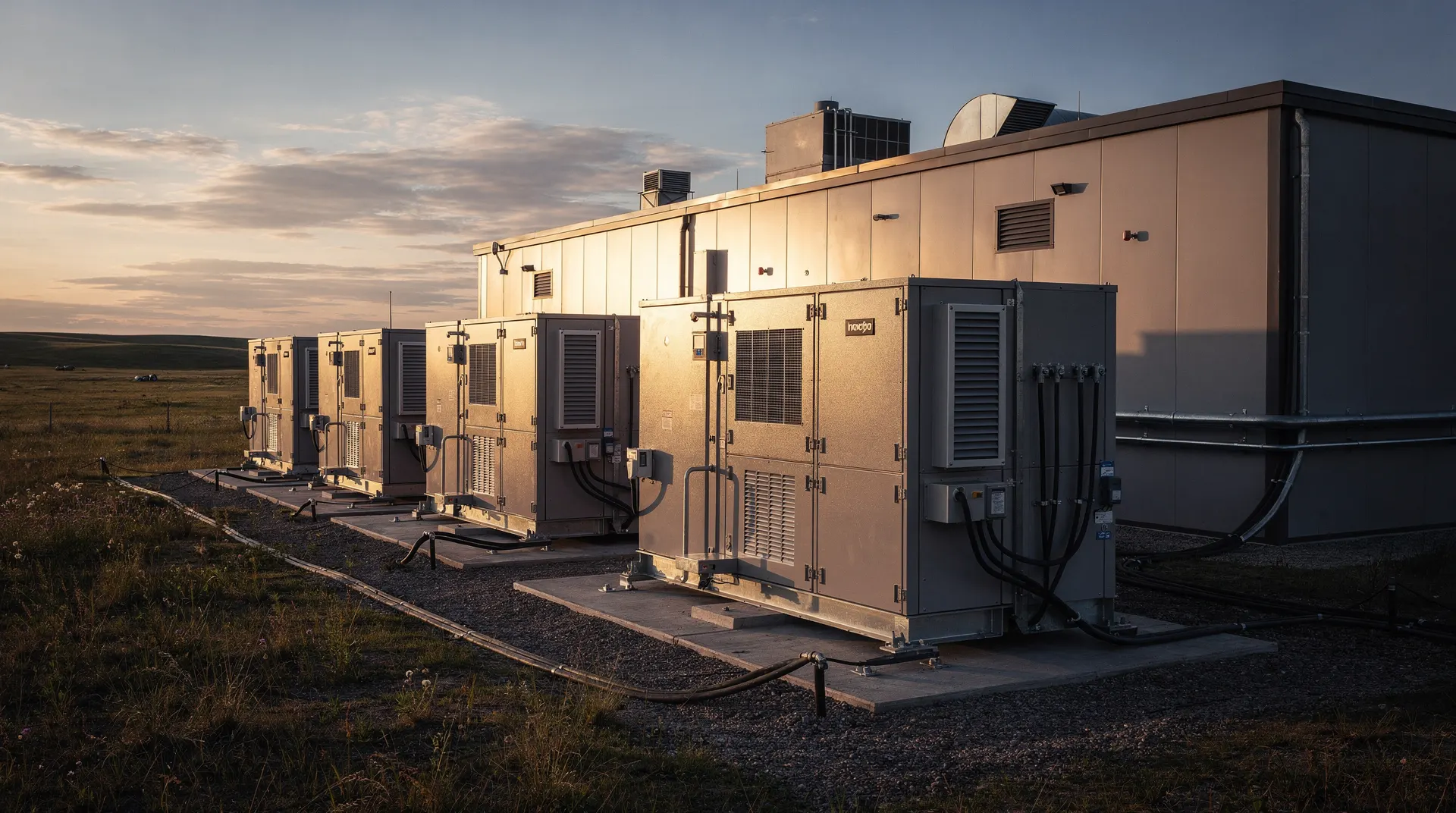
Google moved twice on October 14 to secure dedicated electricity for its US data center buildup: a 20-year power purchase agreement with American Electric Power for 702 megawatts of Bloom Energy fuel cells near Cheyenne, Wyoming, and Indiana regulators approving a $1.3 billion AES Indiana solar, storage and transmission plan to feed a Google campus in Monrovia, Indiana. Together the two steps show how hyperscalers are now paying the full and growing cost of guaranteeing enough power for AI compute.
The larger and more direct fact is the AEP agreement. In a news release dated October 14, AEP said it would develop, with partners, up to 702 MW of fuel-cell generation near Cheyenne, with the facility built under a project called Cheyenne Fuel Cell. AEP holds a 92 percent stake in that project and funds advised by Basalt Infrastructure Partners hold the remaining 8 percent, according to Data Center Dynamics. The fuel cells come from Bloom Energy under a separate supply arrangement that AEP announced in November 2024 for up to 1 gigawatt of capacity.
Related reading: Michigan's Google Data Center Gets a 20-Year Power Deal.
Google is the offtaker under a 20-year power purchase agreement, and the customer load sits just ahead of a large campus the company is building south of Cheyenne. Data Center Dynamics reported that Google is developing a 2.7 GW data center campus near Cheyenne, first disclosed in July, on a 716-acre parcel in the Switchgrass Industrial Park. AEP said construction is planned to start in 2026 and the facility should reach full operation by the end of 2028. AEP estimated the construction cost at about $4 billion.
The second move came from the utility regulator in Indiana. The Indiana Utility Regulatory Commission approved a plan from AES Indiana to build solar, battery storage and transmission serving a Google data center in Monrovia, in Morgan County. AES Indiana said the project will cost about $1.3 billion and that Google will pay all costs associated with it. The company's own filing background, published on its data center page, notes the commission issued its order on October 7, 2026, and local reporting from Inside Indiana Business confirmed the approval this week.
For the broader framework, see our crude oil coverage.
Related reading: Google Constellation Deal Adds 890 MW Nuclear Power to PJM.
What makes the Indiana approval notable beyond the dollar amount is that it is the first large-load filing under a 2025 state law built to protect existing utility customers when a data center comes onto the grid. That law, House Enrolled Act 1007, requires large-load customers to cover at least 80 percent of the generation and transmission costs needed to serve them. AES Indiana said Google will cover 100 percent of the costs, a structure Commissioner Joby Jerrells described in the order as exceeding the statutory requirement substantially.
The Indiana project mixes generation and grid hardware. It includes two battery energy storage systems of 200 MW and 130 MW, a hybrid solar plus storage project pairing 130 MW of solar with 130 MW of storage, and a 10-mile 345 kV transmission line connecting to an onsite substation near the data center. AES Indiana also cited projected savings of about $770 million for its other customers over 15 years, roughly $47 a year for the average residential customer, because Google funds the infrastructure rather than spreading those costs across the rate base.
Related reading: AI Data Center Orders Reach 100 MW, but Plans Are Not Demand.
Read as one theme, the two approvals show what AI data center power now costs and who pays for it. In Wyoming, Google is effectively buying the generation it needs as a dedicated offtake contract, with AEP and Bloom Energy carrying the capital and construction risk against a 20-year revenue stream. In Indiana, Google is funding the infrastructure outright, with the utility acting more as an engineer and operator than a financier. Both models sidestep the slow and contested path of a general rate case, trading speed and certainty for a larger bill that lands on the data center's own P&L.
The market angle is the supply chain that now roots directly into data center demand. Bloom Energy, the fuel-cell supplier in the Cheyenne project, already holds supply deals with Oracle and Equinix, and this agreement extends its exposure to one hyperscaler at a scale larger than any single deal it has disclosed publicly. AEP, by contrast, is demonstrating that a regulated utility can ring-fence a large customer contract so that costs do not spill onto residential bills, a structure regulators in several states are now testing as data center load grows faster than grid supply.
Related reading: Jämsä AI Data Center: Sesterce Plans €10B Campus.
The dated next steps are concrete. AEP expects to begin construction in 2026, with full Cheyenne operation by the end of 2028. AES Indiana said it will build out the Indiana infrastructure in stages aligned with demand rather than all at once. The next signal for the sector is whether other hyperscalers follow the same two paths, dedicated fuel-cell PPAs in the West and customer-funded grid builds in the Midwest, because each lowers the biggest constraint on AI capacity growth: electricity.
This content is for informational purposes only and does not constitute financial advice. Past performance is not indicative of future results. Consult a qualified financial advisor before making investment decisions.
Get daily intelligence delivered
Create a free account for the Daily Brief every weekday and The Week Ahead every Sunday. No card required.