Michigan's Google Data Center Gets a 20-Year Power Deal

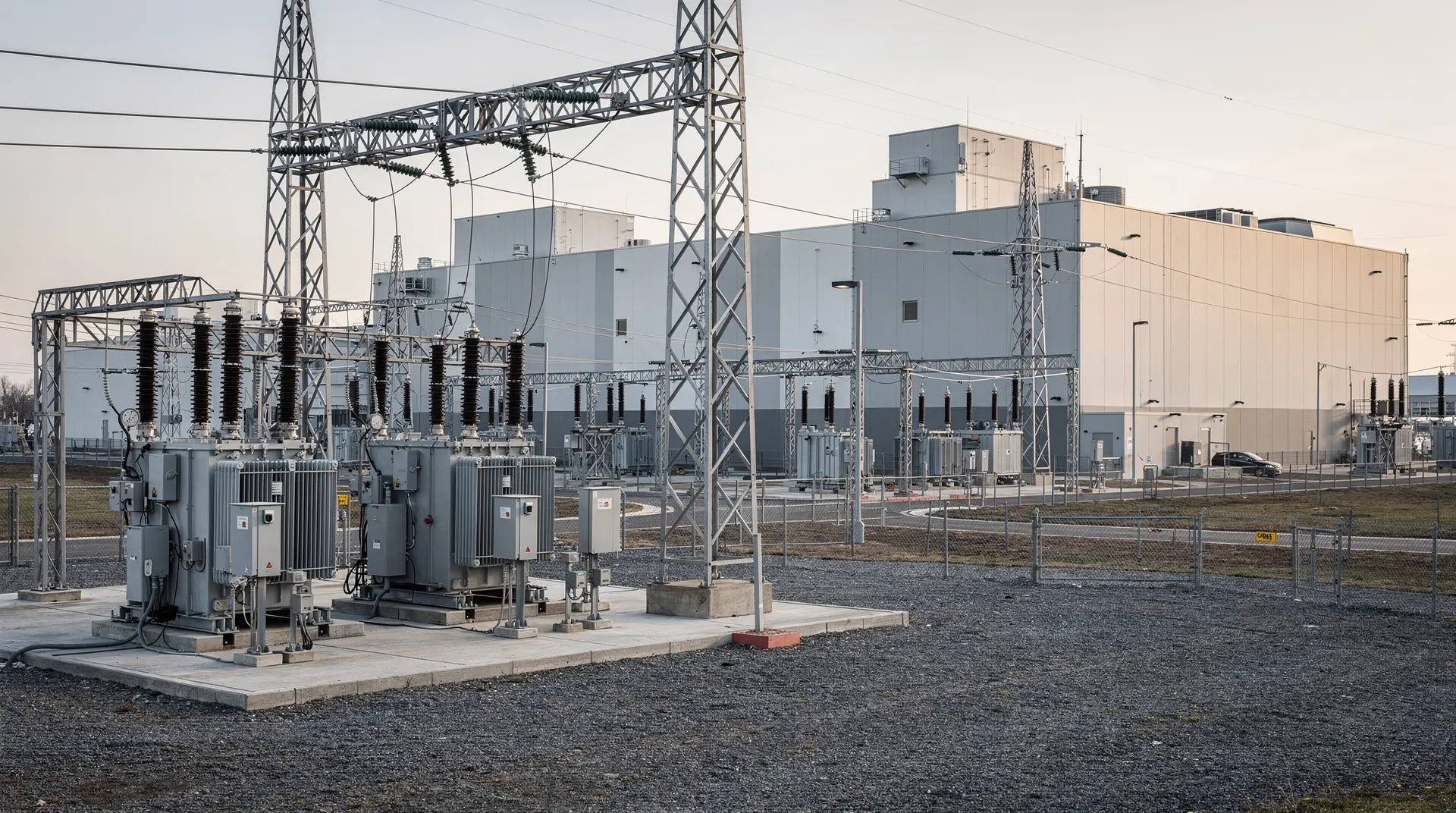
Michigan approved a 20-year electricity contract for Google's Wayne County data center on October 1, 2026, with an 80% minimum billing requirement designed to keep the project from shifting its costs onto other DTE customers. The Michigan Public Service Commission's conditions turn a large AI infrastructure question into a contract test: whether the biggest new loads will pay for the generation and grid resources they require.
Under its October 1 order, the MPSC approved a primary supply agreement between DTE Electric and Google for a facility in Van Buren Township, and a separate clean capacity accelerator agreement. In its official release, the Commission said Google will pay for DTE to develop, own and operate the new clean energy resources and battery storage. The release gives no total contracted load for the facility, so its size should not be inferred from the resource plan.
This distinction matters. A data center can reserve power faster than its servers reach full utilization. If the utility builds facilities around a large forecast and the customer later uses less, fixed costs can linger after demand disappoints. The MPSC's approved terms try to assign that risk to Google rather than to households and businesses on DTE's system.
Under the contract, Google must pay for at least 80% of contracted electric use even if actual consumption is lower. DTE's general D11 large-load tariff uses a minimum billing demand between 50% and 65%, the Commission said on October 1. The agreement also runs 20 years, compared with the usual five-year D11 contract, and an early termination payment requires Google to cover at least 15 years of minimum monthly charges. Credit and collateral requirements provide another backstop if Google stops operating the facility earlier than planned.
That structure is not a guarantee that every cost or execution risk disappears. The safeguards depend on the contract's enforceability and Google's ability to meet its payment obligations over time. Nor does a favorable customer-specific agreement automatically establish how another utility or regulator will treat a future data center. Michigan's decision is a concrete case, not yet a national template.
The other part of the deal is the resource build. Under the clean capacity accelerator agreement, the October 1 MPSC release says Google will pay for DTE to develop as much as 1,600 megawatts of renewable energy and 480 megawatts of battery storage. DTE expects the data center to begin taking service in December 2027 and reach maximum load in December 2028. Those are company forecasts reported by the regulator, not operating capacity already online.
DTE contends that the special contracts will produce a $1.7 billion benefit for other customers over the agreement's 20-year life, because Google pays fixed costs that benefit the wider grid. That figure is the utility's estimate as quoted by the MPSC, not an independently measured saving. The commission said its review focused on the utility service terms and on shielding other DTE customers from project costs and financial risks; it did not decide whether or where the data center should locate.
The investment signal is therefore more specific than a broad claim that data centers are good or bad for power bills. A large customer may bring new generation and storage, but the distribution of risk depends on the rate structure, minimum payments, exit obligations and credit support. In this case, the contract asks Google to carry a larger share of the downside if utilization falls or the project ends early. The same question dominates broader data-center financing: Who Pays for the Datacenters: Debt, Leases and the Hidden Cost of AI Capex.
For technology investors, the approval also makes power procurement part of the infrastructure delivery schedule. That is the pattern behind Five AI Deals in One Day, and Not One Was About GPUs. The Commission's October 1 release places first service in December 2027 and maximum load in December 2028. Those dates leave time for construction and resource development, and they leave execution risk between the contract approval and actual delivery. That risk has already surfaced once this year in a related context, as Oracle's Force Majeure Notice on Project Jupiter Is the AI Buildout's First Delay Clause documents. A delay in generation, storage or electrical infrastructure could affect the timetable even if the customer agreement is in place.
There is a meaningful upside case for the utility and the region: Google-funded resources could add supply and storage while shielding existing customers from the project-specific costs. The countercase is that promised capacity and future savings depend on construction, contract performance and the final shape of the load. The MPSC's ratepayer protections address who bears certain costs, but they do not make the build risk-free or prove the utility's projected $1.7 billion benefit in advance.
The next public markers are operational rather than rhetorical: DTE's forecast start of service in December 2027 and maximum load in December 2028, alongside progress on the renewable and storage resources. Investors watching the AI buildout should compare those milestones with the customer obligations in the contract. The key test is whether the power arrives on schedule and the customer pays through the full ramp, not simply whether another data center has been announced.
This content is for informational purposes only and does not constitute financial advice. Past performance is not indicative of future results. Consult a qualified financial advisor before making investment decisions.
Get daily intelligence delivered
Create a free account for the Daily Brief every weekday and The Week Ahead every Sunday. No card required.