Five AI Deals in One Day, and Not One Was About GPUs

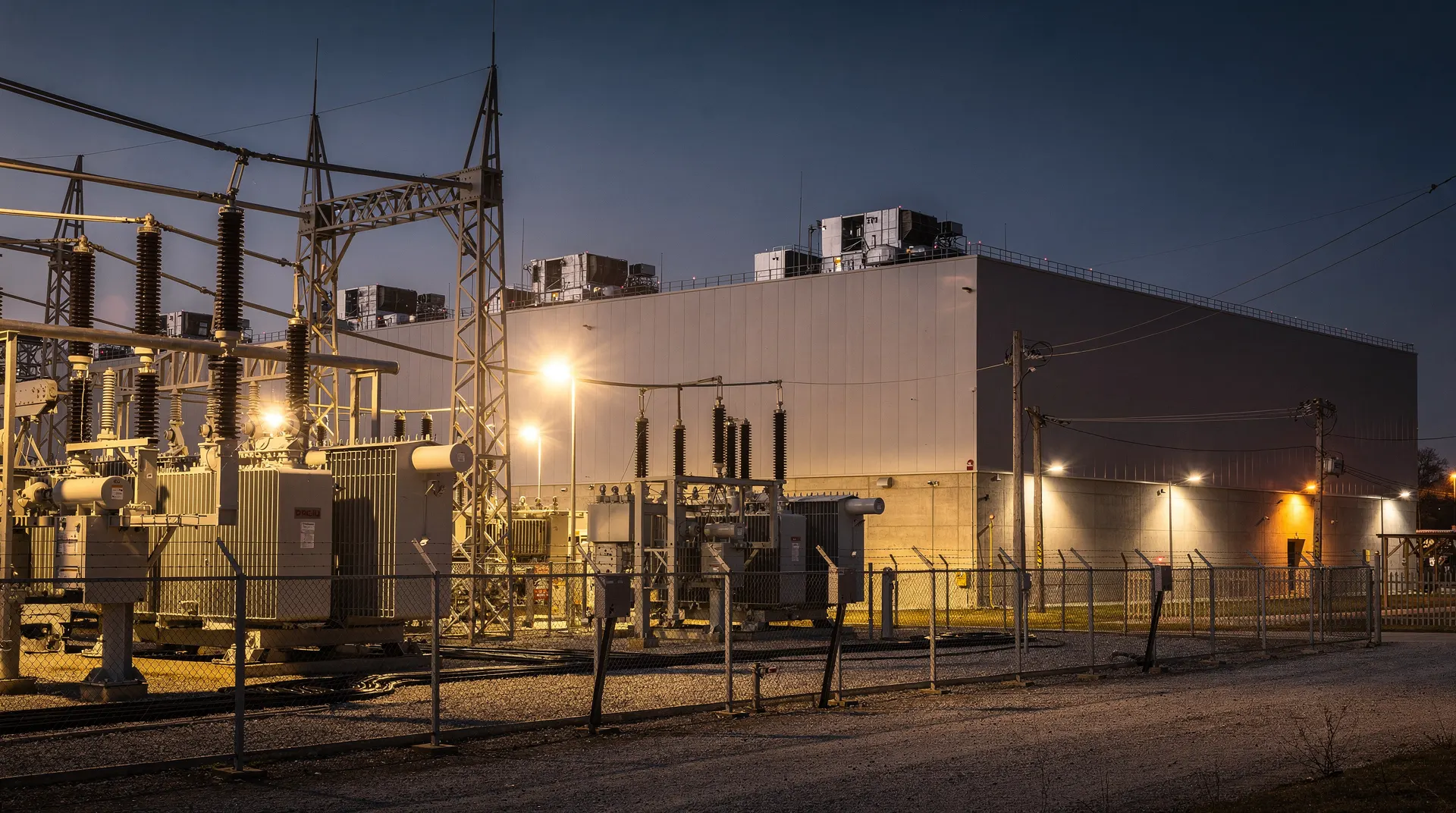
Samsung announced on September 29, 2026 that six of its affiliates, led by Samsung Electronics with USD 500 million, are investing a combined USD 1 billion in Helix Digital Infrastructure, the AI infrastructure company KKR launched in June 2026. Helix does not sell chips. It develops hyperscale data centers, baseload and flexible power generation, transmission and distribution infrastructure, and fiber, and its own materials describe power availability as the defining constraint on AI expansion. The same day, Meta signed to lease AI compute from Firmus's Southeast Asia AI factories, a deal that pushes Firmus's total contracted capacity above 900 MW, while Bell Canada and Cisco signed a sovereign AI infrastructure memorandum for Canada, NetApp and Supermicro announced a jointly validated AI factory stack, and Phaidra deployed its Prism operations platform across Aligned Data Centers on NVIDIA's DSX AI factory platform. Five deals, one day, and the striking part is what none of them buys: GPUs are in every deal as an assumption, not as the product.
The five deals in one table
| Deal | Counterparties | Size disclosed | Geography | Stack layer |
|---|---|---|---|---|
| Helix investment | Samsung Electronics, Samsung C&T, SDS, SDI, Life, Fire & Marine; KKR, Kuwait Investment Authority, NVIDIA, Vistra as founding investors | USD 1 billion combined, USD 500 million from Samsung Electronics | Global | Power, land and shell, integrated |
| Meta compute lease | Meta, Firmus, DayOne | Above 900 MW contracted capacity firmwide | Southeast Asia (Batam, Malaysia), extending Melbourne | GPUs as a service |
| Sovereign AI MOU | Bell Canada, Cisco | Not disclosed | Canada | Power, networking and operations |
| AI factory stack | NetApp, Supermicro | Not disclosed | Global | Storage and networking |
| Operations AI | Phaidra, Aligned Data Centers | Not disclosed | Aligned portfolio, on NVIDIA DSX | Operations software |
Also on September 29, AMD agreed to acquire World Labs for $8.2 billion in stock and Samsung Electro-Mechanics approved a $5 billion substrate expansion. We covered both on this desk already, and this piece links them where they matter rather than restating them.
Helix and the power stack: where the margin now sits
The Helix structure answers a question hyperscalers kept failing to answer themselves: you can order GPUs today and take delivery next quarter, but the interconnect queue at a US utility can run for years. Helix, led by former AWS chief executive Adam Selipsky and backed by KKR's infrastructure business with about 170 dedicated professionals, exists to deliver compute and the megawatts behind it as one package. The Samsung release is explicit about the logic. If data centers are the production hubs of the AI era, power is the fuel that drives them, and the ability to secure both simultaneously has become a competitive advantage.
Look at the investor list rather than the press language. NVIDIA invests because a factory without power is a backlog problem, not a revenue line. Vistra invests because a generation and retail operator monetizes scarcity. The Kuwait Investment Authority and KKR provide patient capital, and Samsung's six affiliates bring engineering across semiconductors, construction and energy. Samsung Electronics closed at 272,500 won on September 29, up 0.93 percent, after a 52 week range of 84,700 to 374,500 won, so this is a company buying optionality from strength rather than salvaging a core business. The USD 1 billion is small against Helix's likely capital needs, but the signal is the composition: the spender and the constraint owner are merging into one vehicle.
That is the structural read. When the binding input moves, the financial instrument that controls it changes. In 2023 the scarce asset was chip allocation. In 2026 the scarce asset is a grid connection with generation attached, and private credit and infrastructure capital are pricing it. KKR closed at $93.18 on September 29, down 0.06 percent, and Vistra at $140.83, up 2.04 percent. Vistra's founding seat in Helix is the cleaner tell: a power company is now an AI infrastructure equity story.
Follow the money through the stack. At the chip layer, NVIDIA still captures the gross margin, and its position is so assumed that infrastructure deals now cite its platform the way servers cite x86. At the systems layer, the NetApp and Supermicro collaboration targets exactly the pain between chip and workload: jointly validated compute, networking, power and liquid cooling with unified data management, sold as shorter integration cycles and better GPU utilization. Supermicro closed at $41.02, down 1.82 percent, and NetApp at $209.18, up 2.33 percent on the announcement to within a dollar of its 52 week high of $210.04. NetApp's 123.27 percent 52 week performance against Supermicro's 110.57 percent says the market currently pays a premium for validated data infrastructure over raw rack count. At the operations layer, Phaidra's Prism is a read only intelligence layer analyzing building management and electrical power telemetry across Aligned's portfolio, claiming faster response and higher reliability. The software layer is small dollars today, but it is the only layer whose product is saving megawatts rather than consuming them, and that becomes valuable the day power stops being cheap.
Related on this desk: AMD pays $8.2 billion for World Labs, and the model lab era starts and Samsung Electro-Mechanics' $5B substrate bet is the AI shortage speaking won and Goldman Puts 2027 AI Capex at $1.4 Trillion, and $400 Billion of It Will Be Borrowed.
Offshore neocloud and sovereign AI: a new demand class
Firmus's agreement with Meta extends an existing lease of NVIDIA GB300 NVL72 systems in Melbourne and adds upcoming AI factories built with DayOne in Batam, Indonesia, planned for 170,000 GPUs, and in Malaysia, where OpenAI has signed a capacity agreement. With that Malaysia deal, Firmus says total contracted capacity now exceeds 900 MW. Meta's vice president of engineering and infrastructure, Gaya Nagarajan, framed Firmus as a long term strategic partner for Asia Pacific. Firmus was reported this month to be exploring an initial public offering of up to $5 billion, which would make this the first listed pure play AI factory builder.
The market consequence runs in two directions. First, hyperscalers leasing compute offshore means the marginal AI workload no longer has to wait for a US interconnect. When Meta can contract 170,000 GPUs on Indonesian land with committed power, the pressure on US utilities to prioritize hyperscaler queues changes from absolute to competitive. Second, it sets a price benchmark. A delivered dollar per megawatt hour for AI grade compute in Southeast Asia becomes a comparison point for every PPA negotiation in Virginia and Texas. US power prices have been the quiet winner of this buildout, and offshore capacity is the first credible check on that pricing power. NVIDIA closed at $227.21 on September 29, down 0.72 percent, and DSX is its attempt to keep the full stack reference design standard across all of these geographies, which is why five of the day's five deals touch NVIDIA's platform.
Bell and Cisco signed a memorandum of understanding, not a contract, so the honest size number here is zero dollars disclosed. What matters is the shape. Bell brings Canadian data center space, power, cooling, physical security and connectivity; Cisco brings its Sovereign Critical Infrastructure portfolio, AI PODs modular architectures and observability. The target customer is government and regulated industries that need workloads and data inside the country. This is the same pattern Helix's own materials flag as a business model, GPU as a service, sovereign AI and colocation, arriving as a distinct demand class alongside hyperscaler capex. Expect more of these this quarter, and expect the disclosed dollars to stay small while the reserved megawatts quietly add up. BCE closed at $20.14 on September 29, near its 52 week low, so the market is not yet paying for the option; Cisco closed at $106.94, up 0.19 percent.
Second order effects and the next dated catalysts
Three follow through effects are worth watching. Utilities with data center exposure become acquisition targets for infrastructure vehicles imitating Helix, which compresses the discount at which power assets have traded against AI equity stories. Offshore compute capacity disciplines US PPA pricing at the margin, which slows the revenue ramp utilities were guided to expect. And the sovereignty wave adds a demand class that does not arbitrage across borders, meaning national capacity builds will price above global parity.
The dated catalysts: TSMC's monthly revenue release in early October is the cleanest read on whether the chip layer still outgrows the power layer, and NVIDIA's next earnings report in late November will show whether DSX adoption converts into attached systems revenue. On the power side, watch FERC and utility commission filings for large load interconnection tariff proposals in PJM and ERCOT this quarter; the 900 MW Firmus number is the offshore benchmark those filings will be measured against. The bottleneck moved on September 29. The filings will tell us who pays for it.
This content is for informational purposes only and does not constitute financial advice. Past performance is not indicative of future results. Consult a qualified financial advisor before making investment decisions.
Get daily intelligence delivered
Create a free account for the Daily Brief every weekday and The Week Ahead every Sunday. No card required.