Jämsä AI Data Center: Sesterce Plans €10B Campus

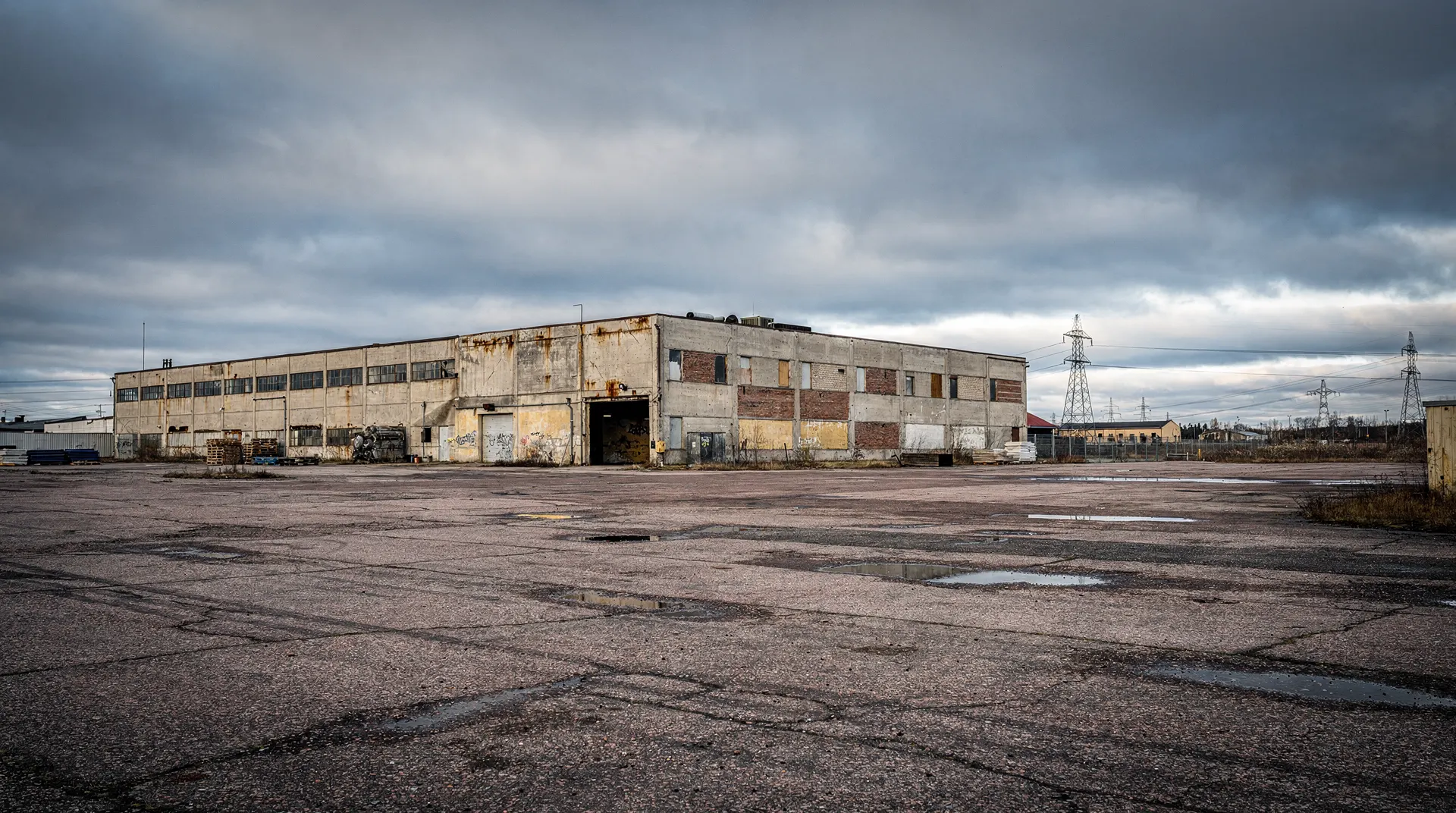
Sesterce says it plans to invest more than €10 billion in an AI computing campus at the former Kaipola paper mill in Jämsä, Finland. The project starts on paper at 200 megawatts, with a second phase expected to lift capacity to 600 MW, but the investment headline is not yet a financing commitment or an operating forecast.
The announcement adds a large European proposal to a market increasingly measured in power blocks, not just accelerator orders. For investors, the consequential detail is the gap between a headline estimate and proof that the project can be financed, connected and filled with paid workloads.
Related reading: AI Data Center Orders Reach 100 MW, but Plans Are Not Demand.
Sesterce's October 8 company statement describes a first phase of 200 MW, with work planned to begin in 2026, followed by a 600 MW second phase. The company also says it aims to develop more than one gigawatt of AI capacity across Finland over time. Those figures describe separate scopes: the initial 200 MW phase, a 600 MW second phase, and a longer-term national ambition above 1 GW. They should not be added together as if all were contracted capacity at one site.
The former paper mill site offers one practical advantage. Sesterce plans to reuse industrial infrastructure at the former paper mill. Elenia says the site has a high-voltage connection, but neither company has disclosed delivered capacity, upgrade costs or a grid schedule. Power at the right scale remains a condition, not a given.
For the broader framework, see our bitcoin coverage.
Related reading: DayOne Data Center IPO Filing Shows 2.3 GW in Bookings.
From proposal to funded capacity
Sesterce says it has an anchor customer and committed workload capacity, but has not named the customer. Yle reported on October 8 that CEO Youssef El Manssouri described it as one of two leading AI labs and said a contract had been signed. Yle also reported that the project's financiers were not disclosed. Investors still lack contract length, minimum payments, pricing and conditions needed to assess revenue quality.
The funding question is particularly important given the mismatch between Sesterce's disclosed scale and the planned build. Sesterce puts the campus investment above €10 billion, but public materials do not identify committed debt or equity, a phase-by-phase construction budget or a capital schedule. Yle reported Sesterce Group revenue of €11.95 million in 2024 from French company-register data. That historical figure does not measure current liquidity or project-partner resources. Financing and customer commitments therefore remain key facts to verify.
Related reading: Oracle's Force Majeure Notice on Project Jupiter Is the AI Buildout's First Delay Clause.
The City of Jämsä's October 8 announcement is a useful counterweight to the corporate headline. Mayor Jori Reijula called the proposal an opportunity only if it progresses from plans to implementation and meets applicable requirements. Yle separately reported that Sesterce was negotiating to buy the industrial property from Kaipola Green Port, with the talks described as advanced but not complete. Site control and permits therefore remain live questions, rather than paperwork details already behind the project.
Sesterce estimates about 2,000 construction jobs and 300 operating jobs. Those are company estimates, not hiring commitments. The local economic case depends on lasting supplier activity and operating jobs, not only the temporary build workforce.
Related reading: Tencent's $7 Billion Oracle Lease Finds the Gap in the Export Control Rulebook.
Power and execution are the real market tests
To address energy concerns, Sesterce says it will enable one megawatt of new renewable generation in Finland for each megawatt the campus consumes, within ten years of operation. The company says the generation will be newly built and commitments audited independently with annual public reporting. This is a company pledge, not evidence that the generation has been financed, permitted or matched to the campus's hourly consumption. The ten-year period also means it may not coincide with the date the first compute halls begin drawing power.
The company describes a closed-loop liquid cooling design, supplemented by rainwater and recycled water, and says drinking water will not be used for cooling. It is also considering waste-heat use. Those choices could help with water and heat management, although the announcement contains no engineering data on cooling efficiency, seasonal performance or heat customers. For the market, they are design intentions to test, not yet operating results.
The 200 MW first phase needs power delivery, cooling and compute equipment. A 600 MW campus requires those systems to scale, alongside grid work and equipment delivery. Sesterce has not published its GPU mix, utilization assumptions or an expected service date. Announced capacity alone cannot establish expected revenue.
The supportive case rests on the reported workload contract, the industrial site and its high-voltage connection. Reuse may reduce some development work, while phasing lets investment track customer demand.
The risks are concrete. The €10 billion figure is an estimate, not a disclosed financing package. The customer is unnamed, the property transaction is incomplete according to Yle, and public materials do not show permits, detailed grid capacity or construction contracts. Each could delay billable capacity.
The next evidence should include site acquisition, permits, a grid delivery schedule, named financing and enough contract terms to assess revenue quality. Sesterce says first-phase work is planned to start in 2026, making progress against that schedule the near-term test. Until those milestones appear, the plan is not proof that €10 billion has been deployed or 600 MW of paid AI capacity is secured.
This content is for informational purposes only and does not constitute financial advice. Past performance is not indicative of future results. Consult a qualified financial advisor before making investment decisions.
Sources: Sesterce project announcement, October 8, 2026; City of Jämsä announcement, October 8, 2026; Yle reporting on the planned Jämsä campus, October 8, 2026.
Get daily intelligence delivered
Create a free account for the Daily Brief every weekday and The Week Ahead every Sunday. No card required.