Saudi Arabia crude output surges 26% in October to 10.563 million bpd as OPEC+ supply nears pre-war levels

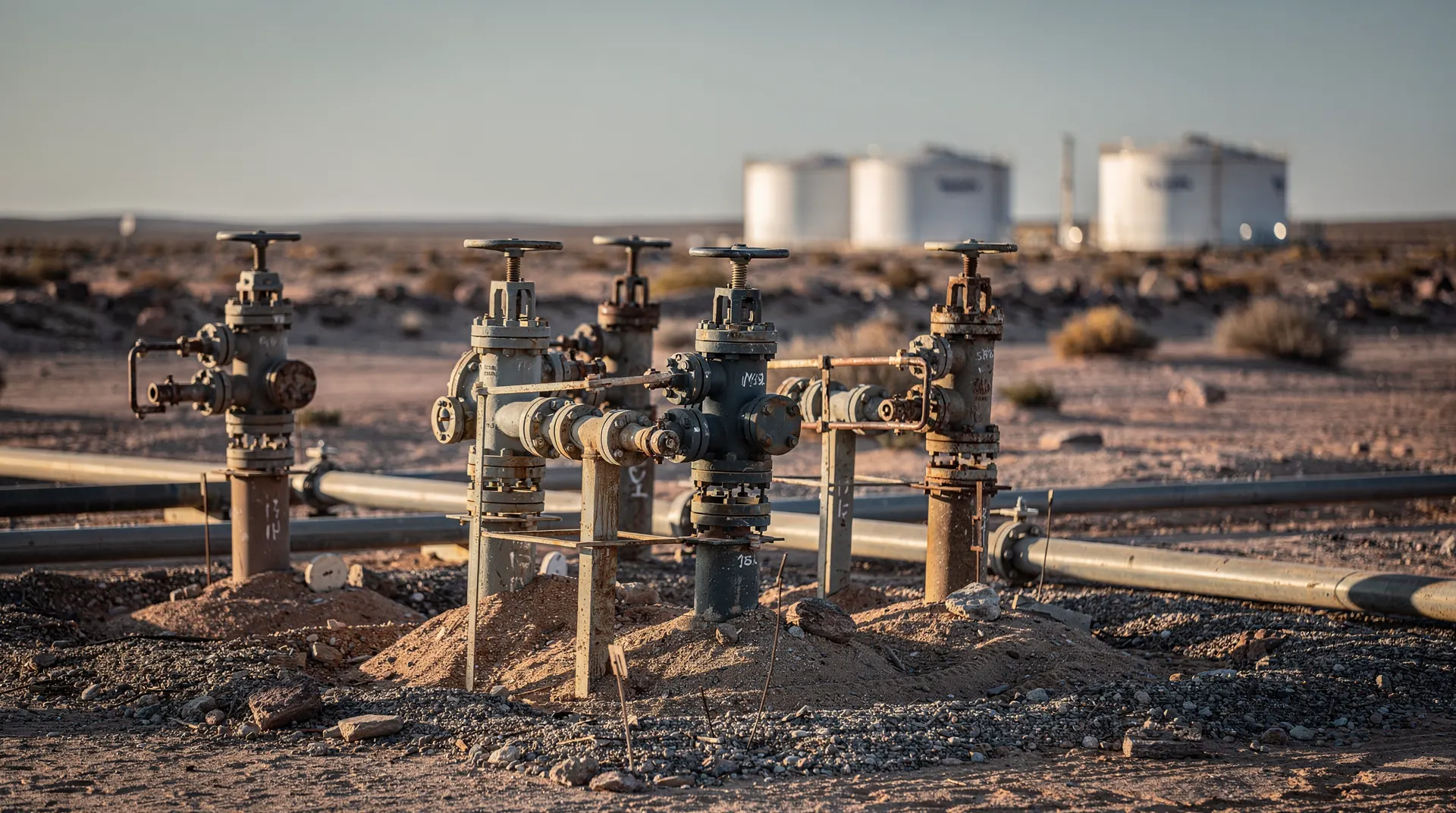
Saudi Arabia told OPEC its crude output surged about 26% in October to 10.563 million barrels per day, the kingdom's highest self-reported production since the Iran war began. The wider OPEC+ alliance has meanwhile rebuilt output to near pre-war levels, according to the group's Monthly Oil Market Report, published Wednesday, November 11, even as OPEC held its oil demand forecast steady. That pairing sets a rising supply picture against an unchanged demand outlook, and the market is still deciding what it means.
The primary number is Saudi Arabia's own filing to OPEC. October output of 10.563 million bpd compares with 8.372 million bpd in September, a jump of roughly 2.19 million bpd in a single month, or about 26%, per the report as cited by Reuters and Bloomberg. That puts October at roughly 97% of the 10.882 million bpd the kingdom reported for February, the last full month before the conflict began.
Related reading: Gold Holds $4,110 as the 29K Payrolls Miss Cuts October Odds.
One step back, the group's own secondary sources tell a different story. Those independent assessors put Saudi October production at 9.194 million bpd, about 1.369 million bpd below the self-report, per Quartz's reading of the same report. Bloomberg's own survey came in at 9.2 million bpd, nearly identical to the secondary estimate and not to the self-report. The two series disagree by a wide margin, published side by side in one document. On the self-reported number Saudi sits about 63,000 bpd above its 10.5 million bpd November OPEC+ target; on the secondary-source number it sits roughly 1.3 million bpd below it.
Group-wide, October OPEC+ output totalled about 41.23 million bpd against 42.72 million bpd in February, per Reuters via CP24. The alliance remains roughly 1.49 million bpd below its pre-war level, and Saudi Arabia's reported recovery accounts for about 319,000 bpd of that shortfall. Iranian output fell to 1.9 million bpd in October, the lowest in Bloomberg's survey records since 1989, while Iraq printed 4.888 million bpd, a wartime high, per Bloomberg via Quartz.
For the broader framework, see our crude oil coverage.
Related reading: Oil Price Drops 6% Below $100 as Iran Peace Draft Circulates.
OPEC left its demand picture unchanged in the same report: growth of 180,000 bpd in 2026 and 2.55 million bpd in 2027, per Reuters via CP24. That matters because the price case for oil in 2026 has leaned heavily on supply constraint rather than runaway consumption. More barrels against a flat demand outlook push the marginal barrel toward the prompt price and the stock build.
The price reaction has so far been two-sided. Brent fell about 1.17% to $91.49 a barrel on November 10, then rebounded toward $92 to $93 on November 11, the day the report landed, per Investing.com and Invezz. Aramco has already cut its November Arab Light price to Asia by $3 a barrel to a six-year low, a direct signal that cargoes are available and buyers are being asked to take them.
Related reading: Oil slips as Gulf supply returns; OPEC+ looms, diesel firm.
Who pays and who gains is where the case splits. Consumers of fuel and Asian refiners gain if the restored barrels hold on the market, because a rising supply floor against a flat demand forecast points toward softer prompt prices. Refiners benefit twice, from cheaper crude and from reopened flexibility to buy medium sour cargoes. Producers who pushed allocations back up carry the cost the other way: the kingdom is already about 63,000 bpd above its November target on its own books, and Riyadh, which projects a 2026 budget deficit of 245 billion riyals per Zawya and Reuters, must hold the revenue line even as it adds barrels. The Saudi over-delivery is a bet that volume outweighs revenue this quarter.
The offsetting bullish force is the same Middle East the supply data now says is healing. Iran sits at zero exports and demands seven conditions before Hormuz reopens; the Saudi Cabinet on November 10 called for an immediate end to threats in Hormuz and Bab al-Mandeb; the East-West pipeline that bypasses Hormuz was struck again in November. The infrastructure behind the October barrels remains under fire, and war-risk can repaint the supply curve overnight.
Related reading: G7, IEA release 100 million barrels to break the diesel squeeze.
What comes next is the next OPEC+ allocation decision. The 10.5 million bpd November target for Saudi Arabia is already set, and Saudi is over it on its own filing; how the group treats that over-delivery, and how it sets December allocations, is the immediate catalyst. The December data, when it prints, will settle whether October was a one-month restoration or a new plateau, and whether the secondary sources ever agree with the self-report.
This content is for informational purposes only and does not constitute financial advice. Past performance is not indicative of future results. Consult a qualified financial advisor before making investment decisions.
Get daily intelligence delivered
Create a free account for the Daily Brief every weekday and The Week Ahead every Sunday. No card required.