Oil slips as Gulf supply returns; OPEC+ looms, diesel firm

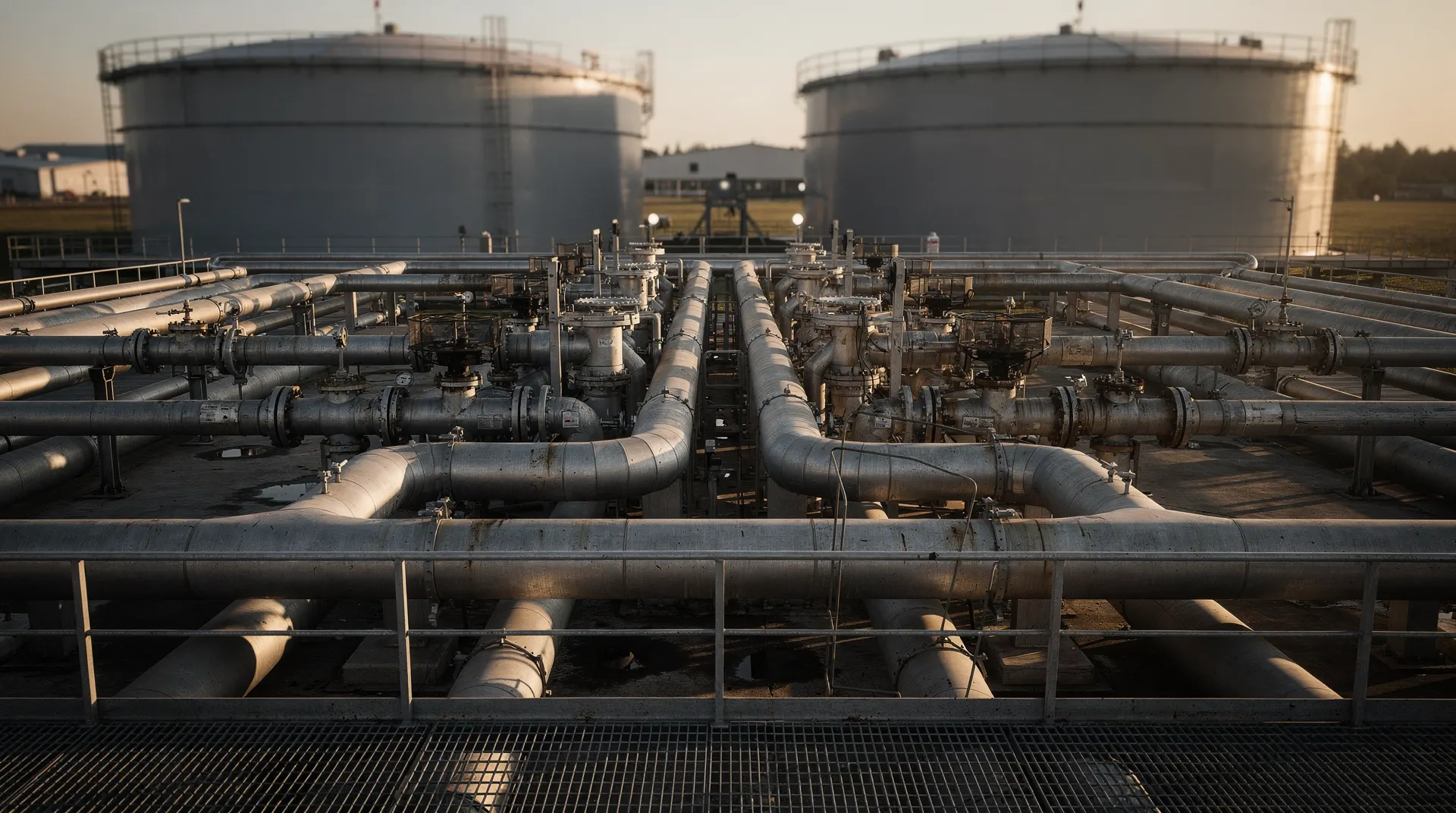
Oil eased in early trading as Gulf export capacity came back online, with Brent for December slipping about 1.1% to $96.96 and WTI for November about 1.3% to $89.24 after both gained roughly a dollar in the prior session. The supply recovery is upstaging geopolitical risk for now, and the market is looking ahead to an OPEC+ meeting Sunday that most delegates expect to hold output targets steady.
The move traces to physical supply, not demand. Saudi Arabia restarted its East-West Pipeline and resumed loadings at Yanbu, which opened an alternate export path around a still constrained Strait of Hormuz. Goldman Sachs estimated Gulf exports, dark cargoes included, reached about 23.3 million barrels a day last week, in line with the 2025 average and roughly double where they started September.
The premium that built through September is bleeding off fast when the physical picture improves. Brent still finished September up about 14%, its best month since July, and WTI up about 5%. That pattern echoes our last read on crude easing on truce hopes: the conflict premium unwinds quickly when supply actually shows up.
Refined products are a different story. Russia extended its ban on diesel exports for all fuel producers through end-October, citing delayed refinery maintenance and the need to rebuild reserves before winter, per Reuters. US diesel futures ran about 4.5% to $5.12 a gallon, and the gasoil complex stays tight even as crude slips. That is the market transmission from the refinery-strike campaign into the barrel that households and truckers actually burn. For the related read on the product squeeze, see our recent piece on the ULSD crack.
The near-term catalyst is the OPEC+ online meeting on Sunday 4 October, where seven core members are expected to hold November quotas steady. Attention is on the compliance statement and the 2027 capacity review rather than the headline outcome. For the wider register on the cartel’s decision, see our crude-oil coverage. The risk skew is two-sided: the bellwether Iran odds track that tail; Goldman's scenarios bracket about $120 if Middle East vessel attacks intensify and about $80 if exports fully normalize. For now the market is trading the supply recovery, not the tail, and products remain the place where tightness shows up.
This content is for informational purposes only and does not constitute financial advice. Past performance is not indicative of future results. Consult a qualified financial advisor before making investment decisions.
Get daily intelligence delivered
Create a free account for the Daily Brief every weekday and The Week Ahead every Sunday. No card required.