Iran shadow fleet sanctions: Treasury blocks nine vessels as Brent holds above $108

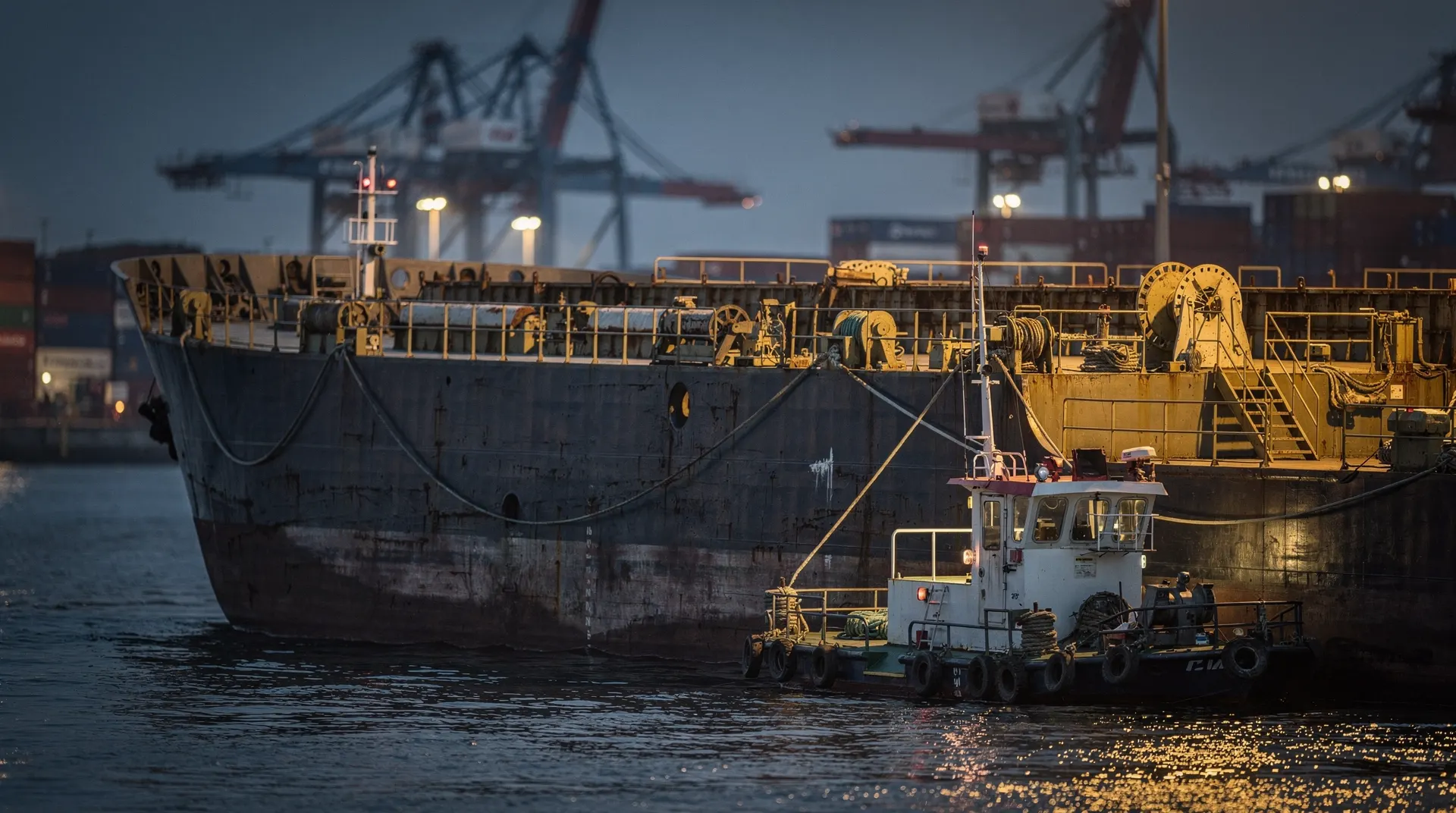
On October 21 the Treasury cut into the professional plumbing of Iran's shadow fleet, sanctioning a Panama and Greece-based law firm, two shipping intermediaries, seven cargo vessels and two small support vessels under Operation Economic Outcast, the campaign that now runs alongside a war that has all but closed the Strait of Hormuz. The newest round is aimed less at a single buyer than at the legal layer that has kept Iranian oil, steel and LPG moving to customers in Asia despite an embargo.
Treasury's press release frames the action as a strike on the enablers rather than the traders. The department said Karnakis and Karnakis helped register shipping companies that moved hundreds of millions of dollars of Iranian steel, petroleum, LPG and petrochemicals, including the corporate network behind Seyed Asadoollah Emamjomeh, described by Treasury as an Iranian LPG magnate. The same release positions the two shipping agents at the operational end of that chain, booking freight and handling the paperwork that lets a sanctioned cargo find hull space and a port.
Related reading: Iran sanctions: Treasury targets Iraqi bank and shadow-financing networks in Operation Economic Outcast.
What makes this round notable is who it reaches. Earlier Operation Economic Outcast actions targeted banks and dollar-clearing conduits, and Treasury has already sanctioned a network of buyers. This one reaches into the advisory and brokerage functions that are the connective tissue of the fleet, the lawyers who register a shell company in Panama, the agent in Singapore who books a tanker, the Dubai line that runs it. Each layer adds distance between the cargo and the ultimate buyer, and each layer is now on the sanctions list.
Where the money flows, and who loses it
For Tehran, the immediate cost is revenue the Office of Foreign Assets Control checks at the settlement layer. Iranian exporters can no longer use these registered vehicles to invoice, clear or collect on cargoes without exposing their counterparties to secondary sanctions, which in practice pushes a portion of oil, steel and LPG trade into barter, discounting or resumed overland routes. The scale Treasury cites, hundreds of millions of dollars across the network, is the size of the revenue slice under review, not a one-quarter figure.
For the broader framework, see our crude oil coverage.
Related reading: Strait of Hormuz Tankers Hit Mines: Two Laden Supertankers Catch Fire as Transit Runs a Third Below Baseline.
Transmission to the market runs through buyers in South and East Asia, where independent refiners and industrial buyers have absorbed Iranian barrels at a discount while Hormuz disruptions squeezed global supply. With nine more vessels blocked and two agent networks cut, the pool of willing hulls and intermediaries narrows, which raises the cost of evading the embargo and, at the margin, tightens the crude that does reach market. That is one reason front-month Brent has held near $109 and WTI near $97 in Wednesday trading, after WTI settled above $100 for three consecutive sessions (101.41 on October 16, 103.66 on October 19, 101.79 on October 20) before slipping back below the line, with the benchmarks at $109.43 and $97.56 respectively as of the most recent close, according to front-month exchange data.
Freight and insurance matter as much as the barrel. Every vessel added to the blocked list takes tonnage out of the unofficial trade and pushes remaining shadow-fleet cargoes toward smaller, older, more expensive coverage. Tanker owners who carry barred cargo risk losing insurance, financing and port access, so war-risk premia and freight rates on the non-sanctioned route tend to firm as the shadow fleet shrinks. The premium traders already pay in the physical market is quietly converting into a premium on the ships that remain legal.
Related reading: The Weekend Brief: Sanctions Architecture Hits a Stress Test.
In practical terms the effect is layered. A flagged vessel such as the WHALES DIAMOND or the PRINCE loses the ability to call at compliant ports, load insured cargo or be traded on secondary markets without triggering penalties, which forces the owner into an increasingly narrow band of buyers who will transact outside the dollar system. A law firm named as a supporter, meanwhile, loses the ability to work with US persons or transact in dollars at all, which removes precisely the legal cover that makes a Panama-registered shipping company look legitimate to a cautious counterparty.
Those nine now-frozen ships are seven Panama-flagged cargo vessels, the ANEMOS, GLORIS, PRIDE, DESTINY, FLAMINGO 1, HARMONY and PRINCE, plus two UAE-flagged small support vessels, WHALES DIAMOND and WHALES PEARL. Each is now blocked to US persons, and any transaction involving them risks secondary sanctions, which is the enforcement lever that reaches beyond US jurisdiction into the flag-of-convenience layer where this fleet operates.
Related reading: Jefferson's Treasury Market Speech Stays in the Plumbing: No New Signal on Rates or Runoff.
In scope the round is restrained: Treasury targeted entities and vessels, not a state, and the enforcement is aimed at money flows rather than at any economic bloc, a distinction that matters for how fully the sanctions bind in practice.
Two catalysts are dated. Treasury has framed Operation Economic Outcast as an ongoing campaign, so further rounds are a working assumption, and each discrete action gives the market a reason to reconsider which layer gets hit next. Second, the indirect US-Iran ceasefire talks brokered through Qatar and Pakistan could, if they advance, change the sanctions calculus faster than any enforcement action, since a durable de-escalation would be the event that actually reopens Hormuz flows and eases the supply pressure behind Brent near $109.
Near term, sanctions look likely to deepen faster than diplomacy. As long as Hormuz stays closed and the shadow fleet is the country's only export channel, the Treasury can keep tightening the screws on the lawyers, agents and hulls that make it run, and each turn pushes a little more cost into the barrel and a little more premium into the freight. For buyers in Asia and for anyone tracking the war-risk line on a tanker invoice, the relevant signal is not any single designation but the widening perimeter of who Treasury decides to reach next.
This content is for informational purposes only and does not constitute financial advice. Past performance is not indicative of future results. Consult a qualified financial advisor before making investment decisions.
Get daily intelligence delivered
Create a free account for the Daily Brief every weekday and The Week Ahead every Sunday. No card required.