The Weekend Brief: Sanctions Architecture Hits a Stress Test

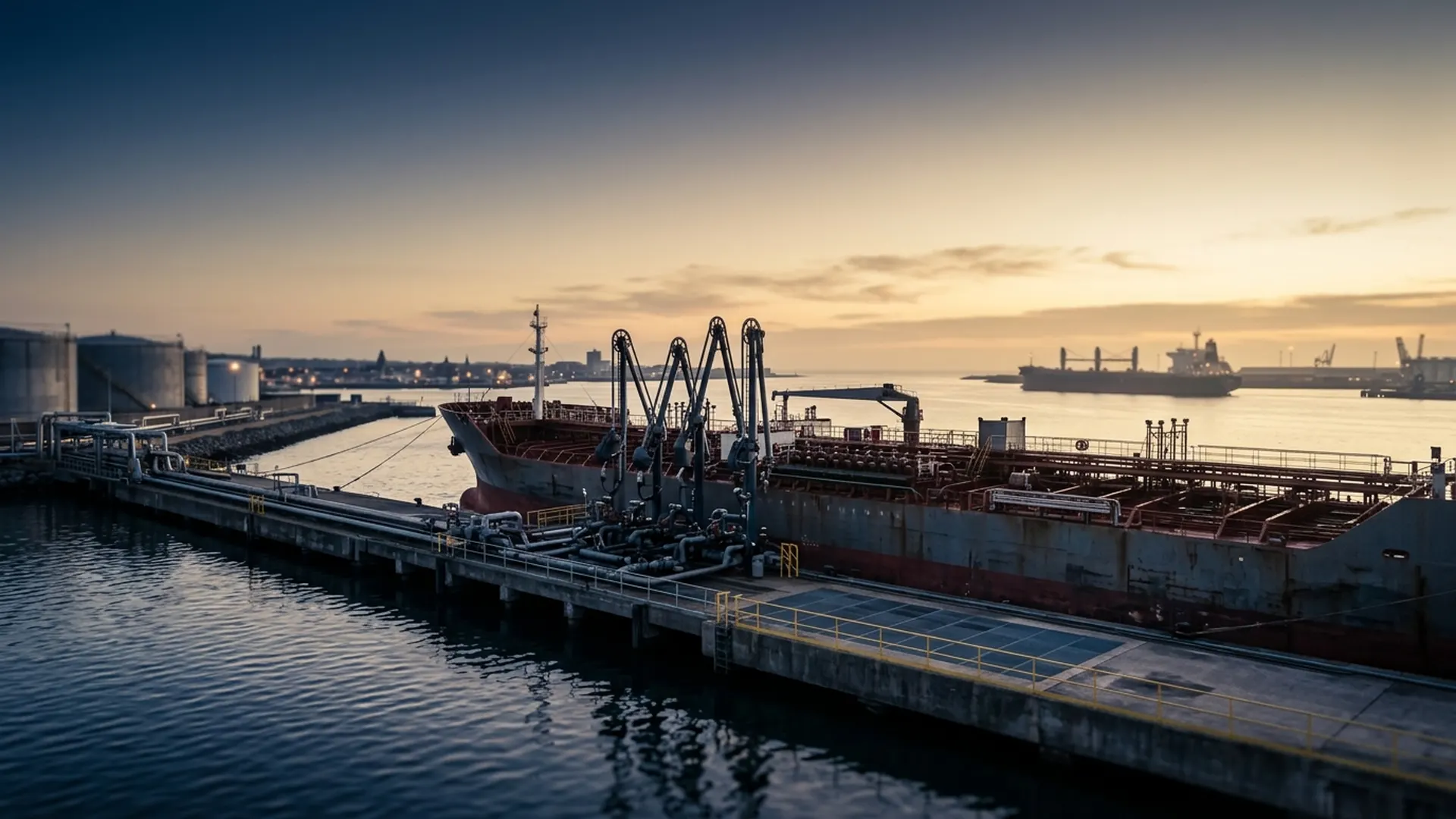
One week in the sanctions world produced a reversal, a strike, a set of narrow exemptions and a regulatory deconstruction, and the cleanest way to read all four is through money. The United States suspended its sanctions on Russian diesel exports through 7 April 2027 after Moscow agreed to release fuel in tranches. Iran's naval force struck an LPG carrier in the Strait of Hormuz and warned it would chase vessels beyond the strait. The Treasury's Office of Foreign Assets Control added the International Criminal Court to its sanctions list while issuing four licenses that keep defined money moving to it. And the Commodity Futures Trading Commission proposed folding event contracts into its definition of a swap while carving casino wagers out of the same definition. Strip away the politics and each move is a live experiment in what the US-led financial architecture can and cannot make stick, priced in diesel cracks, tanker rates and dollar plumbing.
The diesel reversal is the story that tells the most about how the system works under strain (our full write-up is here (our coverage of the diesel reversal)). Treasury issued a temporary license that walks back years of pressure on Moscow, aimed at record pump prices weeks before the midterm elections, and it came after the International Energy Agency estimated Russia's diesel production has fallen by nearly 30 percent this year following two waves of fuel shortages tied to Ukrainian drone strikes on refineries. Russia had banned its own diesel exports, and Moscow extended that producer ban to 31 October, so the market facing the reversal was already missing close to a tenth of global seaborne diesel trade. The tranche schedule is concrete: 300,000 tonnes immediately, 500,000 tonnes in November, another one million after that and three million more within a short period, according to the announcement. That is a supply shock aimed at the exact product that has been the tightest corner of the energy complex.
The market transmission is visible in the numbers the desk pulled this run. The US national average diesel price sat at 6.28 dollars a gallon, down from the record 6.53 dollars at the end of September, per AAA. European diesel was roughly 43 percent more expensive than a year earlier, and the UK was above two pounds a litre for the first time. The raw barrel stays hot on its own: Brent held above 103 dollars a barrel on October 9 against about 73 dollars before the Iran war began in February, per the BBC, and the Brent-WTI spread stayed wide near 12.6 dollars. But the diesel crack, the premium of refined fuel over crude, is where the fight is real, because freight, farming, construction and backup power all pay diesel's bill directly. A license is not a barrel, of course: the immediate test is whether the November tranche lands on time and whether refinery and logistics constraints keep the squeeze alive regardless.
The Iran thread put the same chokepoint math on a map. The IRGC Navy claimed it struck the LPG carrier NV Sunshine south of the Strait of Hormuz on October 9, setting the engine room on fire, and warned it would pursue any vessel using what Tehran calls unauthorized routes, a direct promise to carry the fight beyond the strait. Maritime agencies reported two further strikes, including on the VLCC Gem No. 2, in the Gulf off the UAE the same day, and Kpler counted only seven commodity-carrying vessels passing the strait on October 6, the lowest daily tally in over two months. This is a waterway that moves roughly a fifth of global oil and gas shipments, so a threat to the strait is a threat to the freight rate and the war-risk premium instantly.
For the broader framework, see our crude oil coverage.
Then the de-escalation headline hit and the fear gauge did the opposite of what the news cycle implied. The VIX traded near 14.84 on October 9, down 3.7 percent and within about a point of its 52-week low of 13.38, after Reuters reported that President Trump said the United States would not attack Iran before the November 3 midterms while holding what he called productive discussions. Brent fell about 1.6 percent to 102.58 dollars a barrel by midday on that signal, and the S&P 500 rose toward its record. The asymmetry is the point: crude can round-trip on a headline, but the diesel crack and the tanker rate are slower, structural, and still priced for the conflict that the reversal and the strike both acknowledge is unresolved.
OFAC's ICC actions are the quieter leg of the same architecture story. On October 9 the office placed the International Criminal Court on its Specially Designated Nationals list under the International Criminal Court-Related Sanctions Regulations, and on the same day issued General Licenses 13 through 16 that authorize defined transactions with the court: operating payments, communications and software, pensions and allowances, and detention-related costs. The licenses do not undo the listing. They mark the boundary between money Washington wants flowing and money it does not, which is exactly how a sanctions regime manages its edges in real time.
The CFTC added a different layer to the word "swap." A proposed rule would treat event contracts based on sports, politics, cultural and weather-related events as swaps subject to agency oversight, while a companion interim rule codifies that casino-style gambling products, including sportsbook wagers and casino games, fall outside the swap definition. The two moves respond to conflicting appellate rulings: the Sixth and Ninth Circuits likened a sports event contract to a sportsbook wager, while the Third Circuit sided with Kalshi in holding that the agency can further define swaps (more on the CFTC definitional fight). Neither document has appeared in the Federal Register as of early October 10, so the comment clocks have not started and nothing is law yet. The definitional battle is a financial-architecture story, not merely a markets one, because where the line lands decides which venues list what and under which regulator's rules.
The political economy of a reversal like this is the hard part to price. The relief is contractual, not permanent: the license runs only to 7 April 2027, the November and December tranche dates are the first supply test, and no new strategic reserve drawdown has been added to the 100 million barrel coordinated release already agreed. Kyiv's President Volodymyr Zelensky said flatly that gifts to Putin will not work for peace and that allowing Russia to sell petroleum products invests in a war that must be ended, while Putin's envoy welcomed the arrangement as one that will benefit the world, per the BBC. A serious reader of this week has to hold both: a market that gets relief at the pump, and a strategic relationship that just paid a visible price for it. The December date when the next tranche is due, and the midterm election that sits weeks before it, are the two signposts that tell you which side of that ledger the policy is really managing.
What the definitions mean for money
Read together, the week tests the reach of the US enforcement machinery on three fronts at once: physical supply (diesel and the strait), institutional flows (the ICC licenses), and the very definition of a financial product (the CFTC). The unifying question is calibration. Sanctions work when the cost of violating them exceeds the gain, and each of these actions is a judgment about where that threshold sits. The diesel license concedes that the cost of a persistent squeeze at the pump exceeded the strategic cost of loosening the pressure on Moscow, a trade the critics name plainly: Kyiv's officials said the reversal would help fund a war Moscow must be forced to end, while Moscow's envoy welcomed the arrangement as beneficial to the world. That split is not a sideshow. It is the enforcement calculus made legible.
The dollar plumbing under all of it remained quiet. The Treasury General Account stood near 880 billion dollars in the week, roughly flat, while the overnight reverse repo facility drained to near zero on October 9 after touching about 11.5 billion dollars at the end of September. Markets kept the 10-year at levels not seen since 2002, with the nominal yield near 5.31 percent on a 24-year high, and the composition of that move was almost entirely real rates. On the money-market side, the calm says the plumbing is not the stress point this time; the prices of physical fuel and the politics of enforcement are.
Security and sanctions
The finance lens on the security week is the crack, the freight rate and the enforcement reach. Turbulent as the barrel was, the durable signal is that the war risk premium now sits in middle distillates rather than crude: US diesel at a record near 6.30 dollars a gallon with European diesel up more than 40 percent year over year, and the Urals discount to Dated Brent narrowing from about 25.90 to 21.65 dollars a barrel over the month as Russian barrels found buyers in India. The directive to release 100 million barrels from coordinated emergency stocks, steered toward diesel on October 7, is the policy acknowledgment that the squeeze is one of products, not barrels. The enforcement question rides on the tranches: a sanctions reversal only produces relief if the barrels actually move, so November is the first checkpoint on whether the architecture bends without breaking.
The freight side is where the chokepoint threat gets a price tag. War-risk premia on Gulf routes repriced sharply after the NV Sunshine strike and the IRGC's warning that companies cooperating with the United States will have their vessels targeted, and the seven-vessel day through the strait on October 6 is a reminder that measured traffic is not the same as available capacity. For tanker owners the tail is asymmetric: a partial reopening pays, a closure costs months of rerouting around the Cape of Good Hope that every importer of Gulf crude or diesel must absorb. Our supply-chain coverage of the strike and its rate implications is here; the enforcement question underneath is whether maritime insurers will keep covering vessels at any premium or start excluding the route, which is the real device through which the strait's politics reaches freight rates and, in time, every diesel buyer.
AI and technology
Technology's money story this week came in two speeds. Microsoft traded near 533.50 dollars on October 9, up about 2 percent, about 4 percent below its 52-week high, after a quarter where it added roughly 37.5 percent, its strongest stretch since 1991, with Azure guided to grow about 45 percent going into a fiscal first-quarter report expected around November 4. That is an AI capex and revenue story at the megacap level: 53 buy or strong-buy ratings with a consensus target near 578.82 dollars, per the site's equities coverage (Microsoft stock jumps 2% as the AI and Azure rally returns). The other speed was the shakeout: a Reuters-sourced report that OpenAI's annualized revenue is near 50 billion dollars, about 20 billion below prior reports, rattled the chip complex on October 8 and helped push the PHLX semiconductor index down more than 3 percent. The through-line is who pays for the buildout and what the buildout earns, and this week's tape split cleanly between the names that monetize compute and the names whose customers may be overpaying for it.
IPOs and deals watch
The biggest deal of the week was a spectrum trade with a mandate: SpaceX agreed on October 8 to buy Grain Management's nationwide 800 MHz low-band spectrum portfolio, up to 14 MHz of paired and unpaired bandwidth, an asset that has helped keep Starlink Mobile out of the core US mobile market. The market read it as a structural threat to the carriers: Verizon fell about 7 percent in extended trading Thursday, AT&T about 7.9 percent and T-Mobile about 7.5 percent, with Verizon's move augmented by its ex-dividend date trim of 0.7075 dollars a share. The capital question, and the reason it is a deals story and not just a stocks story, is that the spectrum pivot changes who pays for wireless infrastructure and how much the incumbents must spend to defend their turf. Beyond that, the M&A pulse stayed cautious, consistent with a market where the 10-year sits at 24-year highs and small caps lag. The full read on why carriers fell, including the ex-dividend mechanics, is in our Verizon-SpaceX analysis.
Jobs and sectors
The labor market handed the Fed a test it did not want. September nonfarm payrolls rose just 29,000 against a roughly 100,000 consensus, the unemployment rate ticked up to 4.2 percent, and prior months were revised lower by a combined 60,000, per the Bureau of Labor Statistics (September Payrolls Rose 29K: October 14 CPI Is the Fed Test). Initial claims still came in below 200,000 in the week ending October 3, at 197,000, but continuing claims rose to 1.716 million, the signature of a low-layoff, low-hiring market where workers who lose a job take longer to find another. The Federal Reserve's September minutes showed all officials backed the latest hike and signaled another before year-end, which is why the September CPI due October 14 is the deciding print between more tightening and a pause. The sector tape matched the rates regime: energy led the S&P 500 up 3.85 percent on the week with staples up 3.59 percent and utilities up 3.11 percent, while technology fell 1.02 percent and small caps lagged 1.40 percent, with breadth capped at about 28 percent of stocks above their 50-day average. That rotation is the equity market's way of saying the next catalyst is the data, not the headlines.
From the Investigative Desk
Our investigation this weekend goes inside the counting problem at the Strait of Hormuz. The UKMTO's October 9 report puts traffic through the strait roughly 75 percent below pre-conflict levels, and in the same report the organization says separately sourced US Naval Cooperation and Guidance for Shipping facilitated transit counts are approximately five times its AIS-observed counts. The investigation walks through what the two records actually measure, why the gap should not be read as a measured volume of untracked oil, and what it means for how markets price the waterway. Read the full piece at Strait of Hormuz Traffic: UKMTO Says AIS Misses Most US-Facilitated Transits.
The week ahead in one paragraph
The calendar is heavy and the data decides. The September CPI lands October 14 and is the Fed test, bank earnings open October 13 with the sector deeply rate-sensitive, the November diesel tranche is the first supply test of the sanctions reversal, and the November 3 midterms loom over every geopolitical headline. The watch list is short: the crack, the CPI, and whether the tranche barrels actually sail.
This content is for informational purposes only and does not constitute financial advice. Past performance is not indicative of future results. Consult a qualified financial advisor before making investment decisions.
Get daily intelligence delivered
Create a free account for the Daily Brief every weekday and The Week Ahead every Sunday. No card required.