Iran sanctions: Treasury targets Iraqi bank and shadow-financing networks in Operation Economic Outcast

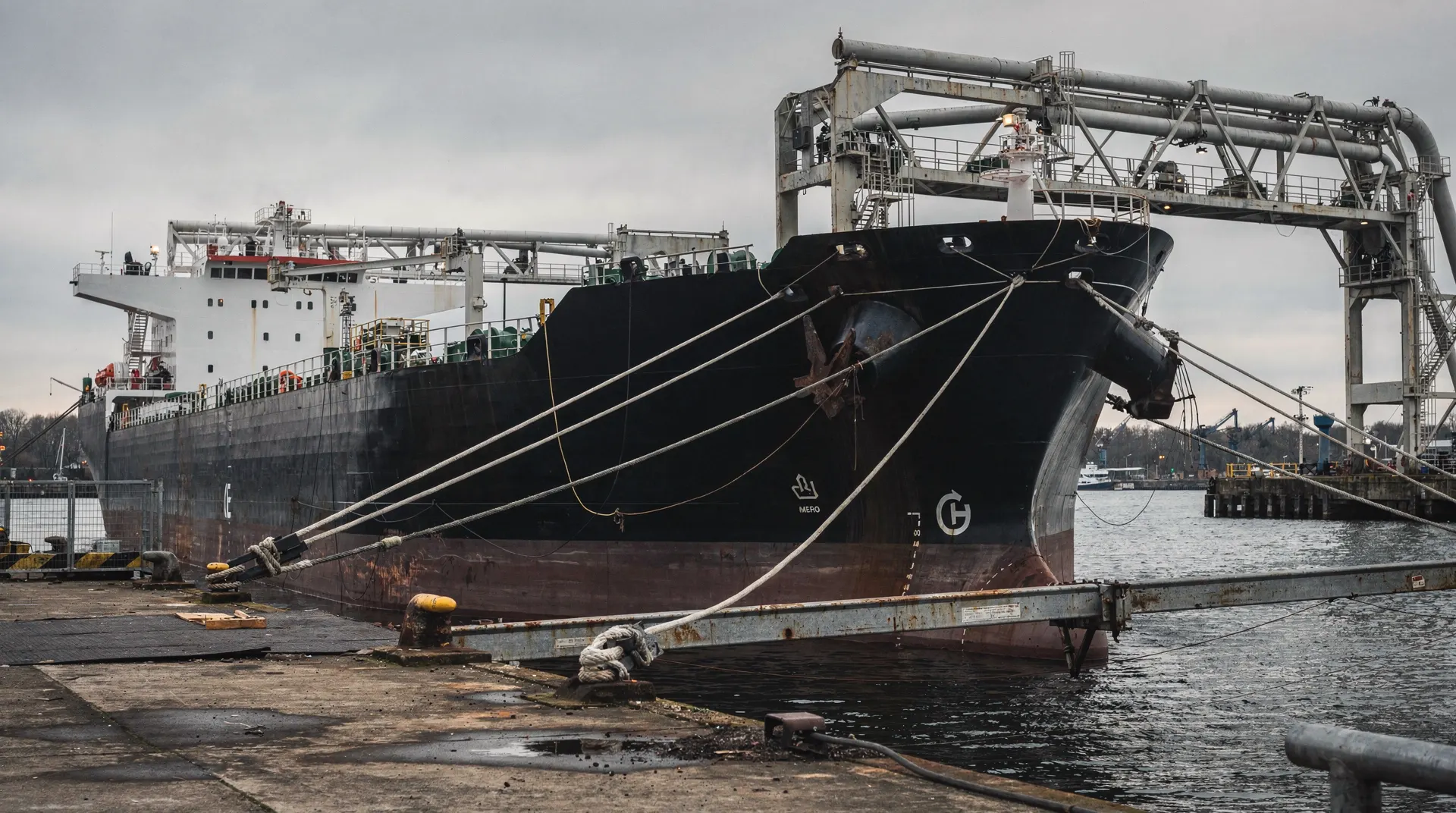
On October 15, 2026, the U.S. Treasury, in an action it calls Operation Economic Outcast, designated an Iraq-based bank that provided U.S. dollar access to Iran and its militia proxies, two Iranian offshore banks, and one of Iran's senior oil-revenue trustees. The designation lands alongside a State Department action against a Cuba-based bank tied to Iran and a FinCEN alert on religious charity networks, tightening the sanctions perimeter around Iranian oil revenue and dollar clearing at a moment when Strait of Hormuz shipping risk has crude trading near 97 to 106 dollars a barrel.
What Treasury designated
Under Operation Economic Outcast, Treasury moved against an Iraqi financial institution it says abused its access to the now-dissolved U.S. dollar wire auction to move funds for Iran. International Development Bank for Investment and Finance (IDB), was designated for providing U.S. dollar access to Iran, its government entities, and Iran-aligned militia groups (IAMGs) operating in Iraq. Treasury made the IDB designations pursuant to Executive Order 13902, which targets the financial and petroleum sectors of the Iranian economy.
Related reading: OFAC Iran Alert Warns Foreign Banks of Sanctions Risk, Not an Automatic U.S. Account Ban.
The action also reached Iran's offshore banking layer. Treasury designated Jazireh International Bank Company, an offshore bank affiliated with Bank Mellat, and Chabahar International Bank Overseas Company, an offshore bank affiliated with Bank Shahr. By naming the offshore arms, Treasury aims to close a channel Iranian banks have used to hold dollar and other hard-currency balances outside their home jurisdiction.
On the oil side, Treasury named Sayyed Ruhollah Razavi, an Iranian oil trustee, along with his two companies, Tejarat Gostar Atlas Parsian Kish Company and Farzanegan Energy Pars Company. Seven foreign-exchange operatives of Farab Sorough Qeshm Company were added to the list, as was Hong Kong-based shell Elitesphere Trading Co. Limited. These designations hit what Treasury describes as a shadow-financing architecture that handles payment and currency conversion for Iranian oil sales.
For the broader framework, see our crude oil coverage.
Related reading: Treasury Flips the Default Setting on Iran Sanctions Exceptions.
Concurrent actions came from two other agencies. The State Department designated Cuba-based Banco Internacional de Comercio S.A. (BICSA) under Section 2(a)(i)(A) of Executive Order 14404 for serving Iran-linked Karafarin Bank since at least 2022. The FinCEN alert, published as a companion document, lists red-flag indicators for abuse of khums and religious charity networks, describing how an Iranian regime can route funds through charitable channels to evade sanctions.
What the action does
The practical effect is to constrict Iranian oil-export payment channels and dollar clearing. IDB and its counterparties lose access to U.S. dollar settlement, which pushes Iranian crude transactions deeper into opaque, harder-to-settle routes. For foreign financial institutions still dealing with Iran, the designations raise secondary-sanctions exposure, a deterrent that typically makes clearing banks more cautious about any transaction with an Iranian connection.
Related reading: Gold Price Holds as Central Bank Buying Hits a Record in Q2.
The energy angle matters because the designations land in the middle of a Strait of Hormuz shipping crisis that already has crude near 97 to 106 dollars a barrel. Any further tightening of Iranian payment channels feeds the supply tightness that the commodities desk tracks, since a seller that cannot collect and settle payments has less incentive to keep barrels flowing even when physical routes remain open. Treasury's move is not a blockade of tankers; it is a squeeze on the financial plumbing that lets a seller get paid.
For Tehran the squeeze compounds existing stress: dollar access was already running through narrower channels after earlier designations, and an offshore-bank layer previously viewed as resilient is now inside the sanctions net. On the other side of the ledger, the designations are limited to a specific set of named entities. Treasury's stated logic is scale, cutting multiple institutions at once so banks cannot simply shift the same business to a newly functional alias, but any institution not on the list remains a potential conduit until separately identified.
Related reading: Waller Discussion at Bloomberg New Economy Forum: Higher Yields Doing Some of the Fed's Work.
What to watch next is the response layer rather than any single price print. Continued Operation Economic Outcast designations and ordinary OFAC enforcement will signal how far Treasury intends to push the architecture. Foreign financial institutions' reaction to the secondary-sanctions message, and any follow-on disruption to shipping through the Strait, will set the near-term tone for Iranian oil revenue and for the crude market. For a reader holding either a macro or an energy view, the number to track is whether dollar-clearing for Iranian barrels gets materially harder from here, because that is the transmission channel this round of sanctions is built to close.
Sources
U.S. Treasury: Operation Economic Outcast Targets Iran's International Financial Networks and Shadow Banking Architecture, October 15, 2026.
U.S. Treasury: Operation Economic Outcast Targets Iranian Regime's Abuse of Religious Charity Networks, October 15, 2026.
FinCEN Alert: Iranian Charity Network Abuse, October 15, 2026.
This content is for informational purposes only and does not constitute financial advice. Past performance is not indicative of future results. Consult a qualified financial advisor before making investment decisions.
Get daily intelligence delivered
Create a free account for the Daily Brief every weekday and The Week Ahead every Sunday. No card required.