macro

Treasury Flips the Default Setting on Iran Sanctions Exceptions

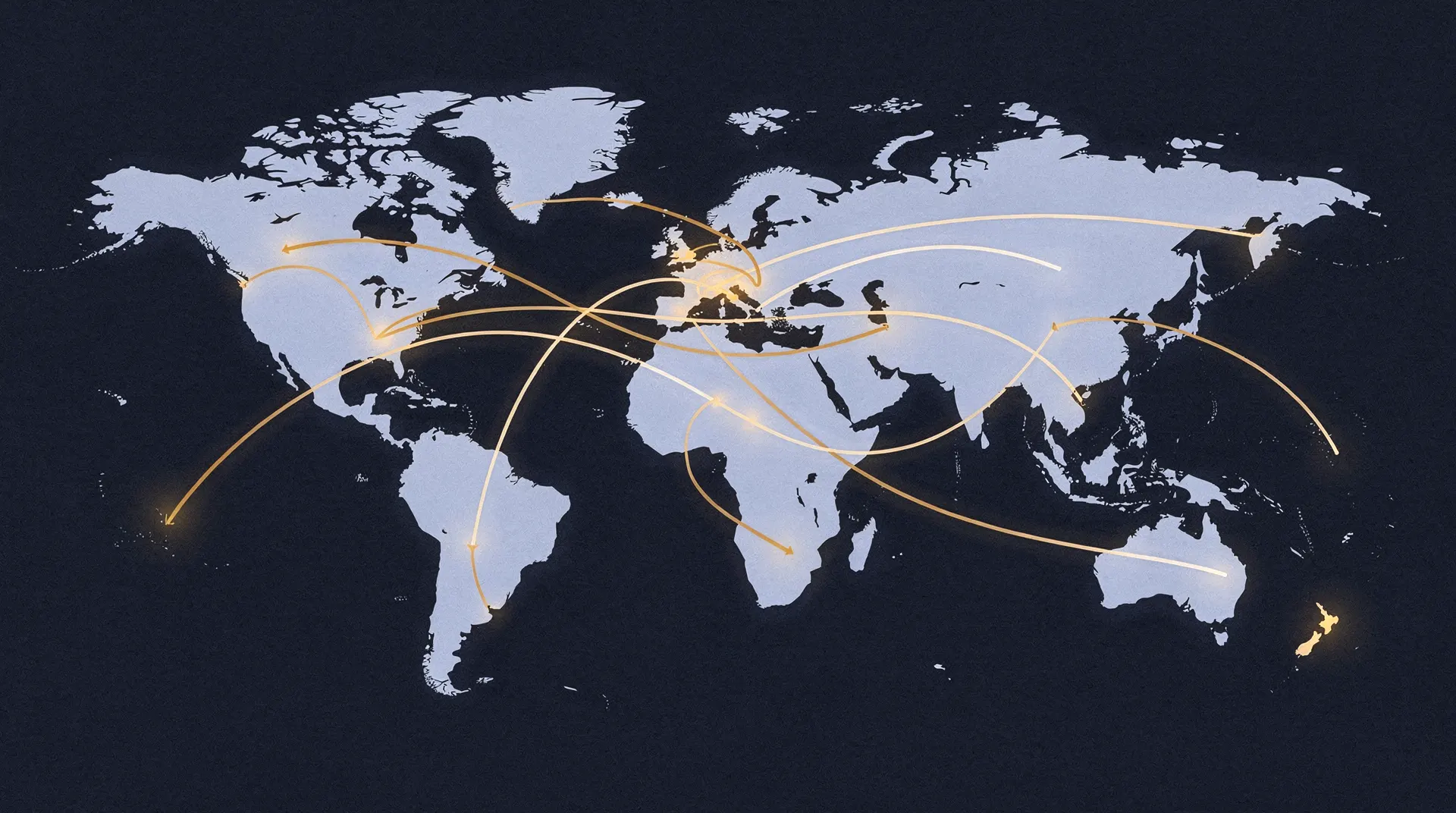
Abstract world map with interrupted glowing pathways representing sanctions

Treasury Flips the Default Setting on Iran Sanctions Exceptions

OFAC's September 10 notice moves from case-by-case licensing to presumption of denial, backed by new terror-financing designations and a six-figure enforcement settlement

The Finding

On September 10, 2026, the Treasury Department's Office of Foreign Assets Control rewrote the default rule governing who gets permission to do business connected to Iran. OFAC's updated Iran Statement of Licensing Policy replaces case-by-case review of specific license requests with a presumption of denial, and the agency said its Licensing Division immediately began denying the vast majority of outstanding Iran-related specific license applications. The notice bundles that policy change with new terrorism-related designations tied to an Iraq-based network and a $1,427,230 enforcement settlement, all under the banner of Operation Economic Outcast.

The pairing matters more than any single line item. A licensing-policy change alters how many transactions can legally happen with Iran going forward, regardless of who gets designated this week or next. Records show OFAC intends to hold that posture "until Iran changes its behavior," explicitly citing obstruction of the Strait of Hormuz, attacks on U.S. personnel and partners in the Gulf, and continued pursuit of nuclear and conventional weapons programs as the conditions for reversal.

The Evidence

OFAC's specific license process is the mechanism by which the agency has historically granted narrow exceptions to the broad Iran sanctions program, covering things like humanitarian transactions, family remittances, or particular commercial activities Treasury judged did not undermine sanctions goals. Under the prior policy, each application got individualized review. The new Statement of Licensing Policy inverts that: license requests are now presumptively denied except where required by law or in limited circumstances such as risk to life, limb, or environmental safety.

Treasury framed the change as immediate and operational, not aspirational. The notice states the Licensing Division began denying the backlog of pending requests the same day the policy published. OFAC also encouraged applicants to subscribe to its Recent Actions feed "for further updates," a signal that further tightening, rather than loosening, is the expected direction.

The policy sits inside Operation Economic Outcast, which Treasury Secretary Scott Bessent announced August 24, 2026, using the phrase "Economic D-Day." According to Treasury's own account, the operation is built around mapping the networks, facilitators, and financial channels Iran uses to smuggle oil, evade sanctions, and fund proxy groups, in coordination with the European Union, United Kingdom, and Gulf partners. Treasury has said the operation both expands secondary sanctions exposure for institutions doing business with Iran and accelerates the pace of enforcement. The September 10 licensing change is the first structural rule change under that operation to touch the exception-granting machinery itself, rather than adding new names to a list.

The Enforcement Pattern

The same notice disclosed that an individual agreed to pay $1,427,230 to settle potential civil liability for providing management consulting and advisory services to one of Iran's leading software companies, according to OFAC. The individual also received Iranian-origin dividends into U.S. bank accounts and acquired real property in Iran, per the agency's description of the case. OFAC characterized the underlying conduct as egregious and not voluntarily self-disclosed, the designation the agency reserves for violations it views as both serious and concealed rather than reported. The investigation involved the FBI's Los Angeles Field Office, Orange County Resident Agency, according to OFAC.

Separately, OFAC announced Specially Designated Global Terrorist actions against a network described in its notice as spanning Iraq, Lebanon, the United Arab Emirates, and Turkey (officially Türkiye), targeting individuals and companies OFAC says provide financial, logistical, or procurement support to Kata'ib Hizballah and Lebanese Hizballah. The designations were issued pursuant to Executive Order 13224, which covers terrorists and their supporters, and Executive Order 13902, which covers persons operating in Iran's petroleum, financial, and petrochemical sectors. OFAC's notice describes the network's activity as spanning hawala transfers, gold exchange operations, and procurement of foreign defense equipment for Iraq's Popular Mobilization Forces, which OFAC says received more than $2.6 billion in Iraqi government funding last year.

Treated as isolated items, a settlement and a designation batch are routine weekly OFAC output. Read together with the licensing change, they read as three simultaneous demonstrations of the same posture: shrink the exceptions, keep designating the support networks, and keep collecting penalties from anyone who dealt with Iran without disclosing it. Whether that pattern holds over subsequent weeks, rather than clustering on one release date, is the open empirical question, and it is answerable only by tracking OFAC's Recent Actions feed going forward.

The Response

This is official government policy and enforcement action, reported from OFAC's own published notice and enforcement release. It does not allege wrongdoing by any private party beyond what OFAC's own designations and settlement already state, and Treasury's designees are not the subject of this analysis. No right-of-reply obligation attaches to reporting a regulator's own published policy change and settlement figures; the relevant "response" on record is Treasury's own, delivered through Secretary Bessent's statement that the operation targets "those who continue to stand with the failing Iranian regime."

The same day, Treasury's Financial Crimes Enforcement Network issued a Whistleblower Bulletin soliciting tips on Iran-related illicit finance, including Bank Secrecy Act violations and sanctions evasion routed through Iranian proxies operating outside Iran. FinCEN's incentive program pays awards on information leading to enforcement actions that recover more than $1 million in penalties, which is itself a data point on how Treasury expects future Iran-related cases to be sourced: not solely internal investigation, but paid tips.

Why It Matters

For the sanctions compliance world, the licensing shift is the headline. Any bank, trading firm, or logistics company that previously relied on the specific license process for a narrow, legitimate carve-out involving Iran now faces a presumption of denial rather than a fair hearing. That raises the practical cost of any Iran-adjacent transaction structure, even ones that were previously approvable, and it widens the population of transactions that fall into ambiguous territory where firms must decide whether to proceed without a license at all.

For markets more broadly, this is a data point on geopolitical risk premium rather than a trading signal. A sustained hard-line licensing posture, combined with expanding secondary sanctions exposure for foreign financial institutions, tends to show up first in shipping insurance, correspondent banking relationships with Gulf-adjacent institutions, and the pricing of sanctions risk in energy and trade finance, well before it shows up in any single equity or commodity price.

What to watch next: whether OFAC's Recent Actions feed shows a sustained drop in approved Iran-related specific licenses over the coming weeks, which would confirm the policy is being enforced as written rather than serving as a one-time signaling notice; whether additional SDGT or E.O. 13902 designations continue to cluster around the same Iraq-Lebanon-Gulf corridor described in this notice; and whether the enforcement settlement pace ticks up, which would indicate OFAC is using its existing caseload, not just new designations, to reinforce the licensing message.

Sources & Methodology

This analysis is based on OFAC's official September 10, 2026 press release and accompanying Enforcement Release, both retrieved directly from treasury.gov and archived in full prior to publication. All figures, quotes, and characterizations of designated parties are drawn verbatim from OFAC's own published notice; no claim in this piece extends beyond what Treasury's own record states. Context on Operation Economic Outcast's August 24, 2026 launch is drawn from Treasury's own public statements referenced in the same notice. This piece does not name or characterize any private individual or company beyond OFAC's own official designation language, consistent with the geoeconomics desk's scope, which covers systems and government actions rather than independent claims against private parties.

  1. OFAC press release, "Treasury Sanctions Networks enabling Kata'ib Hizballah and Lebanese Hizballah," treasury.gov, September 10, 2026.
  2. OFAC Enforcement Release, September 10, 2026 (civil settlement, $1,427,230).
  3. OFAC Recent Actions index, https://ofac.treasury.gov/recent-actions/20260910.
  4. Treasury Secretary Scott Bessent, public remarks on Operation Economic Outcast, August 24, 2026, referenced in the September 10 notice.

Disclaimer: This content is for informational purposes only and does not constitute financial advice. Past performance is not indicative of future results. Consult a qualified financial advisor before making investment decisions. This is investigative journalism produced by MarketIntelLabs based on official government records. It is not legal advice, investment advice, or an accusation of criminal conduct beyond what is stated in the cited official record. All parties named in official designations are subject to the legal processes that govern those designations; nothing in this piece should be read as an independent allegation of wrongdoing beyond OFAC's own published record.*

Get daily intelligence delivered

Create a free account for the Daily Brief every weekday and The Week Ahead every Sunday. No card required.