Strait of Hormuz Tankers Hit Mines: Two Laden Supertankers Catch Fire as Transit Runs a Third Below Baseline

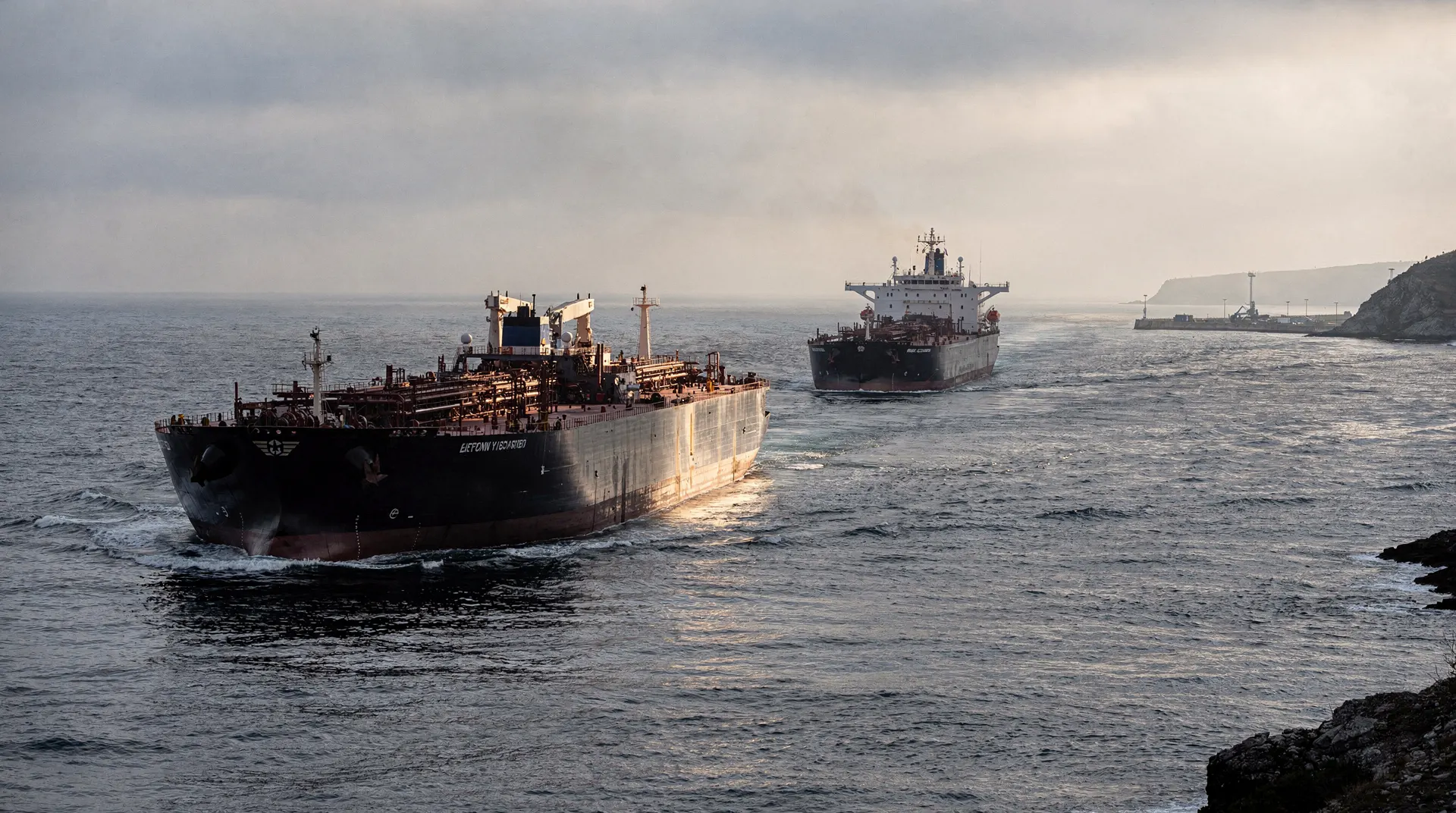
Two laden supertankers caught fire after striking naval mines in the Strait of Hormuz on Saturday, according to Iran's Revolutionary Guards Navy, pulling roughly four million barrels of crude out of active carriage in a waterway that already carries about a third less oil than it did before the war. State media, reporting through the official IRNA news agency, said each tanker was carrying about two million barrels and that the second was left immobilized after the strike. No independent confirmation of the attack had been published as of the 16:30 UTC scan on 17 October.
The Strait of Hormuz carried roughly a fifth of global oil and gas flows before the war, which is exactly why a mined-waterway escalation matters more than the individual ships involved. The United Kingdom Maritime Trade Operations tally for the week ending 16 October logged at least 12 ships attacked, with one sunk, two disabled, three damaged and half reaching port, and it warned that most attacks go unreported. UKMTO also recorded a fresh RPG strike on a tanker 78 nautical miles northeast of Jubail. Layer those incidents on top of the mine strike and the picture is a chokepoint where the volume of oil actually moving has already sagged.
Related reading: Strait of Hormuz oil shipping: crude flows recover to 10.3M bpd, attacks keep freight at $1M a day.
The numbers back that up. Kpler puts oil transits at about 11.6 million barrels per day over the seven days to 13 October, roughly 68 percent of the 17.1 million barrel-per-day pre-war baseline. Product markets responded before Saturday's mine report even landed: Brent crude touched $110 a barrel on Friday 16 October, the first time since May, and the risk premium was still widening into the weekend. A mined waterway that takes laden tanker capacity offline supports crude and, more sharply, the premium products that become scarce first when a tanker cannot finish its run.
Who pays is where the supply-chain read firms up. Global crude and refined-product buyers carry the first cost in the form of a higher clearing price. Tanker owners and operators face the second, because every strike or mine raises the war-risk premium they pay for coverage and pushes effective insurance constraints onto the routes that still run. Importers of Gulf crude, from Europe to Asia, take the third through freight. When a route becomes unsafe, the capacity that remains re-routes, lengthens voyages and commands a higher rate, and that cost lands in the barrel the buyer ultimately receives.
For the broader framework, see our crude oil coverage.
Related reading: Iran Strikes Tanker in Strait of Hormuz, Warns Wider Attacks.
The two governments are putting out contradictory claims side by side, and both belong in the record without endorsement. The U.S. Central Command says the strait is cleared of mines, that vessels are being hit by projectiles rather than mined, and that it controls the waterway, citing 400 ships and 100 million barrels transited in the past week. Iran's Revolutionary Guards, through its Persian Gulf Strait Authority, says the strait remains unsafe for vessels that do not coordinate with it. The mine-strike report is attributed to the Guards and to Iranian state media via IRNA; nothing in it is independently confirmed. Readers should hold both claims as competing assertions until a second source verifies either.
The bear case, and the reason not to chase the headline, is that this could normalize. If CENTCOM's assessment holds and the waterway is physically cleared, a two-tanker incident and a twelve-ship weekly tally, though serious, may not mark a durable step down in throughput. The 400-ship and 100-million-barrel weekly transit figures are large enough that the chokepoint is still functioning in some form. The mine claim is unconfirmed, and the crux of the dispute is that the data on flows, rather than the statements, will decide whether the shortfall widens or stabilizes in the weeks ahead.
Related reading: Two Container Ships Sink in Strait of Hormuz as Shipping Attacks Escalate.
What tips the balance is the next dated catalyst. The recovery of the two damaged tankers, or their failure to recover, sets the immediate floor under available capacity. Further UKMTO attack tallies will quantify whether the pace is accelerating or holding. Any new U.S. or Iranian escalation statement shifts the risk premium directly. And the next session open will show how much of Friday's move to $110 holds once traders price a mined incident into a market that was already a third short on the water. Watch the freight and the insurance line as closely as the barrel price; in a chokepoint story, the cost of moving oil is the real signal of whether the waterway is actually usable.
Related reading: BIMCO Puts a Number on the Freight Party: 14 Million TEU of New Ships Are Coming.
This content is for informational purposes only and does not constitute financial advice. Past performance is not indicative of future results. Consult a qualified financial advisor before making investment decisions.
Get daily intelligence delivered
Create a free account for the Daily Brief every weekday and The Week Ahead every Sunday. No card required.