Egg prices rise into Thanksgiving, far below 2025's $6 spike


A dozen large eggs averaged $2.32 in October, the Bureau of Labor Statistics reported, up about 5 cents from September yet still less than half the $6.23 peak the carton hit in March 2025. For a household that keeps eggs in rotation, the autumn tick means roughly 10 cents more a month on two dozen, not the kind of jump that blows up a grocery budget.
The reason eggs are cheaper than a year ago is the same reason they spiked in spring 2025: bird flu. The outbreak that pushed egg cartons above $6 in March 2025 forced the culling of millions of laying hens, and retail prices stayed elevated into the summer before the flock recovered. By November 2025 a dozen was $2.86. This October at $2.32, the carton is running about 19% below the same point a year earlier.
Related reading: Gas Hits $4.48 as August Shelter Costs Rise.
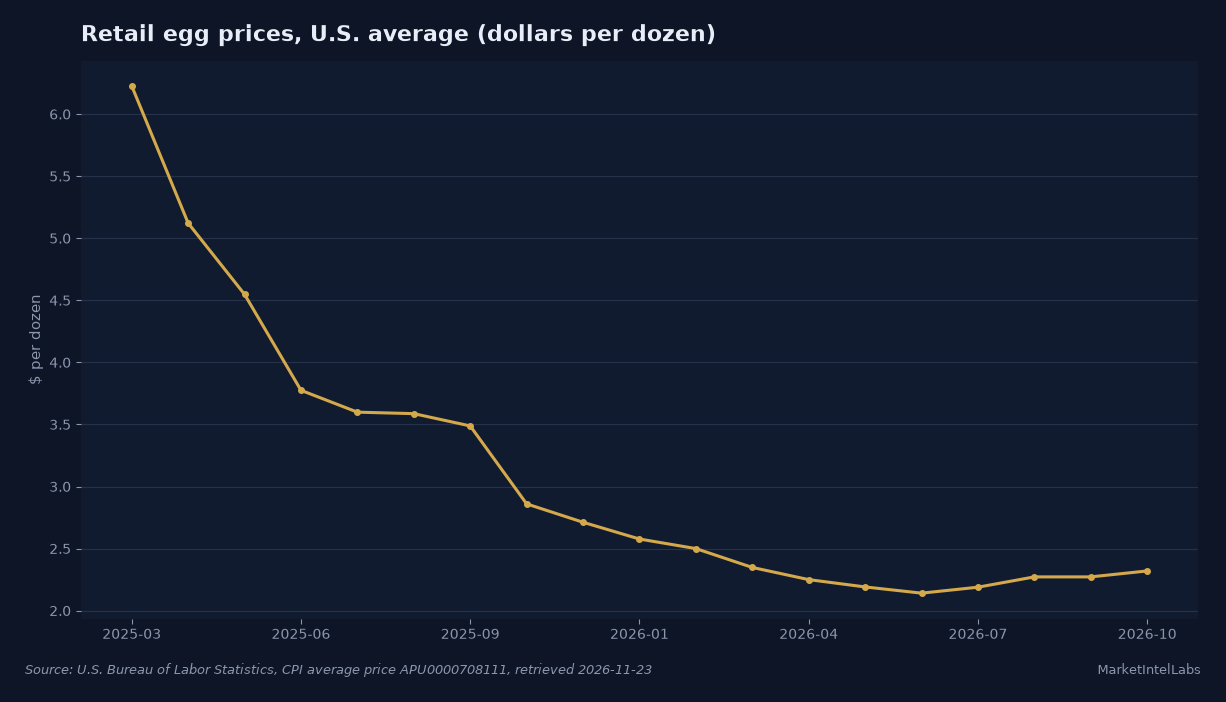
What is new is the direction. Egg prices bottomed around $2.14 a dozen in June 2026, held at $2.27 through August and September, then ticked up to $2.32 in October, a 2.2% month-over-month gain. That is a mild, seasonal-style rise, the kind groceries tend to show as holiday baking demand arrives, not the parabolic move of the 2025 outbreak.
Those monthly moves matter to the per-recipe math. A pumpkin pie needs three or four eggs, a batch of stuffing one or two, and the Thanksgiving spread usually pulls several dozen out of the pantry. At $2.32 a dozen, the baking eggs for a mid-size gathering come to a couple of dollars, versus more than $6 at the peak. The saving is real even if it is not the headline number of the season.
For the broader framework, see our Fed policy coverage.
Related reading: Gas prices near $4.28 a gallon heading into October PCE: what it means for the household bill.
The bigger line in the October grocery report was the broad food index. Food at home rose 0.35% in October to an index level of 322.9, and it sits about 2.9% above a year earlier. Most of that year-over-year increase is carrying over from the spring, when grocery inflation ran hotter. The stall in the carton price is a real offset for the typical basket, since eggs are one of the few staples that fell meaningfully over the past year.
On the energy side of the household bill, the trend is moving the other way. Regular gasoline averaged $3.81 in the week of Nov. 16, the Energy Information Administration said, down about 46 cents from the $4.27 of late October. A driver filling a 12-gallon tank is paying about $5.50 less than three weeks ago. That relief shows up at the register too, since fuel is embedded in the delivered cost of nearly everything in a grocery cart. For a household driving to a family gathering, a tank and a half of travel fuel now costs less than it did a month ago.
Related reading: Consumer inflation expectations fall to 3.7% in November.
Put the two together and the household picture this Thanksgiving is one of mixed but mostly favorable cost lines. Eggs and gasoline are both below their year-ago levels, with the fuel drop the larger of the two. Food at home, at 322.9, is the one line still running ahead, though the pace of increase has slowed from the spring, and shelter costs continue to absorb a growing share of the monthly budget for renters and recent buyers alike.
The third line on the household cost sheet, after groceries and fuel, is the price of borrowing. Credit card rates have held near their highs through autumn, and that is a cost that shows up on a statement, not a shelf. For households carrying a balance into the holiday season, a card charging 21.2%, the August commercial bank average the Federal Reserve compiles, makes a $400 gift haul cost meaningfully more by the time it is paid off, which is one reason the broader inflation story has been slow to feel like relief even as food and gas cool.
Related reading: September CPI Runs 3.7% as Energy and Shelter Stretch Household Budgets.
None of this is a forecast of where prices head next. Bird flu risk has not gone away, and the industry keeps a thin margin between flock recovery and the next outbreak. The October figure predates the full holiday shopping season, so November's report, due in mid-December, will carry the actual Thanksgiving-week grocery data. For now the practical takeaway is modest: a household that saw its egg bill shrink through the summer is starting to see it tick back up, but the carton remains far below the worst of the 2025 spike, and the fuel bill is falling at the same time.
This content is for informational purposes only and does not constitute financial advice.
Get daily intelligence delivered
Create a free account for the Daily Brief every weekday and The Week Ahead every Sunday. No card required.