CesiumAstro's $730M Series D funds a 737-satellite constellation at a $4.5B valuation

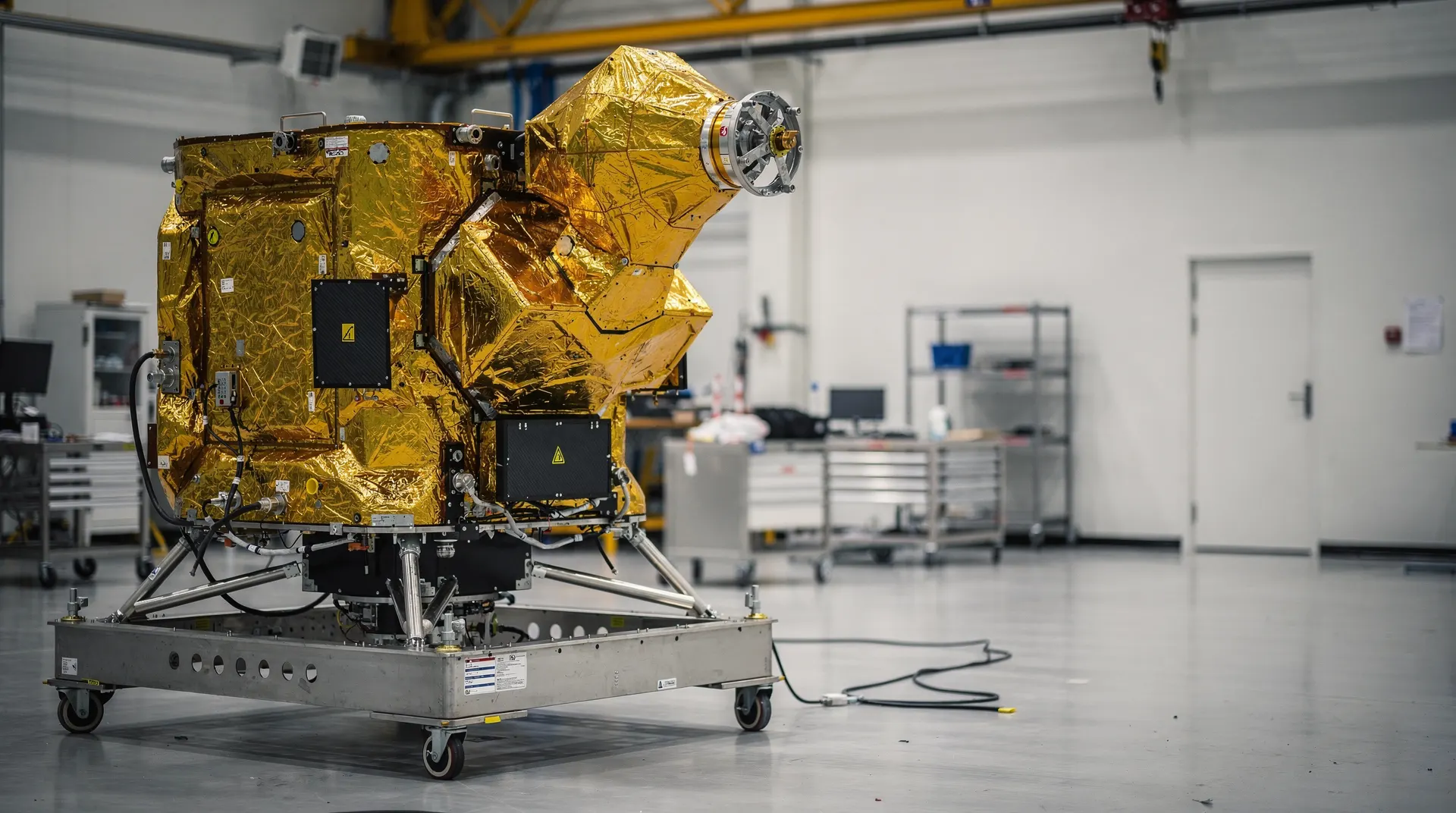
CesiumAstro closed $730 million in Series D equity financing on November 5 at a valuation above $4.5 billion, the Austin space and defense communications company said, lifting its announced 2026 capital past $1.2 billion and funding a planned 737-satellite constellation. The round is the largest single private print on the space beat this week and the freshest signal on how much capital an independent constellation operator can still command.
The equity round was led by Janus Henderson, with participation from Insight Partners, Sands Capital, Sumitomo Corporation of Americas, Woven Capital, Toyota's growth fund, Incharge Capital, Magnetar, AV and NewSpace Capital. Alongside the equity, CesiumAstro drew $100 million in debt through the Export-Import Bank of the United States and JPMorgan. The syndicate is the relevant fact for the market: Janus Henderson's Ascent platform, which originates private market capital for companies expected to move from private to public markets, structured the investment.
Related reading: Northwood Space raises $375M Series C at a $2B valuation to expand the satellite ground network.
What the money buys is a change in business model. CesiumAstro has been a supplier of antennas, payloads and, increasingly, whole spacecraft. Synchronicity moves the company into operating its own network, a 737-satellite, AI-enabled constellation built around a dynamically managed, multi-beam, multi-frequency architecture covering Ku, Ka and V band, with edge compute and multi-orbit operations. The company frames the AI as integrated throughout, handling network optimization, dynamic resource allocation and autonomous adaptation to mission requirements.
The milestone backing the raise is Element-1, CesiumAstro's first satellite, which launched and began on-orbit operations in October 2026. It is the first of eight planned Element spacecraft, and CesiumAstro said seven more launches are secured for the next deployment phase. A constellation the size of Synchronicity is a decade-plus, multi-billion-dollar build, so the round is best read as the down payment on a much larger capital requirement, with the burden of deployment milestones still ahead.
Related reading: Foundry Robotics $100M October Series A funds autonomous assembly factory.
The public comparable
The private mark lands against a weak tape. On the same day, listed space and satellite names sold off sharply as a broader technology-heavy decline hit the complex. Rocket Lab closed at $45.99 on November 5, down about 22% on the session from a prior close of $59.10, and AST SpaceMobile closed at $30.20, down about 30% from a prior close of $43.07. The ARK Space Exploration and Innovation ETF finished lower as well. The contrast matters: CesiumAstro raised at a $4.5 billion valuation into a market that is marking listed constellation and satellite operators down, which tests how much of the private appreciation investors will actually honor when these companies reach the public market.
Against the sector, the valuation sits in the top tier of privately held space and defense hardware firms. The round follows a $470 million Series C earlier in 2026, and the company has used 2026 to buy vertical integration rather than build it, acquiring Jariet Technologies for millimeter-wave RF semiconductors, 1Aardvark for national-security mission software and Vidrovr for AI-driven signal analysis. The stated strategy is control from the silicon up to mission operations, which the company argues lets a constellation adapt as requirements change.
Related reading: OpenAI funding round cut to $20 billion at $1.25 trillion valuation as UAE investors pair capital with compute.
The constraint, in numbers
The constraint is manufacturing and capital intensity. CesiumAstro announced a $500 million investment over five years to expand its Austin headquarters, including 270,000 square feet of advanced manufacturing space, with 550 jobs planned and an Austin-area workforce target above 1,000 employees by 2030. Constellation economics stand or fall on production cost per satellite, so the manufacturing build is the number to watch against the 737-satellite target, alongside the cost curve the company is not yet disclosing.
What is dated next
The next catalysts are concrete. Seven more Element launches are secured for the near deployment phase, and each adds to the on-orbit track record that underwrites the constellation claim. The Austin manufacturing expansion is a five-year program. CesiumAstro has not disclosed a deployment schedule or unit economics for Synchronicity, so the dated events are the Element launches and the staged manufacturing investment, not a first-revenue line for the full constellation.
Related reading: Starfish Space's first Otter servicing satellite fails during NASA's SSPICY mission.
For the listed complex, this is the same pattern the desk has tracked all week: fresh private capital into frontier space hardware while public names reprice. The $730 million fills CesiumAstro's near-term needs, but the round also sets a reference the sector now has to live with, and the sector closed lower on the day.
This content is for informational purposes only and does not constitute financial advice. Past performance is not indicative of future results. Consult a qualified financial advisor before making investment decisions.
Get daily intelligence delivered
Create a free account for the Daily Brief every weekday and The Week Ahead every Sunday. No card required.