Starfish Space's first Otter servicing satellite fails during NASA's SSPICY mission
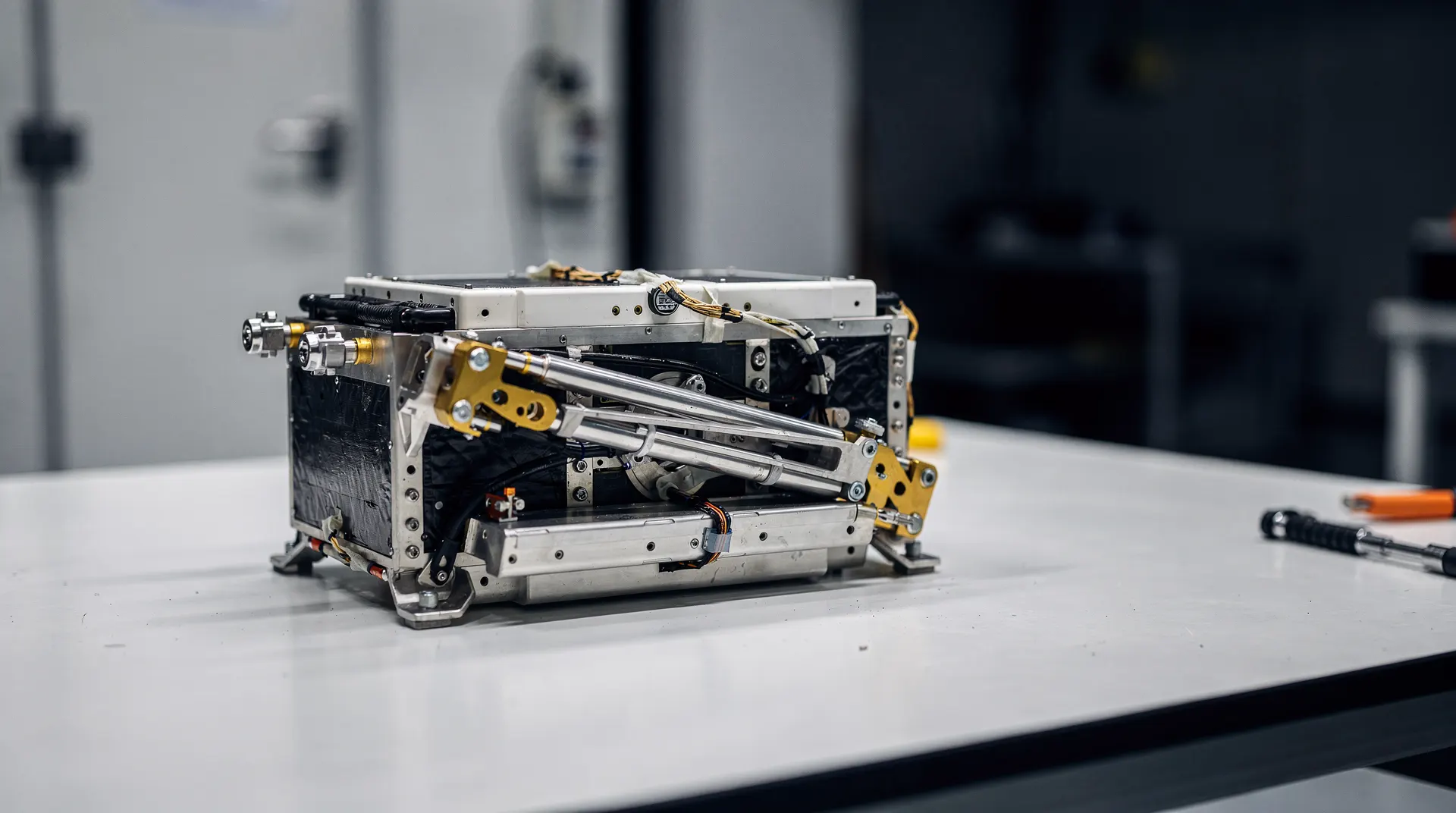
NASA confirmed Tuesday evening that it lost communications with Starfish Space's first Otter servicing spacecraft during commissioning, grounding the inaugural flight of a vehicle the Pentagon and commercial customers had already booked for at least six missions.
The loss came weeks into the Small Spacecraft Propulsion and Inspection Capability, or SSPICY, mission. Otter launched Oct 1 on SpaceX's Transporter-18 rideshare from Vandenberg Space Force Base in California. Starfish established initial communications with the 300-kilogram vehicle, then lost contact during commissioning, the phase after launch when the spacecraft powers on, calibrates instruments and prepares for operations. Joint troubleshooting by NASA and the company traced the problem to Otter's fault protection system, the onboard software that detects and responds to anomalies, which is keeping the spacecraft's radio erroneously turned off. Two-way communication has not been restored, NASA said in a Nov 3 blog post from its Ames Research Center.
Related reading: Northwood Space raises $375M Series C at a $2B valuation to expand the satellite ground network.
This was the milestone mission Starfish had been pointing to since it first teased Otter in 2023. It was the first launch and deployment of the full-size vehicle and the first time the company's navigation and propulsion technology flew as a single integrated system. SSPICY was designed to fly Otter toward inoperable, U.S.-origin spacecraft in low Earth orbit to inspect them up close, demonstrating an articulating robotic boom, advanced guidance and propulsion, and handing NASA data on orbital debris. NASA funded the demonstration through its Advanced Research and Technology Division and programs it from Ames; the mission is an industry test of the servicing, assembly and manufacturing sector that the agency wants to accelerate.
What the failure says about the business is more consequential than any demo. Starfish is a venture-backed bet that in-space servicing can be commercial, and the investors are paid in reliability. The company, founded in 2019 by two Blue Origin veterans in Tukwila, Washington, completed a Series B of about $110 million in April 2026 led by Point72 Ventures, with Activate Capital and Shield Capital as co-leaders, pushing total funding past $150 million. That money funds Otter production and a backlog that now includes a $54.5 million follow-up Space Force servicing contract, a $37.5 million Space Force docking demonstration, a satellite-disposal mission for the Space Development Agency and commercial servicing work in geostationary orbit. Co-founder Trevor Bennett told GeekWire in September the company was building toward a fleet, with at least six Otters in various stages of work and manufacturing time around 18 months per vehicle.
Related reading: Agility Robotics AGLT: first US humanoid-robot stock nears $465M.
The public comparables have been repricing this month. Rocket Lab traded at $54.43 as of early Nov 4, down about 6.7 percent over the prior five sessions, and AST SpaceMobile at $37.15, down roughly 11.5 percent, according to Yahoo Finance data retrieved Nov 4, 2026. The ARKX space ETF sat near $29.91, down about 3 percent over the same stretch. These are moves a risk-off tape explains as much as any single mission, but the Otter loss lands at a fragile moment for a subsector where every failed first vehicle is read as evidence that the entire servicing thesis is early.
It is worth separating the mission outcome from the company's market position. A servicing failure of a first article is not the same as losing a priced contract. None of the revenue attached to Starfish's government or commercial backlog depended on this specific flight, which was a NASA-funded technology demonstration rather than a customer deliverable. Starfish still has Otter Pup 2 closing on a docking test in orbit and has said SSPICY learnings carry into its docking missions. The next dated catalysts are the Space Force docking demonstration and the disposal mission, both of which now carry the weight of a company trying to prove its hardware works the first time it must.
Related reading: Tutor Intelligence raises $75M Series B led by a16z to rent robot workers by the hour.
The constraint the industry learned again Nov 3 is software fault protection, not propulsion or docking. Otter's failure appears to be a vehicle safing the way spacecraft do when they detect a problem: it powered down communications to protect itself, and neither NASA nor Starfish has found a way to turn the radio back on. That is the kind of bug that is fixable in later units but fatal to the inspection campaign this year, and it is exactly why a two-and-a-half-week commissioning window exists. Readers should watch NASA and Starfish for a recovery date or a declared end to the mission, and watch Starfish's customers for how they write the next contract's acceptance terms. Every servicing startup now prices a slightly higher chance that their first real vehicle safes itself instead of doing the job.
Related reading: Hypersonica Series B raises €100M for a European hypersonic missile.
This content is for informational purposes only and does not constitute financial advice. Past performance is not indicative of future results. Consult a qualified financial advisor before making investment decisions.
Get daily intelligence delivered
Create a free account for the Daily Brief every weekday and The Week Ahead every Sunday. No card required.