Hypersonica Series B raises €100M for a European hypersonic missile
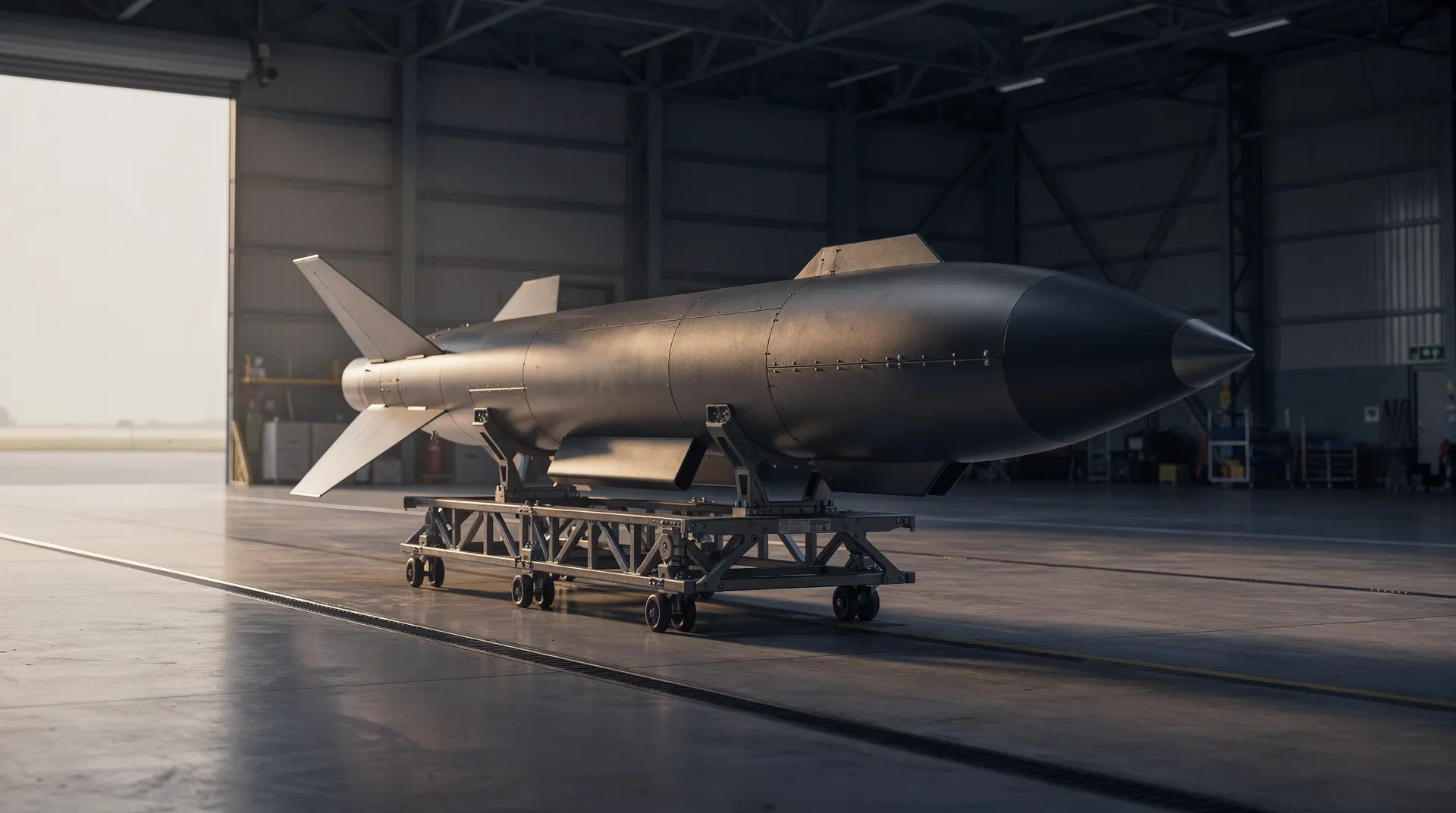
German and British defence startup Hypersonica has raised €100 million (about $112 million at the November 2 euro of 1.12) in a Series B led by US venture firms Lightspeed Venture Partners and General Catalyst, with London-based Plural also in the syndicate. The Munich-area company, based in Feldkirchen, will use the money to turn its HS-1 prototype into a deployable hypersonic weapon and reach mass production by 2029, it announced on November 2, reported by Der Spiegel and Dealroom. It is the largest private bet to date on Europe building its own hypersonic strike capacity rather than importing American or allied designs.
The money buys runway, not a working weapon. Hypersonica says the HS-1 prototype reached six times the speed of sound on its February test flight in Norway, but flew only 300 kilometers and carried no guidance system. Chief executive Philipp Kert has told Der Spiegel the missiles are meant to strengthen European deterrence against a potential Russian attack, and that the first guidance and maneuverability tests come only in 2027. Mass production by 2029 is an aggressive target for a vehicle that has not yet demonstrated it can steer.
Related reading: Foundry Robotics $100M October Series A funds autonomous assembly factory.
Who is paying and what they want matters as much as the headline number. Lightspeed and General Catalyst are the largest US venture names yet to put capital into a European hypersonic startup, and their check validates the defence-tech thesis alongside the early backers Plural, the German Federal Agency for Breakthrough Innovation (SPRIND), and 201 Ventures. The government angle is just as concrete. German defence minister Boris Pistorius visited Hypersonica's office at the end of October, and Germany and the United Kingdom are named as possible first customers as Berlin and London prepare to divide development of new long-range missiles, a plan Politico Europe reported on November 1. NATO expects European hypersonic missiles capable of striking targets about 2,000 kilometers away.
The public comparable is the listed defence complex. Kratos closed at $41.09 on October 30 ahead of the round, and it is the closest free-floating defence-technology proxy in the sector; Lockheed Martin closed at $636.95 and RTX at $199.80 the same day, and the German champion Rheinmetall ended near €1,037.60. None of those names moved on Hypersonica's private round, which is the point: this is venture capital priced against a programme bet, not against output. Dealroom notes the round ranks in the top 7% by size among all-time Series B hardware rounds in Germany, a sample of 94 deals, and puts it in the same category as the US hypersonic startups Castelion, which raised a $350 million Series B in December 2025, and Destinus, which has raised over $400 million at a valuation above $1.7 billion.
Related reading: Cohere Series E targets CAD $7 billion as Canada takes an equity stake for sovereign AI.
The constraint is the engine, and it is the reason the 2029 target has a wide error bar. The HS-1's first flight used an engine developed by the German Aerospace Center (DLR) and Bayern-Chemie, but DLR has ended its cooperation with the startup, according to Der Spiegel. Hypersonica now plans to develop its own solid-propellant engine, which Kert calls a critically scarce component for NATO. The company intends to run its next flight tests in 2027 focused on guidance and maneuverability, and the round assumes those succeed on a first scale-up, not a third attempt.
What happens next is dated. Hypersonica's next test campaign is slated for 2027, with mass production targeted for 2029, and the first purchase decision will hinge on the German and British joint deep-strike programme taking shape through 2027. For investors tracking the frontier, the number that matters is not the €100 million alone but the step-up from the €23 million Series A in February and the presence of two marquee US investors: it prices the gap between a prototype that can go very fast in a straight line and a missile that can hit something, and it says European governments and US capital both believe that gap will close. The test in 2027 is the date that tells whether the bet was right.
Related reading: WEC Energy capital plan jumps to $47.5 billion on Microsoft and Oracle data center demand.
Related reading: Agility Robotics AGLT: first US humanoid-robot stock nears $465M.
This content is for informational purposes only and does not constitute financial advice. Past performance is not indicative of future results. Consult a qualified financial advisor before making investment decisions.
Get daily intelligence delivered
Create a free account for the Daily Brief every weekday and The Week Ahead every Sunday. No card required.