Leading Economic Index falls 0.3% in October as building permits hit a 2020 low

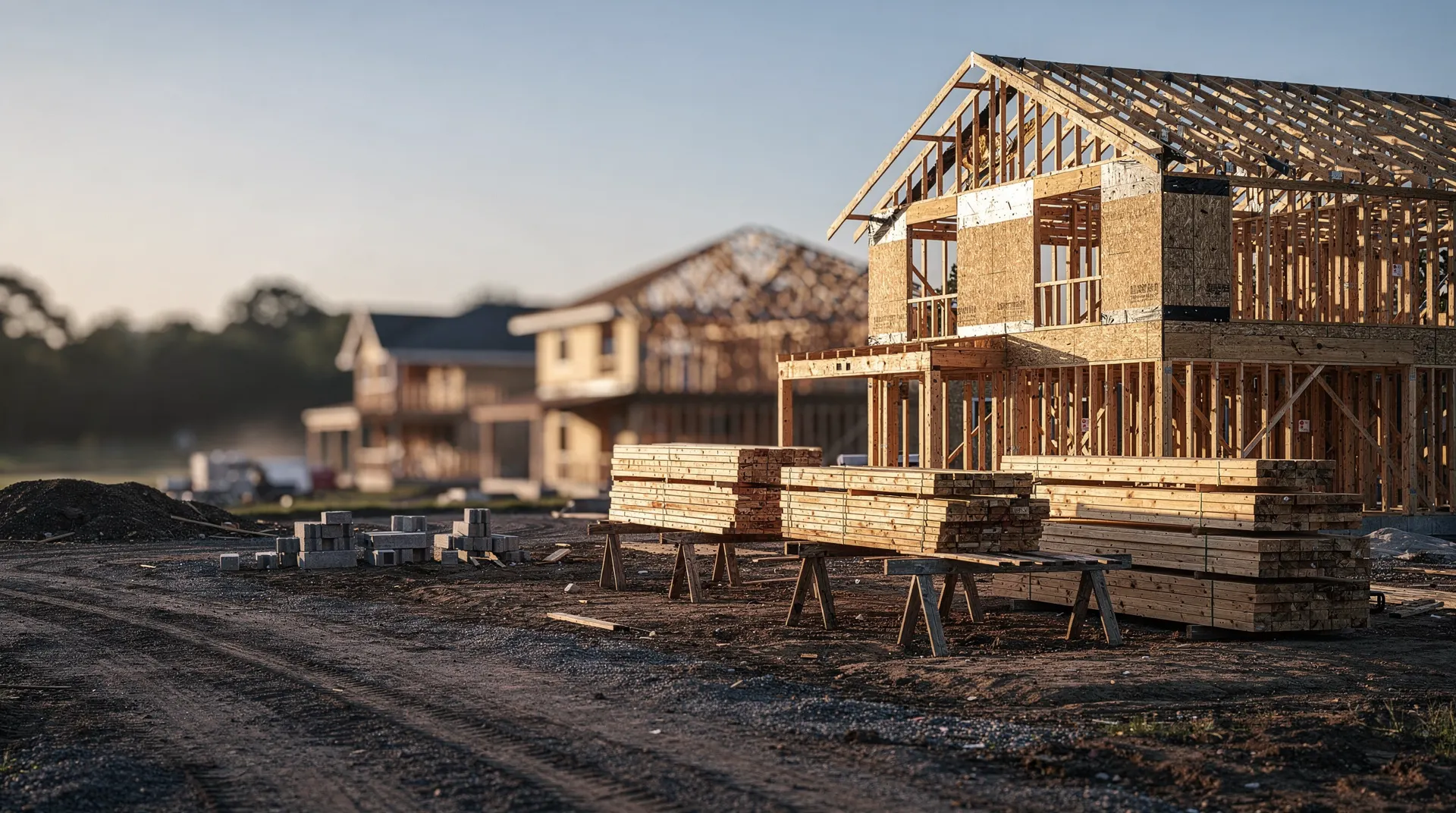
The Conference Board's Leading Economic Index slipped again in October, and the composition of the decline matters more than its size. The index fell 0.3 percent to 99.3 after a flat September, with building permits the biggest single drag at their weakest reading since May 2020. The other negative contributors were consumer expectations for business conditions, average hours worked in manufacturing, and manufacturers' new orders for nondefense capital goods, which is why the reading reads as a household-and-housing slowdown more than a factory collapse.
The method behind the index
The LEI is a composite of ten components, each normalized and weighted into one number with 2016 set as the base of 100. The inputs are average weekly manufacturing hours, initial jobless claims, new orders for consumer goods and materials, new orders for nondefense capital goods, the ISM new orders index, building permits, stock prices, the Leading Credit Index, the interest rate spread, and consumer expectations for business conditions. The Conference Board deliberately mixes hard market and production data with survey-based expectations so that no single sector dominates the signal. Because the inputs are the ones that typically turn before the broad economy, a reading this month should be treated as a signal about where growth is heading over the next six to nine months, not where it stands today. The index is released monthly alongside two companion series, the coincident index, which tracks where the economy is now, and the lagging index, which confirms past turning points.
Related reading: Why did housing starts jump 9.9% as building permits fell?.
The two numbers that matter
The headline pair is 99.3 and negative 0.3 percent: the index level and the month-over-month change. A level of 99.3 means the composite sits just below its 2016 base, and the 0.3 percent decline extends a stretch of softness after September printed unchanged. October was the second straight month without growth at the margin, and the drop is broad based rather than a single-sector wobble.
The six-month trend is the number that changes the story. Between April and October the LEI grew 0.1 percent, a small reversal of the 0.6 percent decline recorded over the prior six months, October 2025 through April 2026. So the index is no longer falling on a six-month basis even though the latest single month was down. That distinction is what separates a genuine downturn signal from a one-month wobble, and it is why the Conference Board frames the reading as slower expansion rather than a recession call.
For the broader framework, see our Fed policy coverage.
Related reading: PPI report: October producer prices rose 6.5%, the most in four years.
The coincident index backs up that reading. The Conference Board's Coincident Economic Index held steady at 115.1 in October after a downward revised 0.1 percent gain in September, and it rose 0.7 percent over the six months through October, up from 0.4 percent growth in the prior stretch. The coincident index tracks payroll employment, personal income less transfer payments, manufacturing and trade sales, and industrial production, the inputs used to date recessions, and every component except industrial production made a positive contribution last month. In short, current conditions still look consistent with expansion; the leading index is what is flagging the slowdown ahead.
Who it hits
The building permits component is the most concrete signal, and it lands directly on the housing and construction finance complex. Permits fell across categories and regions compared with both September and a year ago; the sole exception was the Midwest, where total permits rose slightly since September and 8.1 percent over the past twelve months. With mortgage financing still expensive and the Federal Reserve's bias toward a December rate increase keeping long-end yields elevated, homebuilders and the lenders that fund land and construction are the first to feel a permits contraction, because permits lead housing starts, and starts lead demand for everything from lumber to appliances to moving services. The same rate sensitivity extends to consumer credit and any cyclical sector that carries high debt on its balance sheet, since a still restrictive Fed keeps the cost of rolling that debt high.
Related reading: Jobless claims near a low at 194,000 as the Fed weighs a +29,000 payroll month on October 28.
The labor market gets a softer but earlier warning. Average weekly manufacturing hours are one of the classic leading inputs: factories cut hours before they cut payrolls, so a sustained decline here tends to precede weaker employment reports. Nondefense capital goods orders sliding means business investment is cooling, and the ISM new-orders index sitting flat reinforces a picture of a manufacturing sector that has stopped accelerating. Consumer expectations turning negative matters for the spending side of the economy, because household sentiment feeds directly into the discretionary purchases that still carry the expansion.
The Conference Board's broader view keeps the signal away from recession. The LEI's six-month growth rate remains positive, which the group reads as continued expansion that is increasingly investment-led and paired with softer household demand. Its forecast embeds a deceleration rather than a downturn: real GDP growth of 2.3 percent in 2026 and 2.1 percent in 2027.
Related reading: Pending Home Sales Fall to Record Low 63.0 in October.
The next confirmations come quickly. Watch whether building permits keep sliding into the winter, whether average manufacturing hours hold, and how the Federal Reserve positions at its December meeting. The LEI's six-month trend is positive for now, but it rests on a narrow, investment-led base; another month of falling permits and hours would erase that cushion and make the index's direction unambiguous.
This content is for informational purposes only and does not constitute financial advice. Past performance is not indicative of future results. Consult a qualified financial advisor before making investment decisions.
Get daily intelligence delivered
Create a free account for the Daily Brief every weekday and The Week Ahead every Sunday. No card required.