Gas Prices Ease to $4.33 a Gallon as September Peak Fades


Regular gasoline pulled back to a national average of $4.33 a gallon in the week ended Oct. 12, the third straight weekly decline and roughly 15 cents off the late-September peak, even as the September CPI headlined a 9.1 percent monthly surge in the same product. The weekly pump data is telling households something the monthly snapshot cannot: the spike at the meter is already starting to unwind, but from a level that still stings.
The U.S. average for regular gasoline, per the Energy Information Administration weekly survey, stood at $4.331 a gallon for the week ended Oct. 12. That is 0.5 percent below the prior week, and it marks the third consecutive weekly step down from the $4.478 reading of the week ended Sept. 21. On a 12-gallon fill, the move back from that peak is worth about $1.76, a modest but real break for a household that filled a tank every week through the spike.
Related reading: Gasoline Prices Jump as WTI Near $97 and Hormuz Premium Hits the Pump.
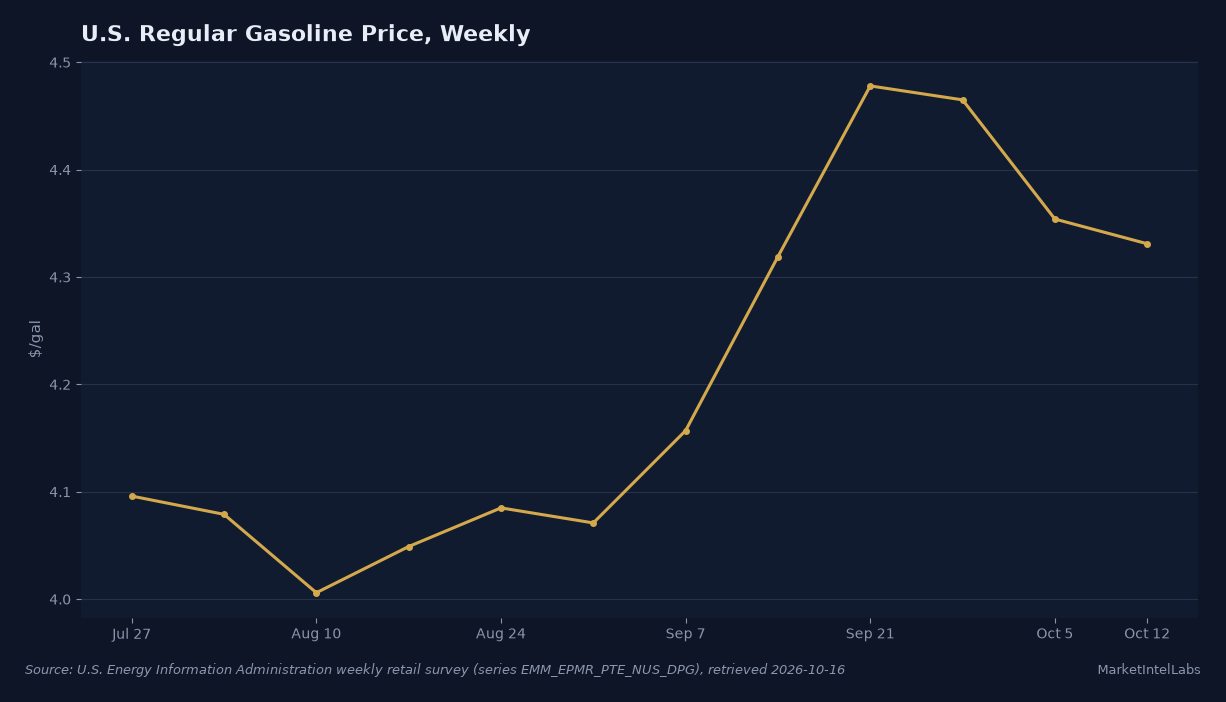
Before anyone reads this as a return to normal, the year-over-year comparison is the uncomfortable part. The same EIA series shows regular gasoline at $3.061 a gallon in the week ended Oct. 13, 2025. The current $4.331 is $1.27 higher, an increase of about 41 percent. A 12-gallon fill that cost $36.73 twelve months ago now runs $51.97, an extra $15.24 per visit, and the visit still comes more often than a paycheck. The retreat from the September peak has done nothing yet to close that gap.
Why is the weekly data moving down while the September CPI showed gasoline jumping 9.1 percent in a single month? The CPI is a monthly average that captured the sharp run-up inside September, including the stretch that produced the $4.478 weekly peak. The EIA print reads the meter after that run-up crested, and it shows the wholesale move easing as refinery runs and import flows caught up. The two series are not in conflict; they are the same episode at different resolutions. What matters for a budget is which way the freshest data points, and it points down.
For the broader framework, see our Fed policy coverage.
Related reading: Gas Hits $4.48 for the First Time Since 2022, and This Is the Season It Usually Falls.
Diesel is the exception that keeps the cost story alive. The national diesel average was $6.18 a gallon in the week ended Oct. 12, barely off its own recent high and still near the top of its two-year range. Diesel does not fill many family cars, but it moves the trucks that carry groceries, clothing and everything else to a store shelf. A pump price that will not fall keeps a quiet tax on every delivered item, which is exactly why the route between a barrel and a carton matters as much as the route to a car. My colleague Sofia Almeida covers the freight side of that spread on the supply chain desk.
The distinction between gasoline and diesel also explains why families feel differently depending on what they buy. A commuter who drives a gasoline car is seeing a small weekly release. A household paying for heating oil, or paying the marked-up shelf price that diesel hauling produces, is not. The diesel spread over regular gasoline ran about $1.85 a gallon, and wholesale heating cost moves on a different clock entirely.
Related reading: Diesel Tops $6 as Gas Hits $4.32: The Bill Moves Downstream.
On the housing side of the household ledger, there is no such relief. The Freddie Mac 30-year mortgage average held at 7.40 percent in the Oct. 15 release, after housing desk colleague Daniel Okafor covered the affordability squeeze that a rising rate compounds. Rent indices have not moved into retreat the way pump prices have, so the same week that offers a small gasoline reprieve offers none on the two largest lines of a typical budget. That is the shape of this inflation: uneven, driven by energy at the margin.
What is dated next for a reader to watch. The next EIA weekly retail gasoline and diesel print lands Monday, Oct. 19, and it will show whether the easing holds or the move down stalls at the $4.30 area. Beyond that, the Federal Reserve meets Oct. 27-28, and markets have been repricing the odds of further action after the hotter-than-expected September inflation data. The pump is not the whole story, but it is the fastest-moving household number available between now and the FOMC.
Related reading: Gas Hits $4.48 as August Shelter Costs Rise.
The takeaway is a split screen. Weekly data says the worst of the gasoline spike is behind the pump, with three down weeks and a fourth expected if the pattern holds. Year-over-year data says the level is still historically punishing, up 41 percent from last October. A household reading this should treat the near-term easing as real but modest, and should not confuse a three-week pullback with a structural decline in the cost of driving. Watch Monday's print, then the Fed, for the next signal.
This content is for informational purposes only and does not constitute financial advice. Past performance is not indicative of future results. Consult a qualified financial advisor before making investment decisions.
Get daily intelligence delivered
Create a free account for the Daily Brief every weekday and The Week Ahead every Sunday. No card required.