Gas Hits $4.48 for the First Time Since 2022, and This Is the Season It Usually Falls

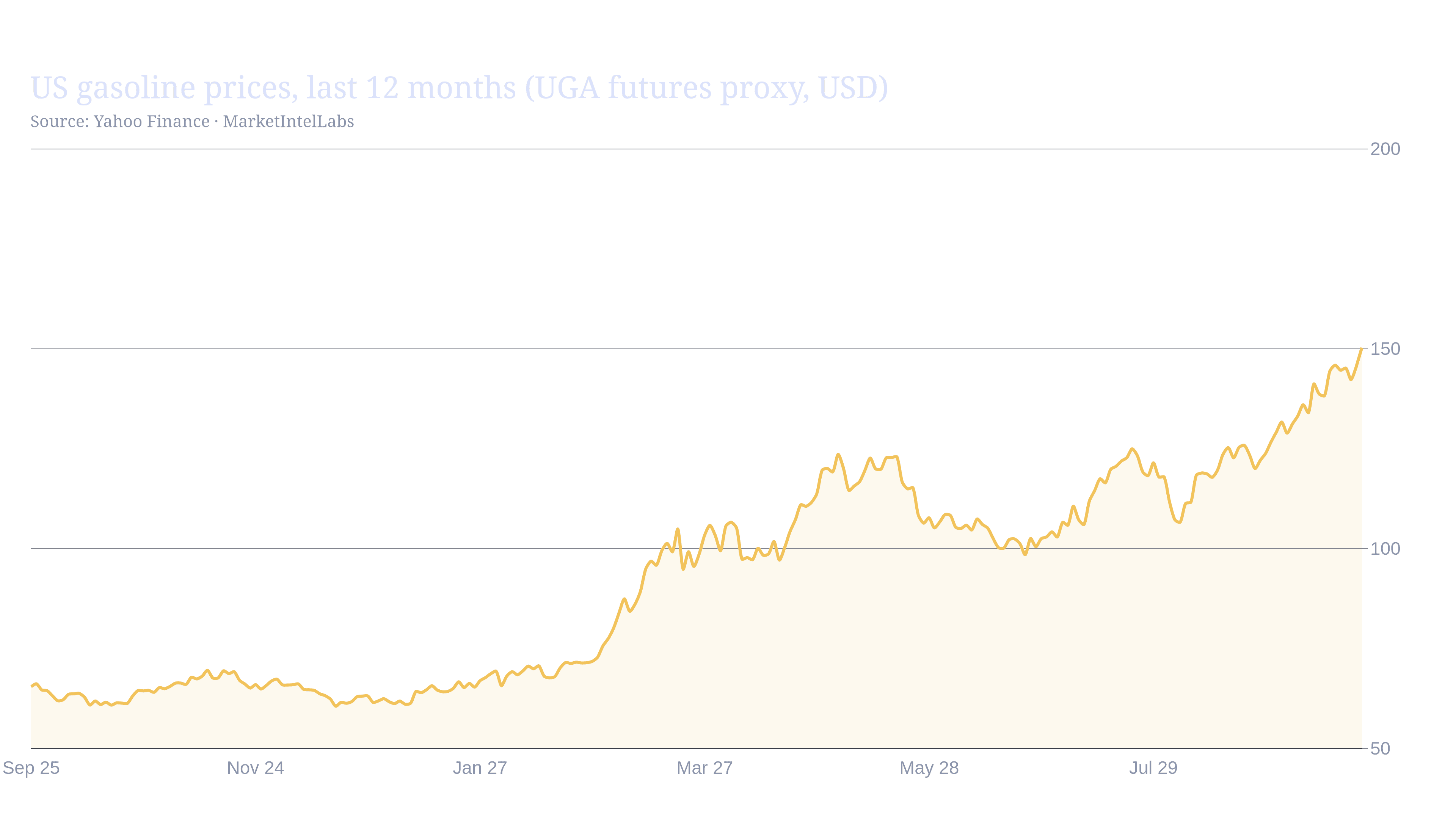
A gallon of regular gasoline cost a national average of $4.478 in the week ending Monday, September 21, the highest weekly EIA print since the week of July 18, 2022, according to Energy Information Administration data published through FRED. The pump moved 16 cents higher in a single week, from $4.319 to $4.478, and sits 41 percent above the $3.173 average of a year ago. What makes it sting is the calendar: this is the season when prices usually fall.
The driver has not changed since spring: the conflict with Iran keeps most ship traffic through the Strait of Hormuz stalled, and about a fifth of the world's oil normally moves through that passage. AAA's public affairs director Marie Dodds put it plainly in a September 21 note: markets do not appear to be optimistic that the shipping channel will fully open anytime soon, so pump prices will stay elevated. Crude is the input that matters, and it is running near $100 a barrel where it sat near $67 the day before the conflict began in late February.
Two facts make this round different from a normal autumn. First, the direction. Gasoline typically loses 20 to 30 cents between Labor Day and Thanksgiving as summer blending requirements end and demand drops. This year the national average climbed from $4.05 at the end of August to $4.48 by September 24, per AAA, a 43-cent rise in four weeks during the seasonal downswing. Second, the level relative to history. The week of September 21 was the priciest September week in the EIA's weekly record; prior Septembers in the series never came close to $4.50.
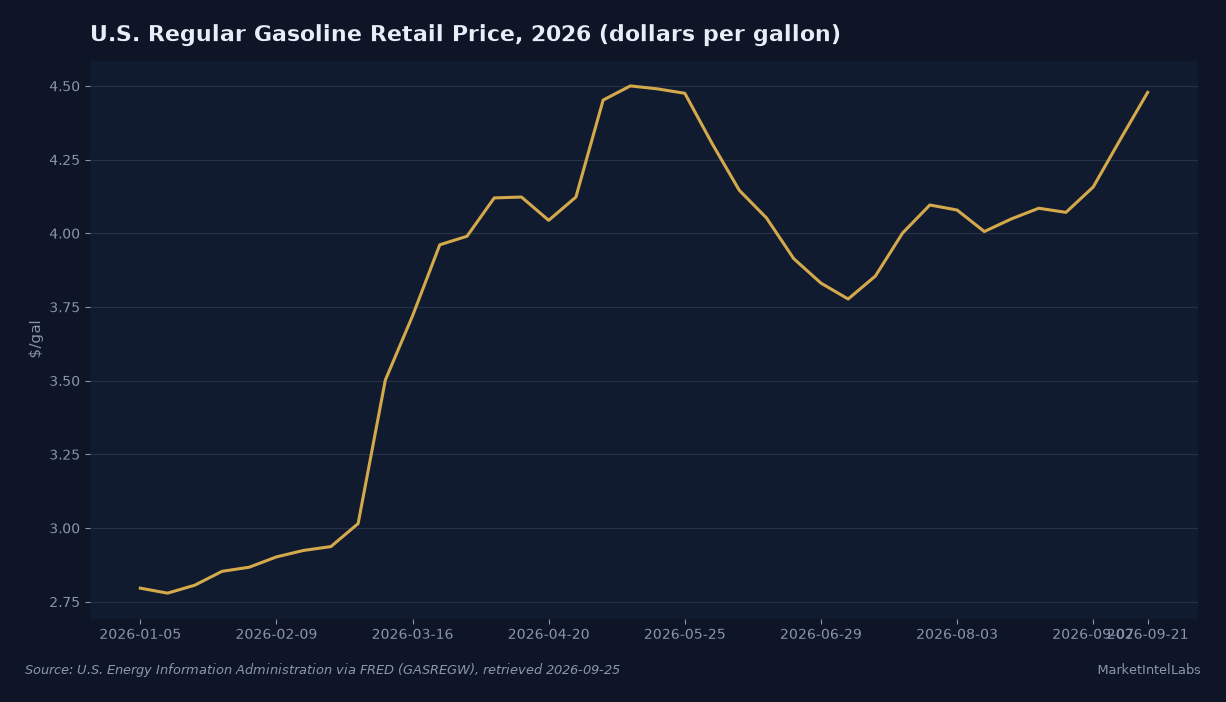
What this does to a household budget is simple arithmetic. The EIA series averaged $4.478 for the week of September 21 against $3.173 a year earlier, so a two-tank month (roughly 24 gallons) costs about $107.50 where it cost $76.15. That is roughly $31 a month, or $375 a year, taken straight out of discretionary spending for a typical driver, before any of the second-order effects on delivered goods.
The grocery aisle is the quiet second victim. Diesel already set its own record at $6.529 a gallon for the week of September 21, as the EIA's weekly survey showed, and every shelf item that arrives by truck carries a slice of that. The CPI food-at-home index, the government's measure of grocery prices, was up 2.2 percent over the year to August, which looks tame until you remember it is compounding on three years of double-digit grocery inflation earlier this decade. Food away from home is where the diesel bill lands more visibly over time.
The August CPI report, released September 11 by the Bureau of Labor Statistics, already shows the energy shock reaching the headline: the overall index rose 0.4 percent in the month and 3.4 percent over the year, with the energy commodities index up 16.3 percent year over year. Shelter, the largest single item in a household budget, added 0.26 percent in August and runs 3.0 percent above last year. Food at home was flat on the month. The point is that gasoline is doing the noisy work in the inflation print while rent does the slow work underneath it.
Consumers have noticed, and the surveys are moving faster than the indices. The University of Michigan's preliminary September reading put consumer sentiment at 47.8, down from 51.7 in August, and year-ahead inflation expectations jumped from 4.0 to 4.6 percent, the highest since June. Survey director Joanne Hsu attributed the deterioration to a resurgence in fuel prices and trade tensions, and said consumers anticipate greater pressures on their pocketbooks to come. When households expect pump prices to keep rising, they pull spending forward and cut elsewhere, which is how an energy shock leaks into the broader economy.
The countervailing data point is crude itself. WTI settled at $96.41 on September 22, about $5 below the prior session's level and well off the April peak near $113, per EIA spot-price data. Wholesale gasoline follows crude with a lag measured in days, so the pump has room to flatten if the strait stays merely tense rather than closing further. The AAA rule of thumb is that every $1 move in a barrel of crude shifts retail gasoline by about 2.4 to 2.5 cents, a transmission that already pushed Midwest gas prices up 40 cents last week on the Joliet refinery restart and Hormuz, so a sustained drop below $90 would take roughly a dime off the pump over a few weeks. That is the bull case for the household budget, and it is a modest one.
The bear case is the calendar plus the supply plumbing. The Saudi-East Arabia pipeline bypass around the strait has reportedly been knocked out by drone strikes, which means more crude has to move by tanker through the contested waterway rather than around it. Refiners are also running into the autumn maintenance season, when utilization dips and product inventories thin. The September 13 week data cited by AAA showed gasoline production falling from 9.8 to 9.3 million barrels a day even as demand held near 8.5 million. Tight product supply in October is how a $96 crude market still produces a $4.60 pump.
What is dated next on this beat: the EIA's next weekly gasoline survey lands Tuesday, September 29, and the September CPI report arrives October 13. The energy index will carry most of the month-over-month move again. If the national average holds above $4.50, headline inflation prints higher than the core rate implies, and the Federal Reserve's inflation fight gets a gasoline-shaped complication. For the reader, the practical math is this: a weekly fill-up is costing $8 to $12 more than it did in January, the average 30-year mortgage climbed to 7.03 percent in Freddie Mac's September 24 survey, and household budgets are getting squeezed from both ends of the drive-and-house split at once. Watch our crude oil coverage through the strait, because the pump simply follows it.
This content is for informational purposes only and does not constitute financial advice. Past performance is not indicative of future results. Consult a qualified financial advisor before making investment decisions.
Get daily intelligence delivered
Create a free account for the Daily Brief every weekday and The Week Ahead every Sunday. No card required.