Gasoline Rises a Third Straight Week to $4.319 and September CPI Will Book It

The national average for a gallon of regular gasoline climbed to $4.319 in the week of September 14, the third straight weekly increase and the highest print since late May, according to the Energy Information Administration's weekly retail survey. A week earlier it was $4.157. Two months ago it was $3.777. A year ago this week it was $3.168, which makes the year-over-year gap 36 percent. That is not a rounding error on a household budget. It is a line item moving the wrong way at the worst time of year for it.
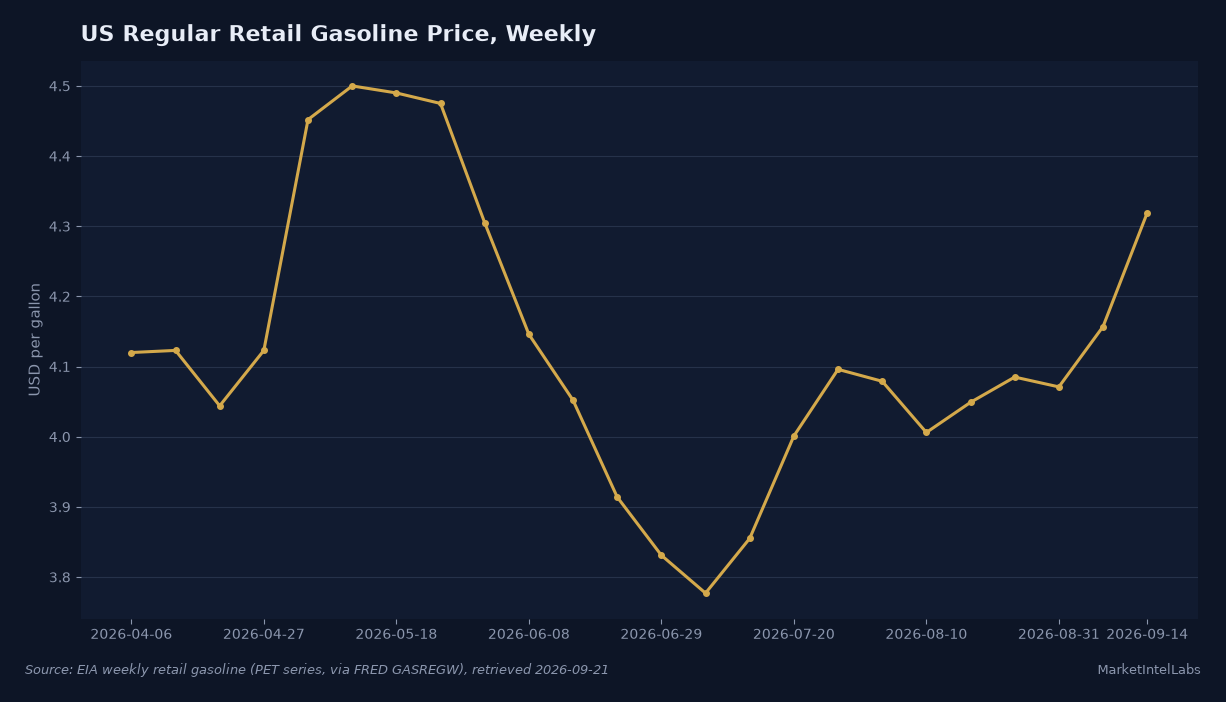
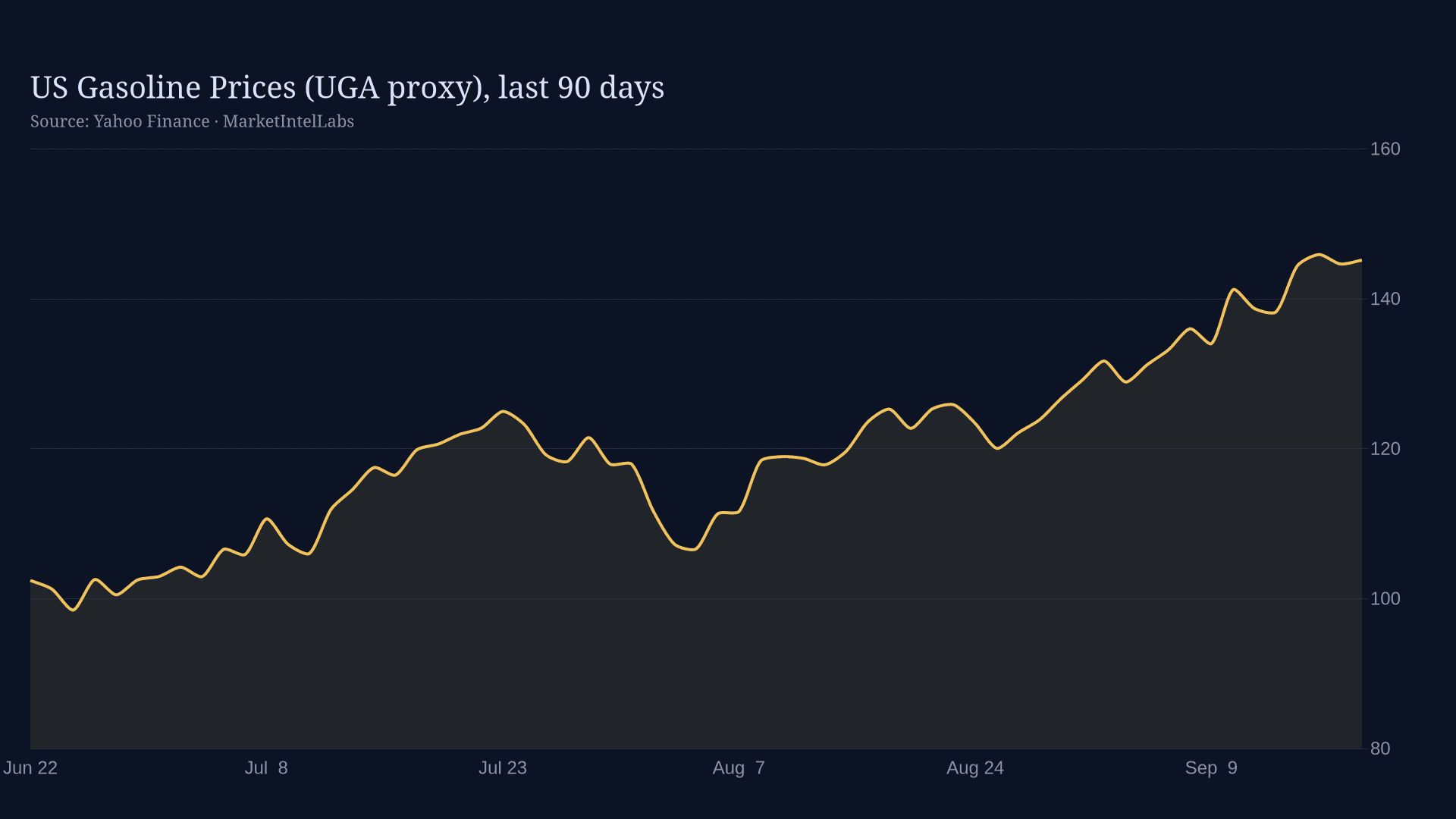
The shape of this year's chart is the story. Pump prices peaked near $4.50 in mid-May, bled down through June and July as refinery output recovered, and touched a summer low of $3.777 the week of July 6. Since then the line has bent upward almost without interruption. Crude costs are the main driver: the commodity desk's coverage has tracked WTI near $97 with a persistent risk premium tied to the Strait of Hormuz, and refiners pass that through to the pump within two to three weeks. When crude holds near these levels, the weekly EIA print stops being noise and starts being a trend.
Translate the weekly move into a household line. A driver who fills a 14 gallon tank once a week paid about $58.20 last week and about $60.47 this week, a $2.27 difference in seven days. Against last September the same fill costs $16.11 more. Over a month that is roughly $64 of extra gasoline spend per single-tank household, and it lands on top of electricity bills that the August CPI put up 6.8 percent month over month. The consumer-energy squeeze is now running on both fronts: what you burn in the car and what the utility charges for the house.
The CPI machinery will capture this with a lag, and the lag matters. August CPI, released September 16, showed the energy index up 2.1 percent on the month and headline inflation at a 3.0 percent year-over-year pace per BLS data. But the August survey window closed before most of this month's pump climb. The September CPI, due in mid-October, will book the September 7 and September 14 weekly prints in full. If pump prices merely hold at $4.32 through the end of the month, September's gasoline contribution alone should add roughly 0.15 to 0.2 percentage points to the monthly headline move, before any further rise. If the Hormuz premium widens again, the figure grows from there.
Food at home is the counterpoint worth keeping in view. The August food-at-home index was essentially flat on the month and up 1.8 percent year over year, the mildest grocery inflation in the current cycle. Groceries have been the calm lane while energy is the storm lane. That mix matters for how households feel the next two months: a family can absorb a flat grocery bill far more easily than a pump price that rises every Monday it checks.
The other line moving at the same time is the cost of borrowing. Freddie Mac's 30-year fixed rate hit 6.95 percent in the week of September 17, the highest since January, up from 6.26 percent a year ago this week. On a $400,000 loan that difference is about $182 a month. Energy and mortgage rates are unrelated costs on the household ledger, but they share a driver in the energy market, because crude-driven inflation expectations are part of what has pushed long rates up this month. When both climb together, the household budget has no offsetting relief to point at.
What is dated next: the EIA weekly retail gasoline update for the week of September 21 lands next Monday, September 28, and it is the first read on whether the third weekly rise becomes a fourth. The September CPI is due in mid-October and will carry this month's pump climb into the official inflation record. The September jobs report, due the first Friday of October, will show whether hourly pay is keeping pace; August's real hourly earnings were already down slightly from a year earlier per the BLS, so a rising gasoline line is eating into paychecks that have not grown.
The data suggests the next several weeks are shaped, not random. Crude is near $97, refinery margins are firm, and the seasonal slide that usually cools pump prices after Labor Day has not shown up. Watch Monday's EIA print. If it prints above $4.40, the September CPI surprise becomes likely; if it finally turns down, households get a late-year break they have not seen since July.
This content is for informational purposes only and does not constitute financial advice. Past performance is not indicative of future results. Consult a qualified financial advisor before making investment decisions.
Get daily intelligence delivered
Create a free account for the Daily Brief every weekday and The Week Ahead every Sunday. No card required.