August CPI Reaccelerates on Gasoline: Headline Holds at 3.4% as Core Keeps Cooling

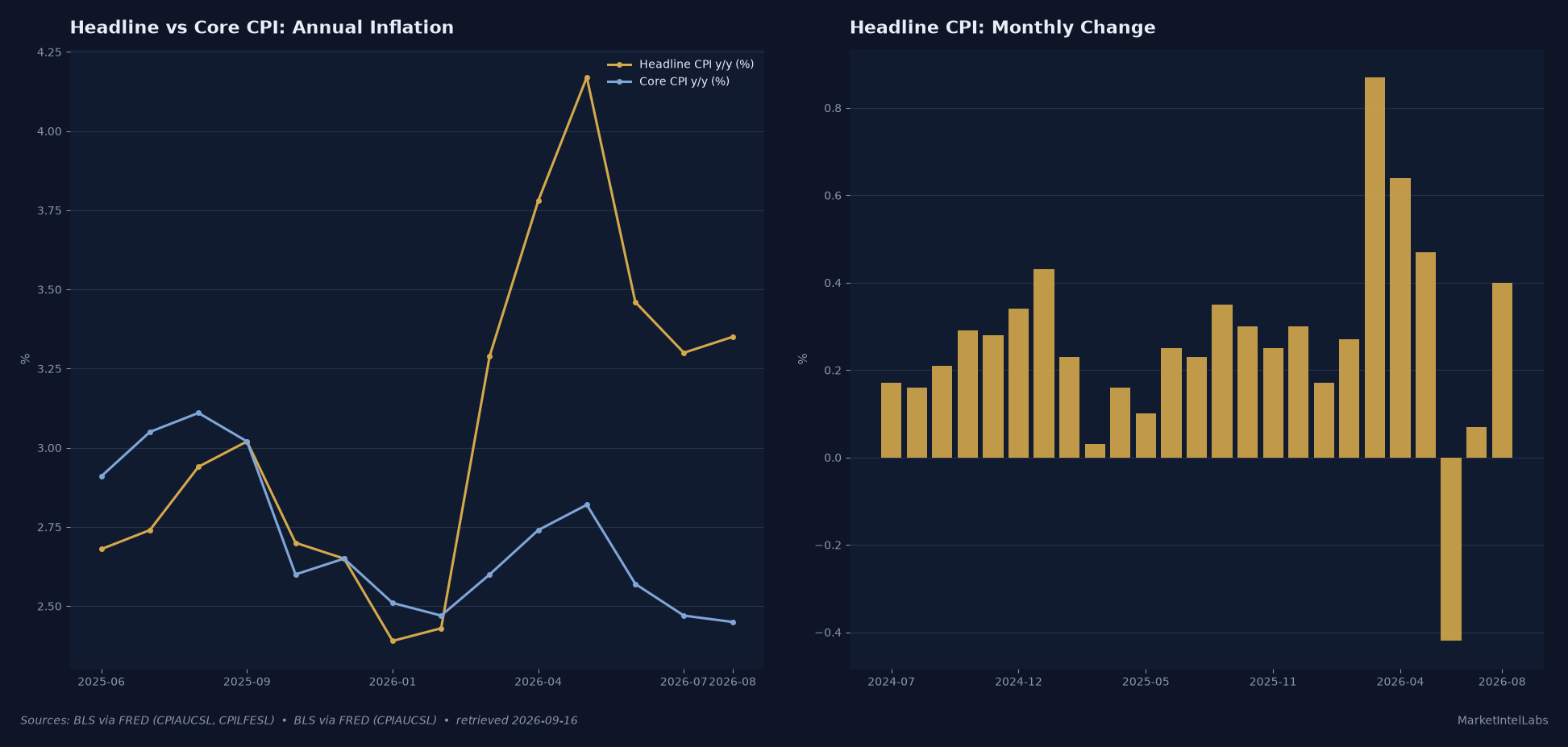
August's inflation report handed the Federal Reserve the exact mix it needed to justify a resumption of its hiking cycle: a gasoline-driven headline reacceleration paired with a still-cooling core. Headline CPI rose 0.4% month over month, holding the annual rate at 3.4%, above the 3.3% consensus, according to the Bureau of Labor Statistics. Core inflation, which strips out food and energy, cooled to 2.4% year over year, its lowest of the cycle. For a deeper look at the core picture, see August CPI in Three Charts: Why Core Inflation Warped the Fed's Next Move.
The composition matters more than the top-line beat. Gasoline prices rose 3.9% on the month and accounted for more than a third of the headline gain, while the energy index is up 16.3% from a year ago, the residue of a conflict-driven supply shock. Shelter, the stickiest category in the basket, moderated to 0.3% month over month and 3.0% year over year, a sign that the disinflation in services that had carried core lower remains intact.
That split is why the Committee appears ready to act this afternoon. A headline that reaccelerates above target argues for tightening; a core that keeps cooling argues the disinflation path survives. Fed funds futures have resolved the tension toward action, pricing a 92.5% probability of a 25 basis point hike to a 375-400 basis point range when the decision lands at 2:00 p.m. ET, with only 7.5% assigned to holding at 350-375 basis points, per CME FedWatch. For the full agenda into the meeting, see What to Watch: September FOMC Decision.
The labor market does nothing to soften that call. August nonfarm payrolls added 162,000 jobs against a consensus near 53,000, and the unemployment rate held at 4.1%. Initial claims for the week ended September 5 came in at 206,000, essentially in line with expectations. The data-dependent bind the Fed described all summer has resolved into a picture that reads hawkish on the headline and on growth, even as core goods and services pricing cools. For the framework behind that bind, see our Fed policy coverage.
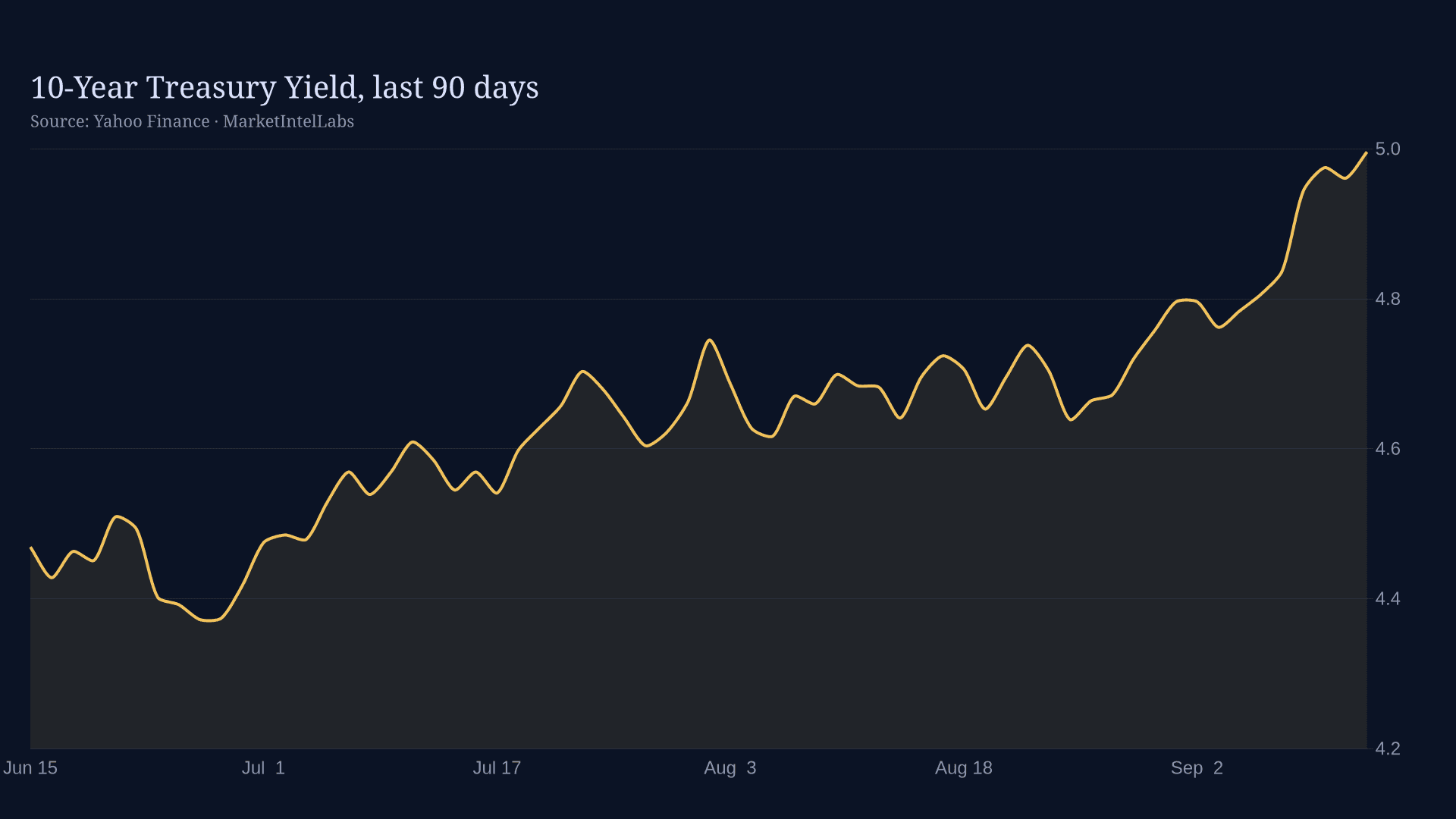
The near-unanimous pricing cuts both ways. Because a hike is almost fully priced, the asymmetric surprise sits on the dovish side: a balanced statement or a dot plot that marks down the core path could trigger a relief rally in bonds and risk assets. The more damaging scenario for markets is a hawkish hike paired with a hawkish dot plot, which would extend the rise in real yields and pressure rate-sensitive equities already trading near multi-week lows with the 10-year Treasury at 5.00%. The run is broken down in 10-Year Yield Breaks 5% Into the FOMC: What's Priced and What Isn't.
For investors, the takeaway is that the inflation mix entering the decision is genuinely two-sided. The gasoline-driven headline is the argument for a hawkish posture; the cooling core is the argument that policy is working. Retail sales, out at 8:30 a.m. ET, is the last data point before the 2:00 p.m. statement, and the September dot plot plus Chair Warsh's press conference at 2:30 p.m. will determine whether this is a one-and-done hike or the start of a longer path.
This content is for informational purposes only and does not constitute financial advice. Past performance is not indicative of future results. Consult a qualified financial advisor before making investment decisions.
Get daily intelligence delivered
Create a free account for the Daily Brief every weekday and The Week Ahead every Sunday. No card required.