August CPI in Three Charts: Why Core Inflation Warped the Fed's Next Move

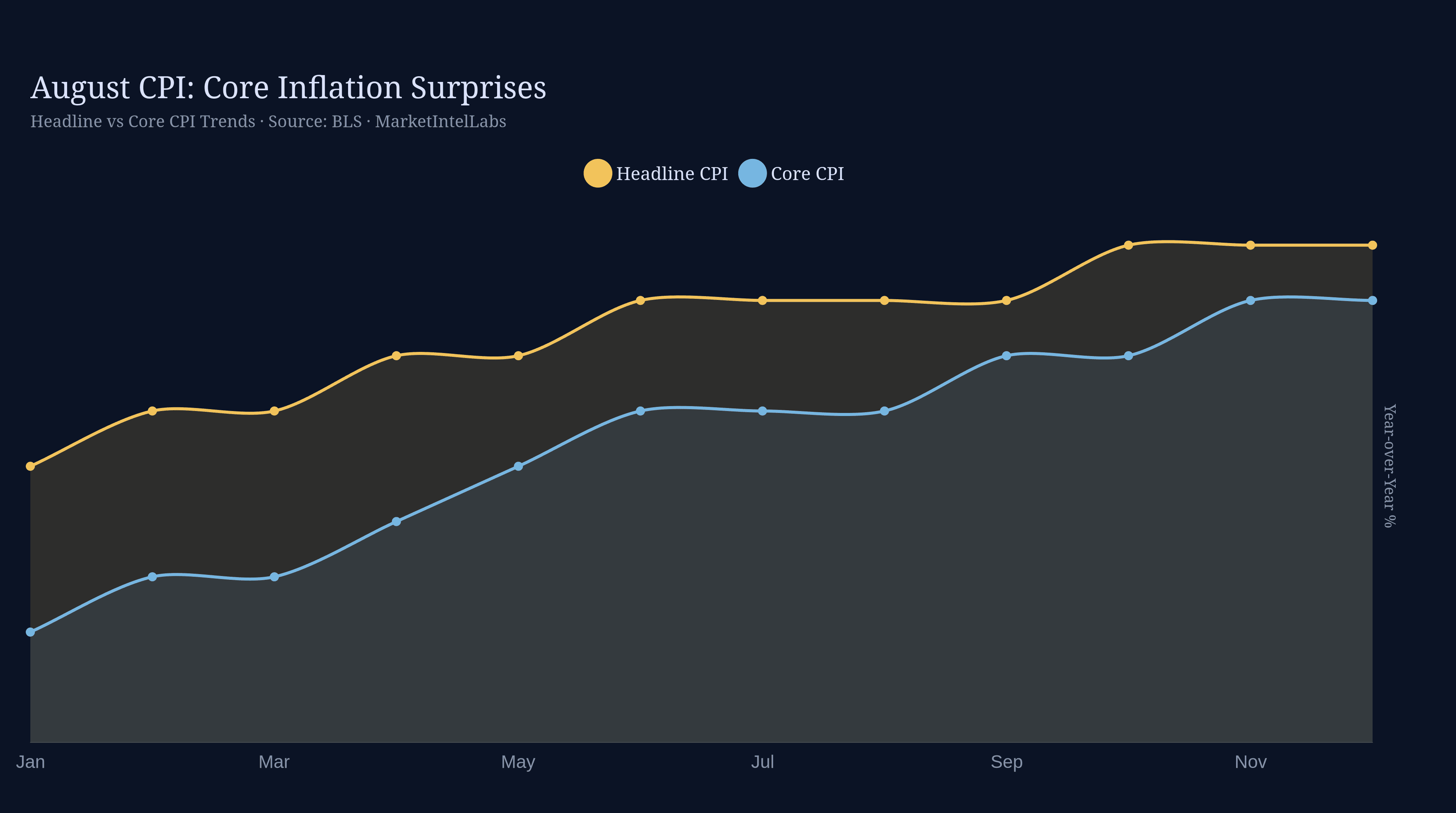
The August consumer price index, released Friday September 11, looked tame on its surface and hot where it mattered. Headline CPI rose 0.4% month over month, in line with expectations, and 3.4% from a year earlier, matching July. Core inflation, the reading the Federal Reserve leans on, accelerated 0.3% on the month against a 0.2% consensus and held annual core at 2.4% (BLS, September 11). One tenth of a point does not sound like much, but it was enough to tilt the September 15-16 Federal Open Market Committee meeting from a close call toward a hike.
Chart one: the energy spike had bite
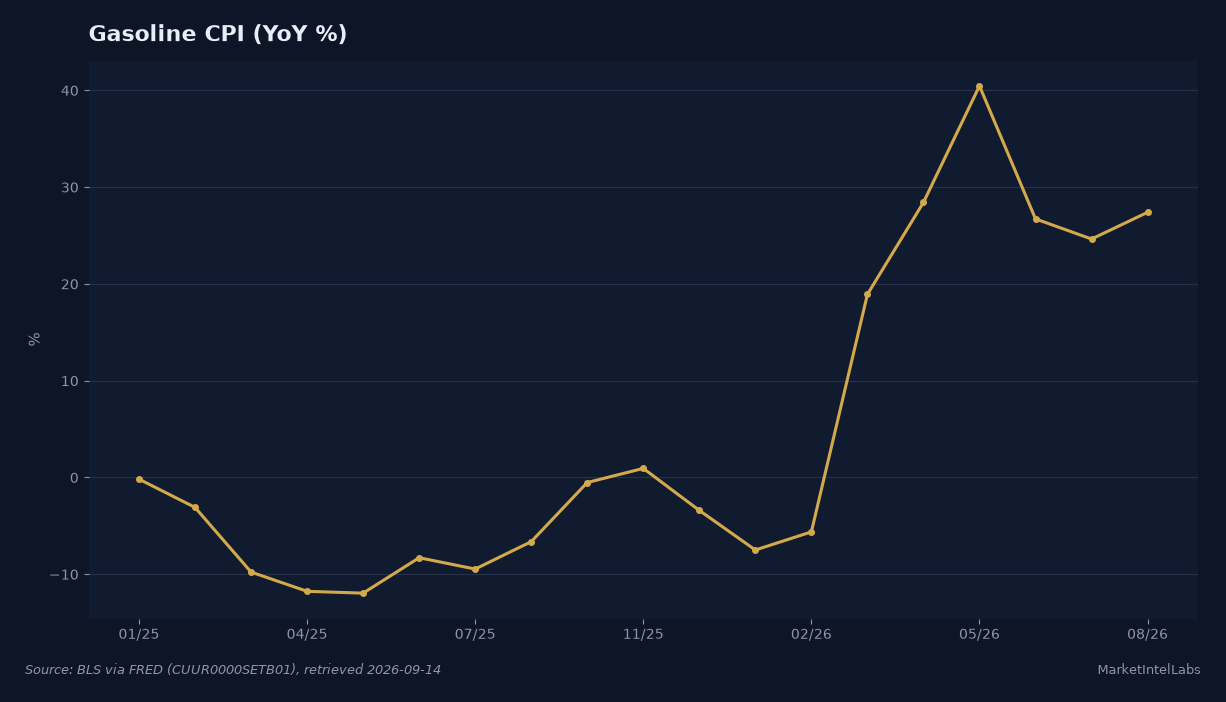
The headline number hid the real story in the fuel aisle. Gasoline rose 3.9% in August and is up about 27% on the year, with the broader energy complex up 2.1% on the month and 16.3% on the year as WTI crude broke above $102 after the Iran-war escalation (BLS; Yahoo Finance, September 14). Brent sits near $107. Energy is the clear headline offender, and because it runs through almost every goods price, it pushed the monthly print up rather than simply showing up as a line item.
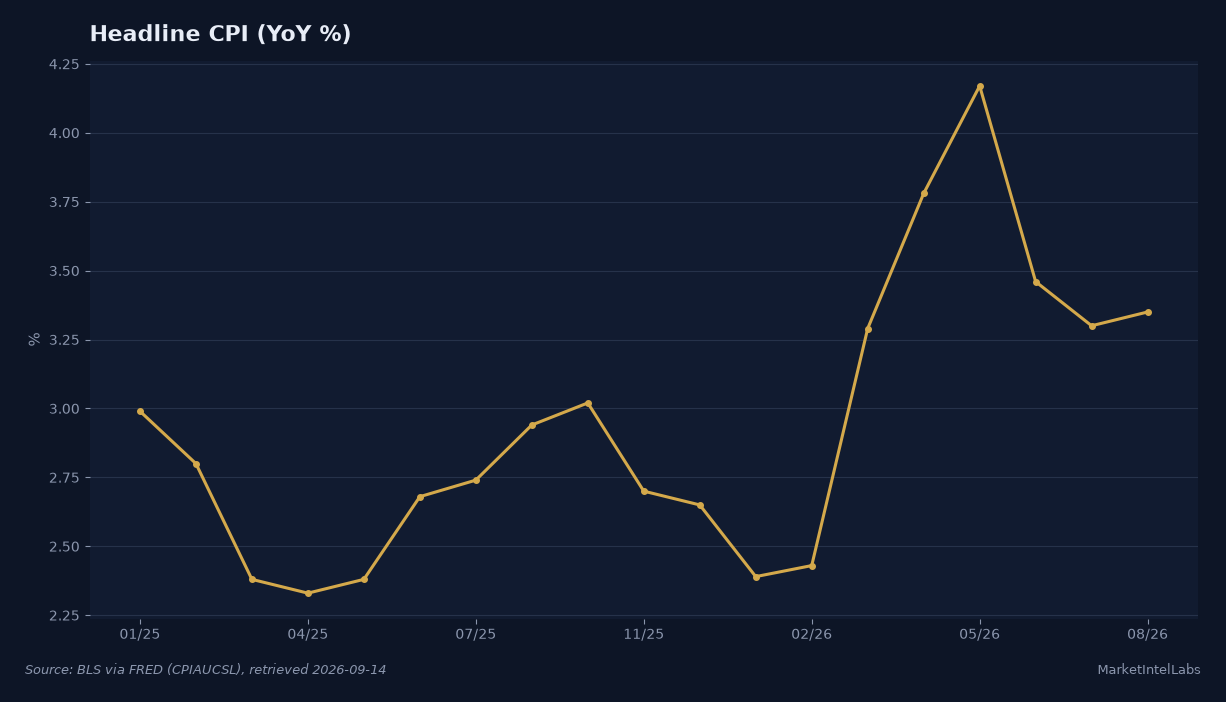
Within our Fed policy coverage, that is the uncomfortable part for the Fed. A committee debating whether inflation is converging on target has to look past an energy shock to judge the trend, yet the shock also raises the cost of staying patient. The data now shows both a one-off energy push and a core rate that is not falling.
Chart two: core was the real surprise
Core CPI at plus 0.3% on the month against a 0.2% consensus is the number that moved the needle. The move echoed the pattern our CPI Reaction: August Inflation Print Surprises Markets laid out, where the core beat narrowed the window for patience. It is not dramatic on its own, and at 2.4% year over year it sits level with July's print rather than climbing. But monthly momentum matters as much as the annual level, and consecutive firm monthly core prints have stalled the disinflation that dominated the first half of the year (BLS, September 11).
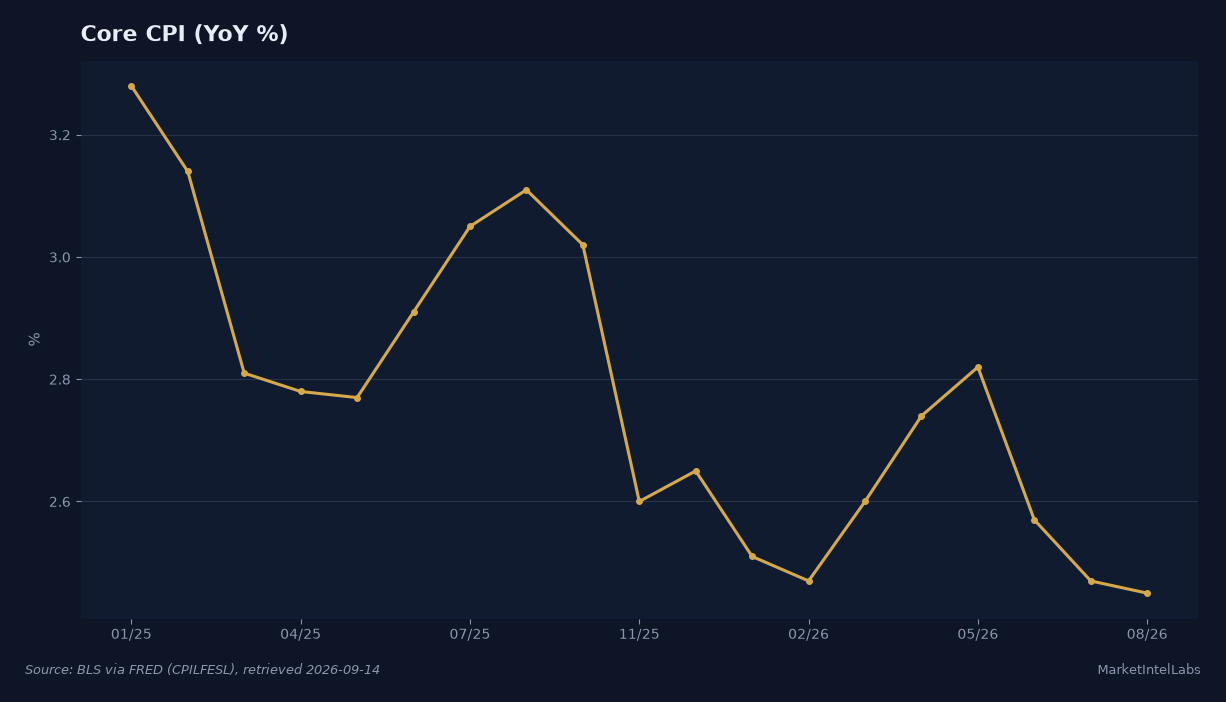
This piece of the report matters most for the decision window. Core inflation is what policymakers anchor on to judge whether restrictive policy is doing its job, and an upside miss at this stage, weeks before a meeting, gives the hawks a concrete reason to press for action.
Chart three: the market repriced the meeting
The gasoline line is the third chart to watch, because it shows how much of this report is supply-driven. Gasoline CPI has run at or above 24% year over year for four straight months and sits near 27% in the August data (BLS via FRED).
Market odds had already been creeping higher before the print, a move our Yields Spike 11 Basis Points as Markets Await CPI Print flagged as a sign of pre-positioning. What the BLS did not produce is the repricing that followed. Market odds for the September 16 decision flipped over the release: Kalshi prices a 25-basis-point hike at roughly 78% and CME FedWatch puts the odds near 90% (Kalshi API, September 14; CNBC, September 11). A week ago this was a live debate over whether the committee would hold. The hot core print, sitting on top of a strong jobs report, resolved that debate in one direction.
What the meeting now hinges on.
Friday's payrolls data had already done the groundwork. August nonfarm payrolls came in at plus 162,000 versus a 55,000 consensus, the unemployment rate held at 4.1%, and wage growth ran 3.1% year over year (BLS via Rithm Capital). That removed the labor-market case for staying on hold. The inflation report then added the price-pressure case. Together they put the committee on a path to lift the fed funds target from 3.50%-3.75% to 3.75%-4.00%.
None of this makes the decision automatic. Chairman Kevin Warsh said at Jackson Hole the Fed "has work to do" on inflation, and so far this year the committee has held rates steady every month (FRED; BLS/CNBC, September 11). The internal split still matters, with three July dissenters having favored a hike, while a White House publicly pushing for cuts injects a political cross-current no data point resolves.
The risk is asymmetric toward a hawkish outcome. A hike is no longer a contrarian call; it is the base case the market has nearly fully priced. For the full decision road map, see Week Ahead: FOMC Decision, Retail Sales Take Center Stage. That leaves the real questions for Wednesday: how the committee frames future data dependence, where the new rate path points, and whether the dots move higher to match the new reality. Watch the statement language and the press conference, not just the headline decision, because the market has already front-loaded most of the move.
This content is for informational purposes only and does not constitute financial advice. Past performance is not indicative of future results. Consult a qualified financial advisor before making investment decisions.
Get daily intelligence delivered
Create a free account for the Daily Brief every weekday and The Week Ahead every Sunday. No card required.