Vertiv Named for a Nearly $1B Brunei Data Center. US Superintelligence Exports Reach SE Asia.

The White House, closing a state visit to the Philippines and the ASEAN summit, announced on November 18, 2026 that it is expanding its Super Intelligence Exports Program across Southeast Asia, putting sovereign AI cloud contracts with the Philippines, Malaysia and Brunei into official U.S. trade documents. The single fact sheet bundles more than $17 billion in commercial deals, and the largest single item on the AI side is a nearly $1 billion data center buildout in Brunei that U.S. supplier Vertiv has been named to construct. For the AI market, the announcement matters less for the dollar total and more for the pattern: the U.S. government is now brokering frontier-model cloud infrastructure for allied governments, which opens a state-enabled demand channel for American AI vendors.
Start with the Philippine piece, because it carries the most specific dollar figures. The White House said the U.S. and the Philippines agreed to supply the country's sovereign cloud infrastructure with trusted U.S. superintelligence technology through the SI Exports Program. The Philippine Department of National Defense announced a $37 million contract with a U.S. firm for SI-enabled mission support, supporting 140 American jobs. On top of that, the department committed to work with trusted U.S. technology providers on a $63 million initiative to modernize its defense cloud infrastructure for SI use cases, supporting more than 200 American jobs. Those are small contracts in isolation, but they establish a procurement lane that can scale.
Related reading: Google Malaysia data center investment hits $15 billion for 2027 and 2028.
Malaysia is the more open-ended commitment. President Anwar and the U.S. side announced that a U.S. consortium will develop a sovereign SI cloud for the Malaysian government, facilitated through the U.S.-ASEAN SI SPARK arrangement. No dollar figure was attached in the fact sheet, which makes it a framework agreement rather than a signed buildout. That distinction matters for anyone trying to size the revenue: the Brunei and Philippine lines are concrete tenders and contracts, while the Malaysian cloud is a stated intention to form a consortium with government workload attached.
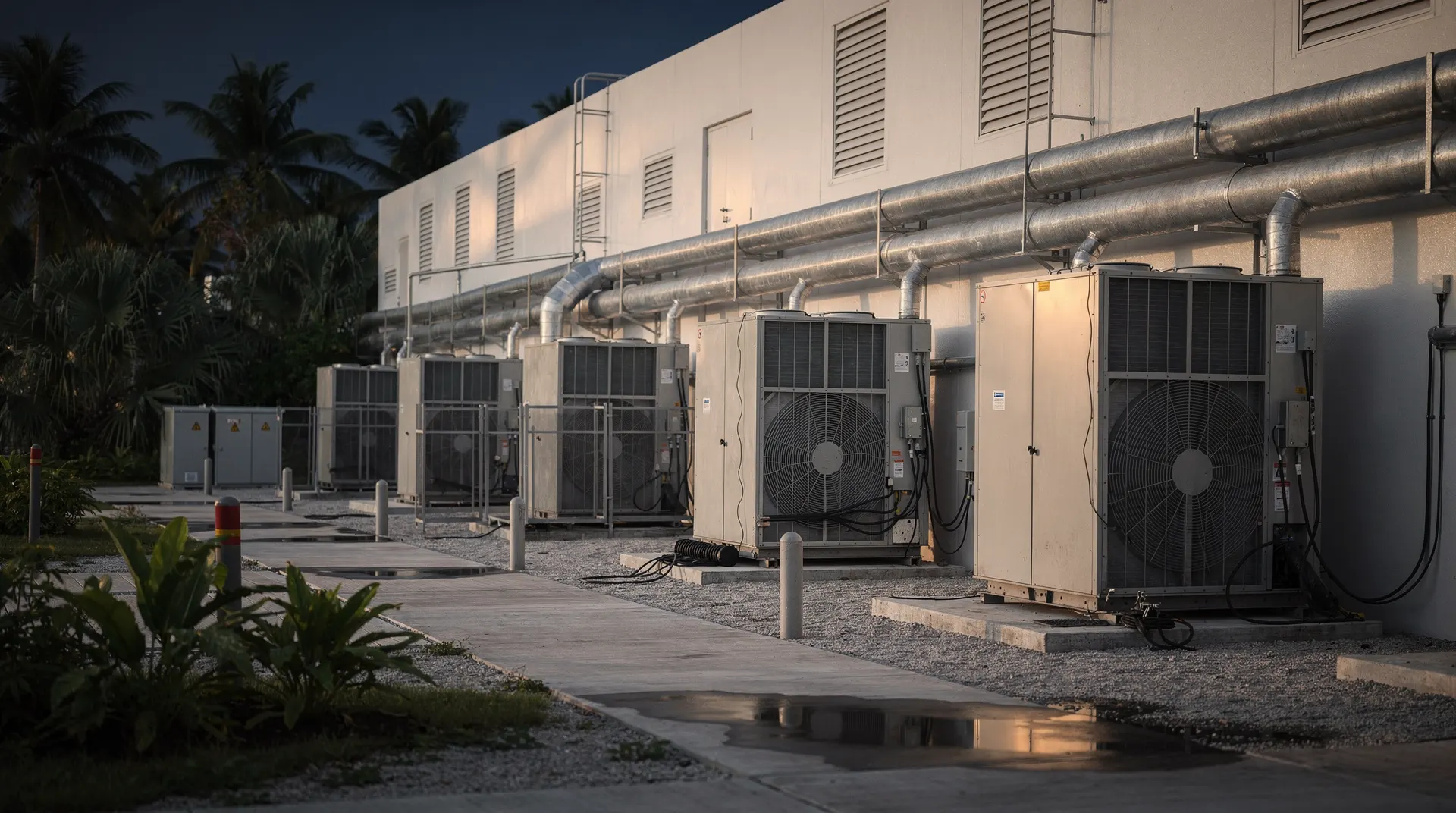
Brunei is where the capital concentration sits. The White House said Brunei's Unified National Networks intends to award U.S. company Vertiv the Rimba Data Centre tender and source the nearly $1 billion buildout from U.S. vendors, describing it as the largest-ever development of superintelligence infrastructure in Brunei. Vertiv is the New York Stock Exchange-listed power and cooling infrastructure vendor, ticker VRT, and data center equipment is its core business. A near-$1 billion single-country buildout is meaningful for a supplier whose whole commercial pitch is the physical layer that makes AI compute run.
Related reading: Vertiv stock jumps 13% after AI data center earnings beat.
What the market priced versus what the document says is the honest read here. The fact sheet is a set of intentions, facilizations and memoranda, not a set of signed, funded contracts. Several lines use qualifying language: Brunei "intends to award," Malaysia "will develop" a consortium, the Philippine cloud is pursued "through" the export program. The only hard contractual commitments are the $37 million and $63 million Philippine Department of National Defense lines. Vertiv shares traded around $194.57, down about 5.8% in the session at the time of writing against the prior close of $206.51, per the internal quote feed (/api/system/quotes?symbols=VRT, retrieved 18:10 UTC). A roughly 6% single-session decline is a material move, and with the Brunei award still an intention rather than a signed contract, the print should be read with caution rather than as the market pricing the buildout on this announcement alone.
The broader context is the direction of travel. The United States has been using export rules and state-to-state programs to shape where frontier AI infrastructure lands, and this fact sheet confirms that the pattern now extends to sovereign clouds for allied governments. Every sovereign SI cloud needs the same stack an American hyperscaler runs: Nvidia or equivalent accelerators at the top, and behind them the power, cooling and networking gear that Vertiv and its peers sell. A sovereign cloud of this kind is a repeatable contract template, not a one-off, which is what makes the procurement lane more interesting than any single tender.
Related reading: AMD Q3 earnings: data center revenue nearly doubles to a record $8.5 billion.
There are two counterweights worth naming. The first is timeline risk: state visits produce announcements, and announcements do not always become tenders inside the same calendar quarter. The Malaysian consortium in particular has no committed capital behind it yet. The second is concentration: three countries buying U.S. superintelligence infrastructure now means a later administration or a changed export posture could slow or redirect the same flow. For the companies supplying the physical layer, the near-term revenue signal is still the Brunei tender and the two Philippine contracts, not the memoranda.
The next dated catalysts are the final awards. Watch for the Brunei Rimba contract to move from "intends to award" to a signed order, for the Philippine defense cloud initiative to issue its request, and for the U.S.-ASEAN SI SPARK to name the Malaysian consortium's members. Each of those events converts a stated intention into booked revenue for a named U.S. supplier. Until then, the market has a federal program expanding, a listed vendor with a near-$1 billion tender in hand, and a reminder that sovereign AI procurement is becoming a durable line of American export demand.
Related reading: AI capex week: AMD data center up 97%, financing costs climb.
Disclaimer: This content is for informational purposes only and does not constitute financial advice. Past performance is not indicative of future results. Consult a qualified financial advisor before making investment decisions.
Get daily intelligence delivered
Create a free account for the Daily Brief every weekday and The Week Ahead every Sunday. No card required.