Verizon AWS AI deal: more than $2 billion in fiber as AI connectivity becomes a new capex lane

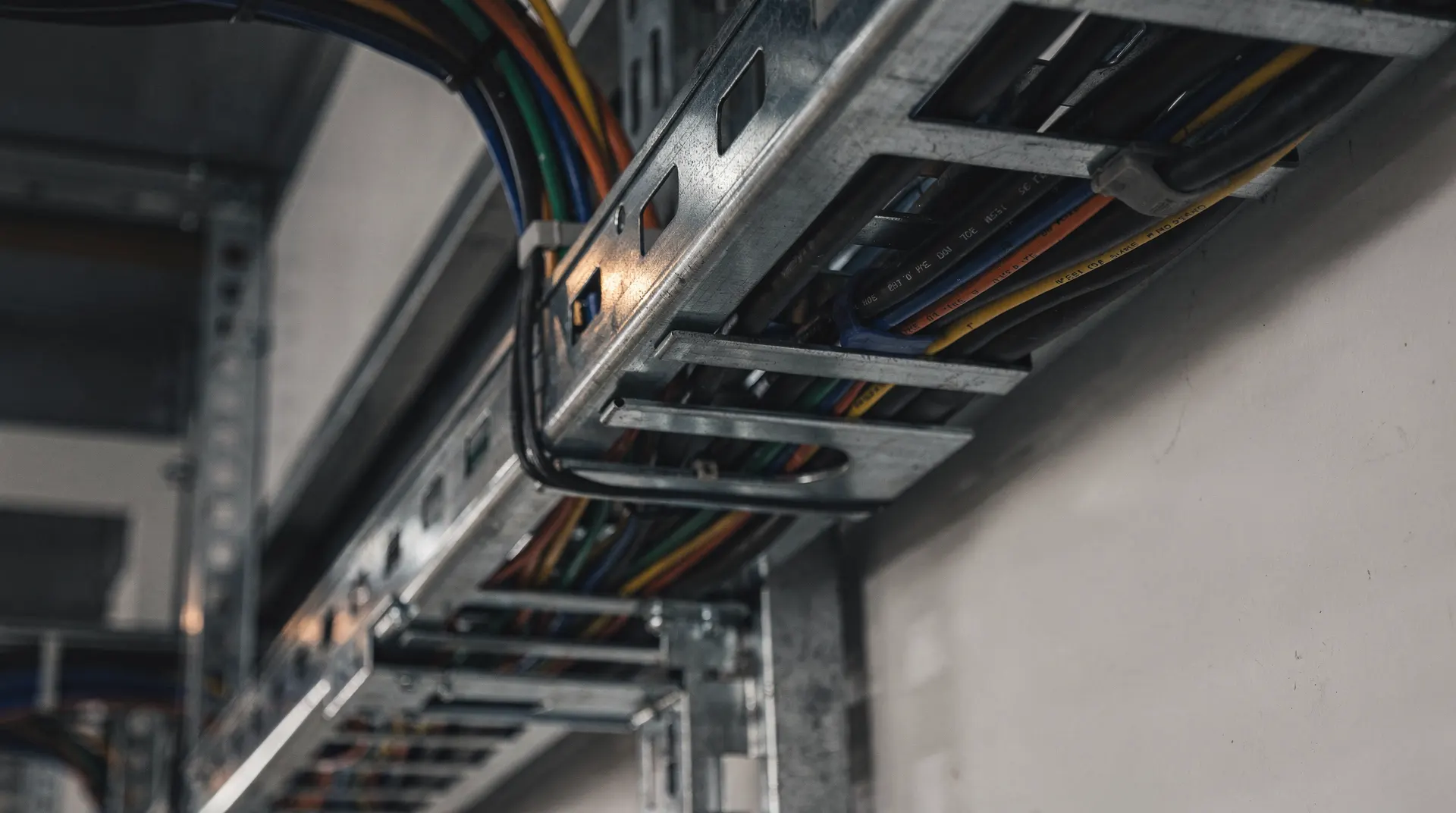
Verizon signed a more than $2.0 billion AI infrastructure agreement with Amazon Web Services, disclosed Monday October 26 alongside third-quarter results that beat on wireless subscriber additions and prompted the company to raise its full-year guidance for the third straight quarter. The deal, in Verizon's 3Q26 earnings release, establishes what the company calls a commercial framework to scale distributed compute and meet the real-time demands of agentic and generative AI workloads. Under the agreement, Verizon provides high-capacity fiber optic connectivity for AWS data centers, enabling faster and more reliable data transfers to support growing AI computing workloads.
The agreement is the second large fiber deal Verizon has announced this year, and together the two contracts signal that AI buildout is pulling a new spend category into the hyperscaler capex story. In July, Verizon announced a more than $1 billion agreement with Google to connect data centers using dark fiber, and CEO Dan Schulman said on the earnings call that the two contracts are a clear signal that the largest builders of AI infrastructure in the world are choosing Verizon as a strategic connectivity partner. Schulman added that the company has an active pipeline of additional hyperscalers, neocloud providers and large enterprise clients negotiating for either dark or lit fiber connectivity.
Related reading: Meta Q3 2026 Earnings: Capex Floor Raised to $135 Billion as New Share Class Funds AI Spend.
Viewed through the money lane, the deal is a supply chain read-through that looks different from the chip and power stories that dominate the AI capex beat. The AI market has spent the year pricing three constraints: GPU supply, through TSMC CoWoS packaging and Nvidia's allocation; memory, through HBM; and power, through datacenter electricity demand that has pushed utilities and PPA prices into the narrative. Connectivity is a fourth, quieter lane. The two hyperscaler agreements give Verizon a direct revenue stream tied to data center buildout rather than to consumer wireless, and they make fiber a named input in the AI infrastructure bill that runs to hundreds of billions of dollars a year.
The timing matters because the announcement landed with the quarter's numbers. Verizon reported total operating revenue of $34.3 billion in the third quarter, up 1.5 percent year over year, with mobility and broadband service revenue of approximately $23.5 billion, up 2.9 percent. Postpaid phone net additions were 406,000, up more than 820 percent year over year, the strongest third-quarter performance in five years, and postpaid net account additions were 137,000, the best result in over a decade. Consolidated net income was $5.3 billion, up 5.2 percent, adjusted EBITDA was a record $13.8 billion, up 8.0 percent, and adjusted EPS of $1.31 was up 8.3 percent. Free cash flow was $7.8 billion, up 12.1 percent.
Related reading: AI Capex Hits $998 Billion in 2026, and Memory Is Why.
Revenue came in below analyst estimates of $34.74 billion for the quarter, according to LSEG data reported by Reuters, pressured by lower device upgrade volumes as customers hold phones longer after Verizon cut device subsidies. The subscriber beat was the driver that mattered to the company's own framing, and it pushed Verizon to raise its full-year 2026 forecast for postpaid phone net additions to between 1.1 million and 1.2 million, from an earlier 750,000 to 1 million, and its adjusted EPS range to $5.04 to $5.06 from $4.99 to $5.04. The company also holds its 2026 capex plan at $16.0 billion to $16.5 billion, inclusive of success-based investments for its AI Connect program.
The AWS agreement should be read for what it prices, not for what either company promises it will deliver. Verizon has not given a revenue recognition schedule for the deal, so the market is being asked to price a large multiyear connectivity contract with the shape of the fiber deals now common in the hyperscaler supply base: capacity and pricing commitments spread over years, tied to data center buildout rather than to a near-term release. That is the same pattern as the July Google dark fiber agreement, which analysts have treated as a modest but durable new line within Verizon's business segment rather than as a step-change in growth.
Related reading: Hyperscaler Capex Surge Signals Second-Half Acceleration.
The competitive read also pulls the story back to Verizon's core. Schulman used the call to push back on the framing that a low-earth-orbit entrant would soon pressure the wireless market, saying that building a competing terrestrial network would take four to six years and cost $300 billion to $500 billion. The comment is a reminder that the telcos face their only structural growth from AI on the connectivity side, where fiber to the data center is the asset, while their consumer wireless businesses are mature and capital heavy.
What makes this a signal for the AI capex market is the pacing. Verizon's first hyperscaler fiber deal came this year, its second within four months, and management says the negotiating pipeline holds more. If the fiber deals start to compound at the same pace as hyperscaler GPU and power contracts, connectivity becomes a measurable slice of the AI infrastructure bill, worth tracking the way CoWoS capacity and PPA pricing are tracked. The dated catalyst to watch is the pacing of follow-on hyperscaler and neocloud fiber agreements, and whether Verizon recognizes material service revenue from the AWS deal in upcoming quarters.
Related reading: Goldman Puts 2027 AI Capex at $1.4 Trillion, and $400 Billion of It Will Be Borrowed.
This content is for informational purposes only and does not constitute financial advice. Past performance is not indicative of future results. Consult a qualified financial advisor before making investment decisions.
Get daily intelligence delivered
Create a free account for the Daily Brief every weekday and The Week Ahead every Sunday. No card required.