TotalEnergies expands US gas output through Continental Resources deal

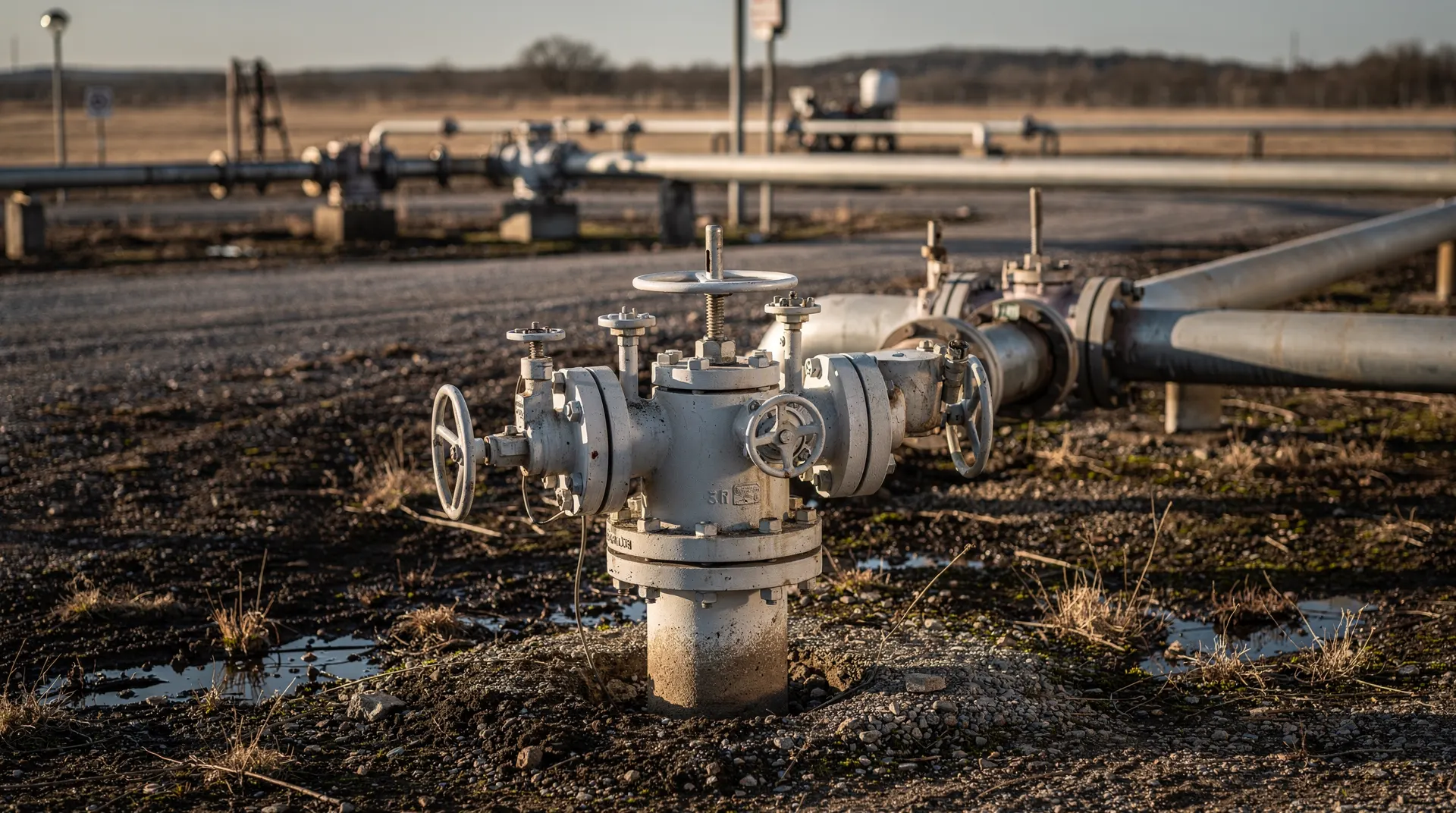
TotalEnergies has agreed to buy interests in U.S. natural gas assets from Continental Resources, a deal it says will add roughly 150 MMcfd, or about 26,000 boed, to its net U.S. gas production by 2032. The agreement, reported Nov. 23, extends a gas buying spree the French major has run through Oklahoma and Texas for two years, and it is aimed squarely at one thing: feed stock for its LNG export machine.
What TotalEnergies is buying
The scope is a set of upstream gas interests with low-cost, low-emission production, long plateau lives and direct ties to existing midstream, according to the company's statement as reported by World Oil. Neither TotalEnergies nor Continental disclosed financial terms or the location of the assets, which is worth flagging up front because it keeps us from judging whether anyone overpaid.
Related reading: Diamondback expands in the Permian with a $5 billion Double Eagle deal.
This is not the first time these two have traded. It builds on TotalEnergies' 2025 purchase of non-operated interests from Continental in the Anadarko Basin, and it follows the 2024 buys of Eagle Ford gas interests from EOG Resources and Lewis Energy. Add the operated Barnett asset TotalEnergies already holds, and the company now targets net U.S. gas output of about 850 MMcfd, more than 140,000 boed, from 2032 onward.
Nicolas Terraz, TotalEnergies' president of exploration and production, called Continental "a leading U.S. operator in the region" and said the transaction "will strengthen our natural gas production in the United States and consolidate TotalEnergies' integrated position from upstream gas production to LNG exports." That line is the whole thesis: upstream gas in the U.S., liquefied and shipped from U.S. terminals, sold into Europe.
For the broader framework, see our crude oil coverage.
Related reading: Hurricane Isaias shuts in 1.28M bpd of Gulf oil production: what it means.
TotalEnergies was the largest U.S. LNG exporter in 2025, shipping 19 million tons, about 18% of total U.S. output, with 14 million tons going to Europe. It holds upstream gas positions in Texas, Oklahoma and the U.S. Gulf, has invested in Cameron LNG in Louisiana and Rio Grande LNG in South Texas, and buys LNG from the Sabine Pass, Freeport and Corpus Christi terminals.
What it does to the gas market
Do not read this as a supply shock for Henry Hub. At roughly 150 MMcfd against national output measured in tens of billions of cubic feet a day, the added volume is rounding error for the macro gas market. EIA data put Henry Hub at $3.03 per MMBtu in the week of Nov. 13, steady around the $3 level that has held since October, and this deal changes none of that arithmetic.
Related reading: Saudi Arabia crude output surges 26% in October to 10.563 million bpd as OPEC+ supply nears pre-war levels.
The real read is feed-gas. TotalEnergies is not buying a few wells to trade; it is locking up the raw material for LNG it will need to keep its export position full as new liquefaction capacity comes online. That turns the deal into a statement about the build-out: producers with export-grade gas are consolidating into the hands of the companies that own the terminals.
Who pays and who gains
Continental gets a buyer willing to write a check for gas-weighted reserves in a market where natural gas has spent months under $3. For a company whose books are loaded with oil and gas inventory, selling a slice of gas acreage into the LNG consolidation wave is monetizing reserves instead of waiting on the spot price.
Related reading: Gold Price Breaks $4,136 on 321t of Q3 Central-Bank Buying.
TotalEnergies gets what it has said it wants, a U.S. molecule connected to its own outfit. The gain is strategic more than it is about any single MMBtu improving. The risk is that it is paying for export demand that has to show up on schedule: if LNG offtake disappoints, feed-gas-heavy upstream positions mark down first.
What to watch next
The near-term catalyst is the closing. TotalEnergies has not put a date on it, so the first dated confirmation will be completion, followed by operational updates on the acquired interests ramping toward the 2032 production target. On the LNG side, watch Rio Grande LNG and Cameron LNG milestones, because every train that starts takes feed gas, and that is what this acreage is for.
The second thing to watch is whether TotalEnergies keeps going. It has now bought gas from EOG, Lewis Energy and Continental twice in two years, and it still has room below the 850 MMcfd target if it wants more. Henry Hub stays capped near $3 until export demand pulls harder, and for now the surest bid under gas is the one from the people liquefying it and pointing it at Europe.
This content is for informational purposes only and does not constitute financial advice. Past performance is not indicative of future results. Consult a qualified financial advisor before making investment decisions.
Get daily intelligence delivered
Create a free account for the Daily Brief every weekday and The Week Ahead every Sunday. No card required.