Riot Platforms Stock Jumps About 10% After $28 Billion Corsicana AI Lease

Three AI infrastructure decisions landed in one afternoon, each a different answer to the same question: where does compute get built, and who pays for it. Bitcoin miner Riot Platforms signed a US$28 billion lease on its Texas campus with an AI lab, Oracle walked away from a roughly US$7 billion chip-lease with Tencent, and Google pledged about US$15 billion to Malaysia. Together they repriced how hyperscalers, miners and sovereign markets are competing for capacity clubs.
The largest lease in Riot's history
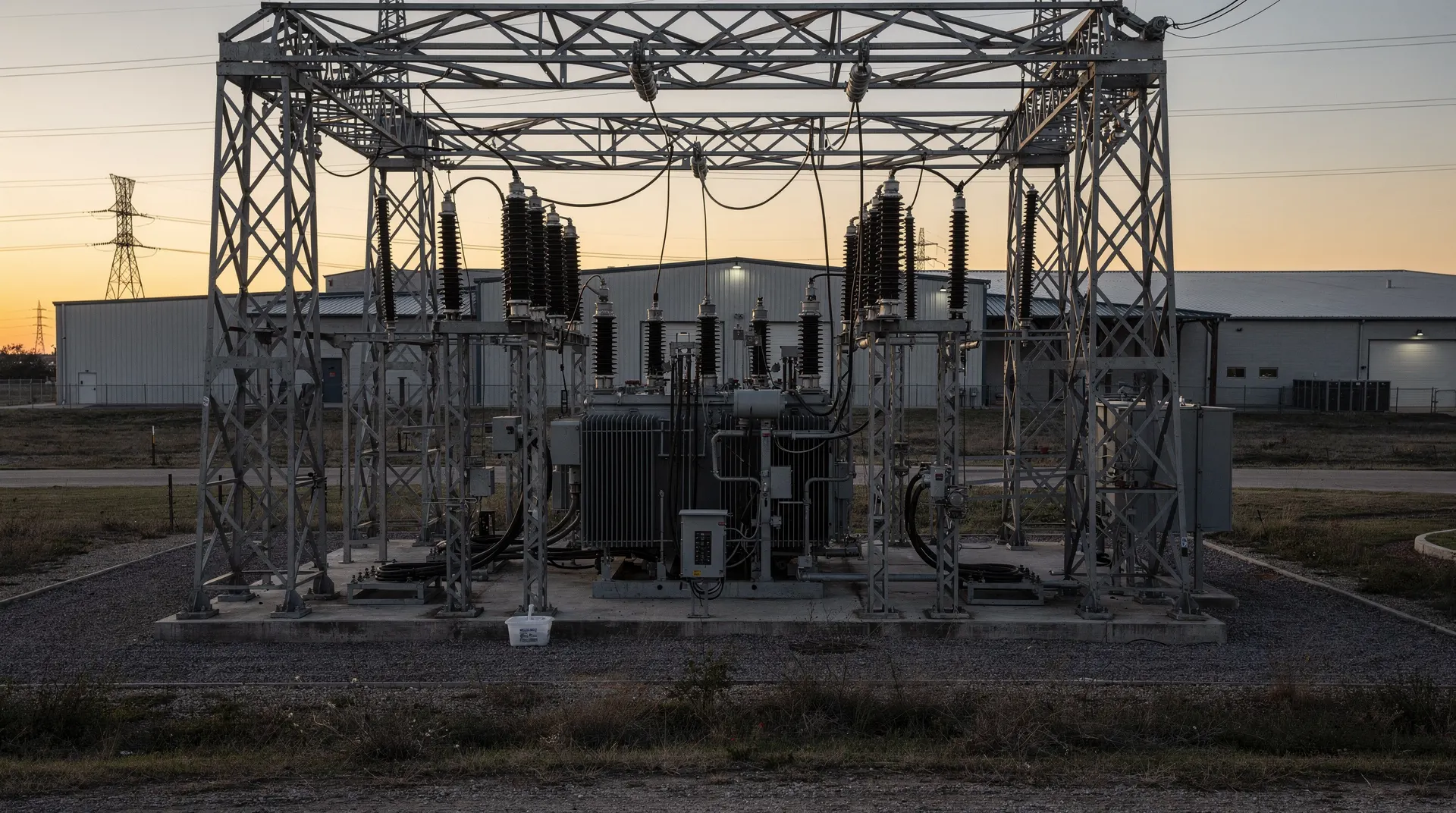
Riot Platforms reported third-quarter results and disclosed a 15-year triple-net powered land lease of its entire Corsicana, Texas campus to a frontier AI lab, with about 910 megawatts of critical IT capacity on a contiguous 332-acre parcel. The lease carries roughly US$28 billion in total contract value over its initial term and about US$1.8 billion in average annual rent including escalators, according to the company's release on November 4. Chief executive Jason Les called it the largest lease in Riot's history.
Related reading: Tencent's $7 Billion Oracle Lease Finds the Gap in the Export Control Rulebook.
The deal is the market's clearest read on what a former crypto miner's land and power are worth in the compute age. Riot now holds about 1,151 megawatts of critical IT capacity leased across Corsicana, roughly US$38 billion in long-term contracted revenue once earlier deals, including a 191-megawatt Rockdale lease with the same lab, are included. The stock was changing hands near US$15.83, up about 10% on the session, according to Yahoo Finance data.
The chain runs spender to supplier to constraint. The AI lab brings the customers and the demand; Riot brings the land, the interconnection and the cheap Texas power that is the real bottleneck for AI training capacity. The arrangement converts a miner's sunk grid infrastructure into a contracted annuity, in contrast to the bitcoin mining volatility Riot has historically absorbed.
Related reading: WEC Energy capital plan jumps to $47.5 billion on Microsoft and Oracle data center demand.
Oracle walks a $7 billion Tencent chip lease off the table
Oracle terminated a roughly US$7 billion agreement to lease up to 100,000 advanced AI chips to Tencent for its data centers in Southeast Asia, the Financial Times reported on November 4. The agreement, which the FT described as running over five years, had been structured as an offshore lease at a time when US export controls restrict direct sales of advanced chips to Chinese customers. US officials had raised concerns about the arrangement, according to the FT's sources.
Oracle's shares fell sharply, losing about 12% to trade near US$127 by mid-session, per Yahoo Finance. The sharp drop is a negative market reaction: the unwind removes a workaround for the export-control regime, and it signals the divide between advanced and restricted compute markets is hardening. For the AI capex cycle, the episode underscores how the biggest compute customers now treat export rules as a first-order cost.
Related reading: Google Locks In 702 MW of Fuel-Cell Power From AEP for Its AI Data Centers.
Google commits $15 billion to Malaysia
Google pledged about US$15 billion in investment to Malaysia across 2027 and 2028, the company announced November 4, seven and a half times the US$2 billion it committed in 2024. The outlay covers data centers, a cloud region, clean energy, water replenishment and local job training, per the company's release, which Reuters and the Wall Street Journal corroborated.
The move is a sovereign-capacity play common to the hyperscalers this year: build where demand is growing and where energy and land are unconstrained, and lean on contracted power prices rather than merchant markets. Malaysia matters to the AI trade because it offers scale, land and cooling outside the crowded North American grid. Google's shares were down about 9% on the session to near US$295, sharply underperforming the S&P 500, which was off about 0.8% in the same session, per Yahoo Finance. The session move shows the Malaysia pledge, on its own, was not enough to lift the shares.
Related reading: Banks and Blackstone line up $63 billion to fund Broadcom AI chips for Anthropic.
The three releases price the same scarcity from different seats. Riot's document shows a miner converting grid assets into contracted AI revenue, marking a permanent shift in how the public markets value its fleet. Oracle's confirmation shows the export regime acting as a real cost on compute supply chains, with offshore leasing no longer a reliable workaround. Google's pledge shows hyperscaler capex continuing to grow even as investors debate the payback horizon, with 2027-2028 commitments matching this year's pace.
None of the three documents changes the underlying fact that AI capacity remains the binding constraint, and each is another data point that hyperscalers expect the buildout to run for years. The dated catalysts to watch are Riot's hosting revenue ramp as the Corsicana parcel fills, Oracle's next data center disclosure on how it reallocates capacity reserved for the unwound lease, and Google's quarterly capex guidance as Malaysia land and power come online through 2027.
This content is for informational purposes only and does not constitute financial advice. Past performance is not indicative of future results. Consult a qualified financial advisor before making investment decisions.
Get daily intelligence delivered
Create a free account for the Daily Brief every weekday and The Week Ahead every Sunday. No card required.