Tencent's $7 Billion Oracle Lease Finds the Gap in the Export Control Rulebook

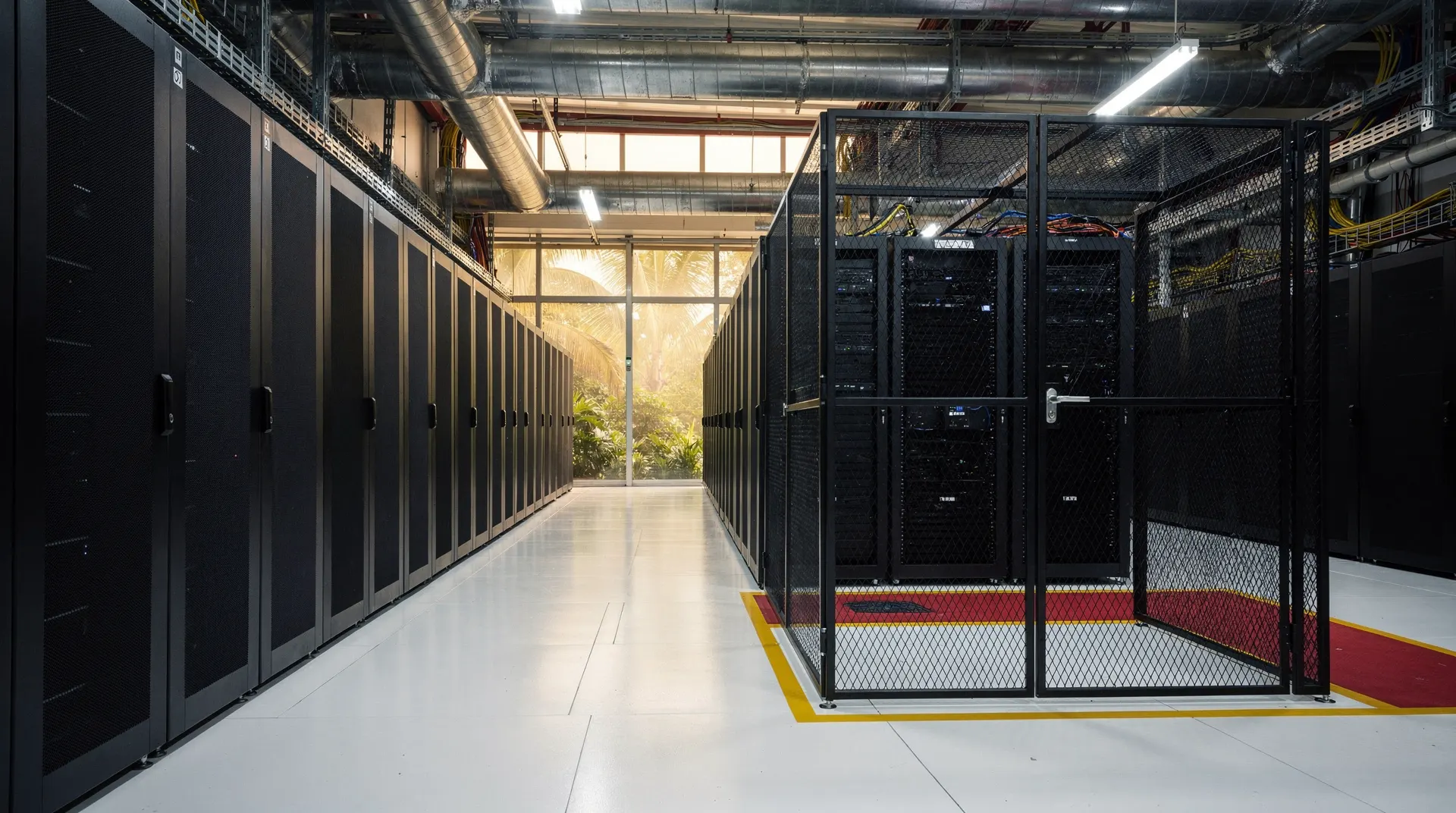
Tencent has signed a five-year lease worth about $7 billion for roughly 100,000 advanced AI chips sitting in Oracle data centers across Southeast Asia, according to the Financial Times, which reported the deal on September 30 citing people familiar with the matter. The chips never enter China. Tencent is renting compute in Oracle's region instead, and that single distinction is the story: the American export-control rulebook was written to govern hardware that ships, and this deal runs straight through the part of it that was never written.
The shape of the contract matters as much as the size. Tencent agreed earlier in 2026 to a five-year lease across multiple Oracle data centers in Southeast Asia, with an upfront payment of about 30%, according to the FT. At $7 billion total, that is roughly $2.1 billion paid before the first model finishes training, and it makes this Tencent's largest ever overseas lease agreement. Reuters picked up the FT report the same day but said it could not immediately verify the figures independently, and both companies did not respond to Reuters' requests for comment. So treat the numbers as well-sourced but unconfirmed by the parties.
One number is confirmed in Tencent's own accounts. The FT reports the deal already weighed on Tencent's free cash flow in its second-quarter earnings, which tells you the payments started moving before the story did. A commitment of this size, pre-paid at 30%, is a balance-sheet event for a company whose capex discipline investors had been quietly praising.
Why the rulebook leaks here
US export controls govern the physical transfer of advanced chips. A Chinese company cannot buy an Nvidia accelerator at the top of the stack, but under the rules as reported by the FT and summarized by Investing.com, it can lease compute capacity internationally, in a data center outside China, and get access to chips that were never available at home. The hardware stays in Oracle's facility. The training runs happen remotely. Nothing in the current framework treats a remote GPU-hour the way it treats a shipped package.
Tencent's choice is therefore an answered question about Beijing's self-sufficiency push. Chinese champions are under real pressure to buy domestic: Huawei is courting the same customers, DeepSeek partnered with Huawei on chip programming tools to reduce reliance on Nvidia, as the Straits Times reported in late September, and Reuters has reported Chinese regulators weighing whether to let Alibaba and ByteDance buy newer Nvidia chips at all. Tencent had a domestic answer available and a foreign one available, and it signed a $7 billion check for the foreign one. That says little about Huawei's silicon and much about what a company with a frontier AI roadmap does when the domestic alternative is not yet good enough to bet five years of training on.
Oracle's side of the ledger
For Oracle, this is the cleanest kind of revenue in the AI buildout, a status Oracle's Project Jupiter force majeure notice has already strained: committed, multi-year, partially prepaid, and attached to a customer whose approval required no one in Washington. Oracle has been racing to stand up capacity across Asia to serve exactly this demand, part of the AI buildout whose value is moving to the network, as HPE's $1.2 billion Vultr order showed, , and a $7 billion anchor tenant makes the region's buildout easier to finance. The market's reaction was muted: Oracle shares closed at $137.30 on September 30, per Yahoo Finance, roughly flat on the day the FT story landed, after closing at $137.79 the day before. Investors either do not believe the report yet, or they have already priced Oracle's Asia backlog as policy-proof.
The second reading deserves skepticism. Oracle's stock has been living on its remaining performance obligations all year, and a lease that depends on a gap in US export controls is not the same quality of revenue as one that depends on nothing. If Washington decides remote compute for Chinese tenants is a loophole rather than a feature, a $7 billion contract signed to exploit that gap becomes the first thing a new rule touches. That risk is real, it is unpriced at $137.30, and it is the reason this deal is a market story and not just a corporate one.
What to watch next
The next dated catalysts are quiet ones. Oracle reports earnings in December, and any disclosure on Asia-Pacific cloud revenue growth or a named large tenant would confirm or dent the FT's figures. On the policy side, there is no announced US regulatory response to remote-compute leasing as of October 1, so the watch item is a Commerce Department action or a new rulemaking that extends export controls from shipped hardware to leased capacity. On the demand side, with 2027 AI capex set to hit $1.4 trillion including $400 billion of borrowing, watch whether Tencent's peers show up in the same Oracle regions; one $7 billion lease is an exception, three of them is a pattern, and a pattern is what actually forces the rulebook to change.
The deeper point is that export controls are doing what they were designed to do, and losing anyway. The chips stayed out of China. The compute did not. A rulebook built for crates is now governing a business that ships nothing, and Tencent just spent $7 billion to show every other Chinese AI company where the seam is.
This content is for informational purposes only and does not constitute financial advice. Past performance is not indicative of future results. Consult a qualified financial advisor before making investment decisions.
Get daily intelligence delivered
Create a free account for the Daily Brief every weekday and The Week Ahead every Sunday. No card required.