US strikes Iran's Qeshm Island and mines hit tankers: oil tops $106 and Brent $107 as Hormuz paralysis sets in

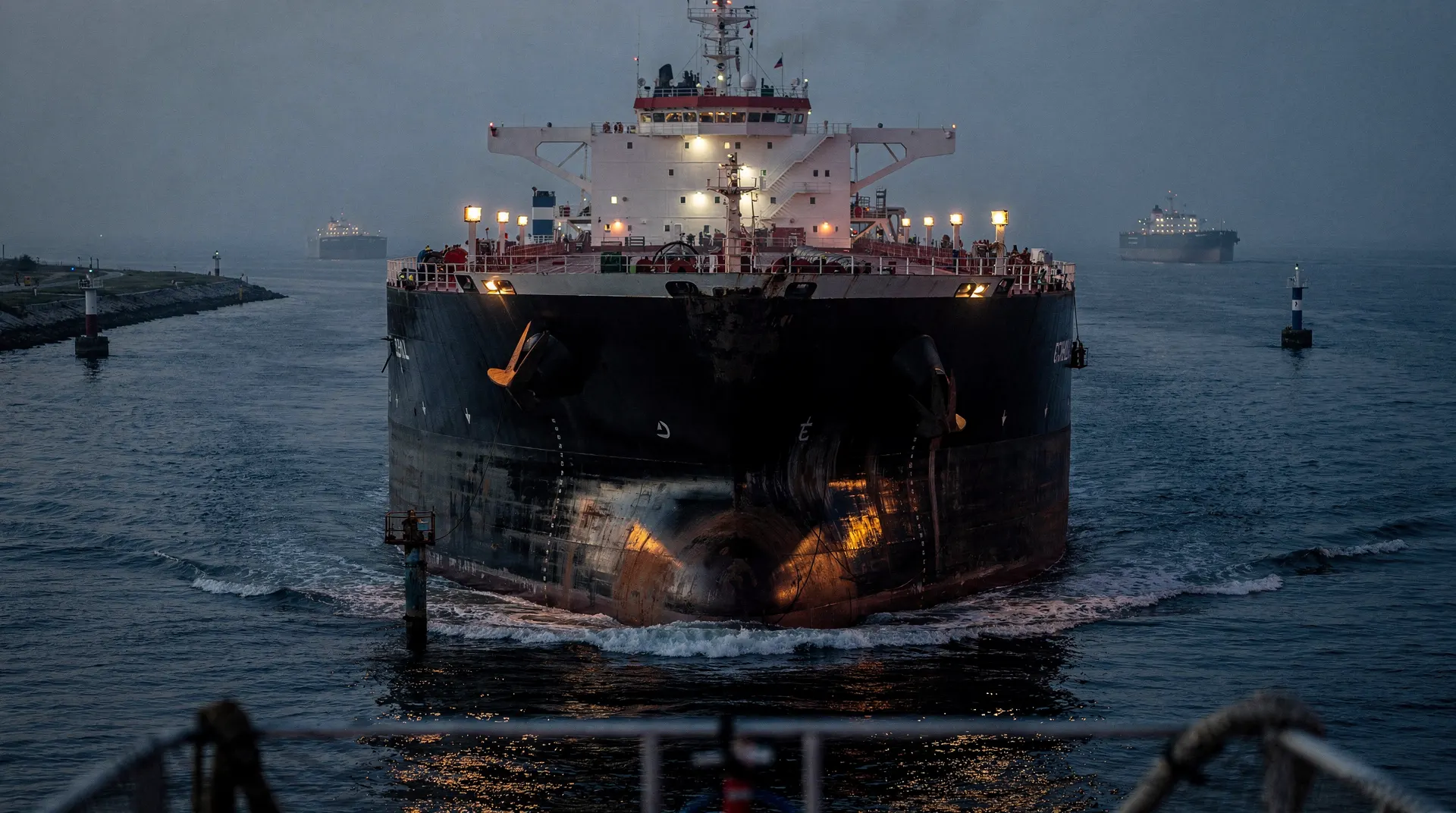
Crude reversed two days of peace-trade weakness in the span of a morning. Wire and shipping reports on Tuesday said U.S. forces struck Iran's Qeshm Island, near the Strait of Hormuz, with some accounts also citing Kish Island, and that three oil tankers were hit by mines in the strait. Front-month Brent traded up to $107 and WTI moved above $106 at the height of the reports, a rebound after the 7.6% selloff that the peace-draft narrative set off on the prior session.
Let me be clear about what is verified and what is not. The strike details, the mined tankers and the damage numbers are all being reported by wires and shipping outlets, not yet by official U.S. or Iranian channels in the window I could confirm. U.S. Central Command and the Pentagon had not issued a public statement capturing the strike at the time I checked, and Tehran's official response was still coming through as attributed claims rather than a confirmed accounting. Treat every contested element as a claim from one side, awaiting a second confirmation, before we call any of it settled.
Related reading: Brent oil price tops $110 as Hormuz and Houthi strikes bite.
Here is the market consequence the moment the reports crossed the tape. The Strait of Hormuz carries roughly a fifth of global oil consumption, so a disruption there is not a marginal supply event, it is a pricing event for the whole flat curve. Trading reports had Brent bid to $107 and WTI above $106 during the escalation news, while European gas prices also surged as the same chokepoint panic spread into the gas market. That is the peace-draft move of the last two sessions reversing in a few hours. By the time I pulled the prevailing prints, crude had given back part of the spike. WTI was changing hands near $96 and Brent near $103, still elevated but off the highs, which is exactly what a market waiting for official confirmation does: it bids the front, then it waits.
What the market is waiting for is a statement, not a headline. The whole trade hinges on two unknowns. First, will Washington or Tehran confirm, expand or walk back the military action? Second, are the mine strikes a one-off event or the start of a campaign against transiting hulls? Until one of those questions gets an official answer, the front of the curve carries a war-risk premium and backwardation stays bid, because the market has to assume the strait stays impaired until proven otherwise.
For the broader framework, see our crude oil coverage.
Related reading: Brent price near $115 as Hormuz conflict premium holds: Brent-WTI spread stays near $13.7.
Look at who pays and who gains in a practical, desk-level way. The list of payers is long and familiar. Refiners and airlines eat the flat price, and the crack structure, the relationship between crude and its refined products, widens when crude can be hard to get out of the Gulf. Tanker rates and war-risk premia climb for everything that has to schedule a Hormuz transit, and the pump consequences show up later in diesel and gasoline, the Cost of Living angle that is always a lag. Import-dependent Asia, and Japan, Korea and India above all, is the most exposed, and the currency side is real there too: higher energy import bills press on the yen, the euro and the rupee. On the other side, any producer whose barrels can price the war-risk premium, and cargo routed through alternate corridors, gets a better screen.
Now the spreads, because that is where this story actually lives. A Hormuz disruption widens Brent-WTI, because more of the world's vulnerable supply is priced off Brent, and it widens Brent against Dubai, the benchmark for Gulf supply that would be the most directly impaired. Refining cracks stay firm on the delivery risk. The flows question is the classic bid out of a chokepoint disruption: money leaves currencies and rates that look exposed to the import bill and moves toward the dollar and toward safe-haven gold, so the metals and the dollar can both price the same event. That is not a contradiction, it is the same war-risk premium showing up in two places.
Related reading: Oil prices hold $105 as unverified ceasefire meets fresh Hormuz risk.
There is a real bear case tucked inside this rally, and it is worth stating plainly rather than burying it. Part of Tuesday's spike is a violent mean reversion off a peace-trade overshoot. Oil did not crash 7.6% because the war was over, it crashed because a draft peace document circulated. If no official statement confirms sustained disruption, and the strait's traffic returns to something close to normal over the days ahead, this premium can unwind as fast as it appeared. The bull case is equally direct: a mine campaign in the world's most important chokepoint changes the risk calculus for every barrel that has to pass through it, and insurance-driven rerouting alone is enough to keep physical supply tight for a while.
So here is what I am watching next, because this trade moves on catalysts, not on my read. The first is any official release from U.S. Central Command or the Pentagon, or a formal Iranian response, that confirms or denies the strike. The second is tanker-company safety notices and operator guidance from the shipping desks, Lloyd's List and the tanker brokers, the source of any fresh Hormuz closure or rerouting bulletin. Somewhere in that queue is the statement that decides whether the front of the curve holds its war-risk premium or gives it back. Until it lands, the direction trades on headlines and the size of it trades on whether the strait stays open enough for tankers to keep scheduling round trips. I would not bet against volatility either way, but I would not assume the premium is permanent either. The confirmation, not the escalation, sets the next leg.
Related reading: WTI Oil Price Jumps to $110.48 Session High as Tankers Burn in Strait of Hormuz.
This content is for informational purposes only and does not constitute financial advice. Past performance is not indicative of future results. Consult a qualified financial advisor before making investment decisions.
Get daily intelligence delivered
Create a free account for the Daily Brief every weekday and The Week Ahead every Sunday. No card required.