Oil Price Falls After Largest St Petersburg Drone Raid Yet

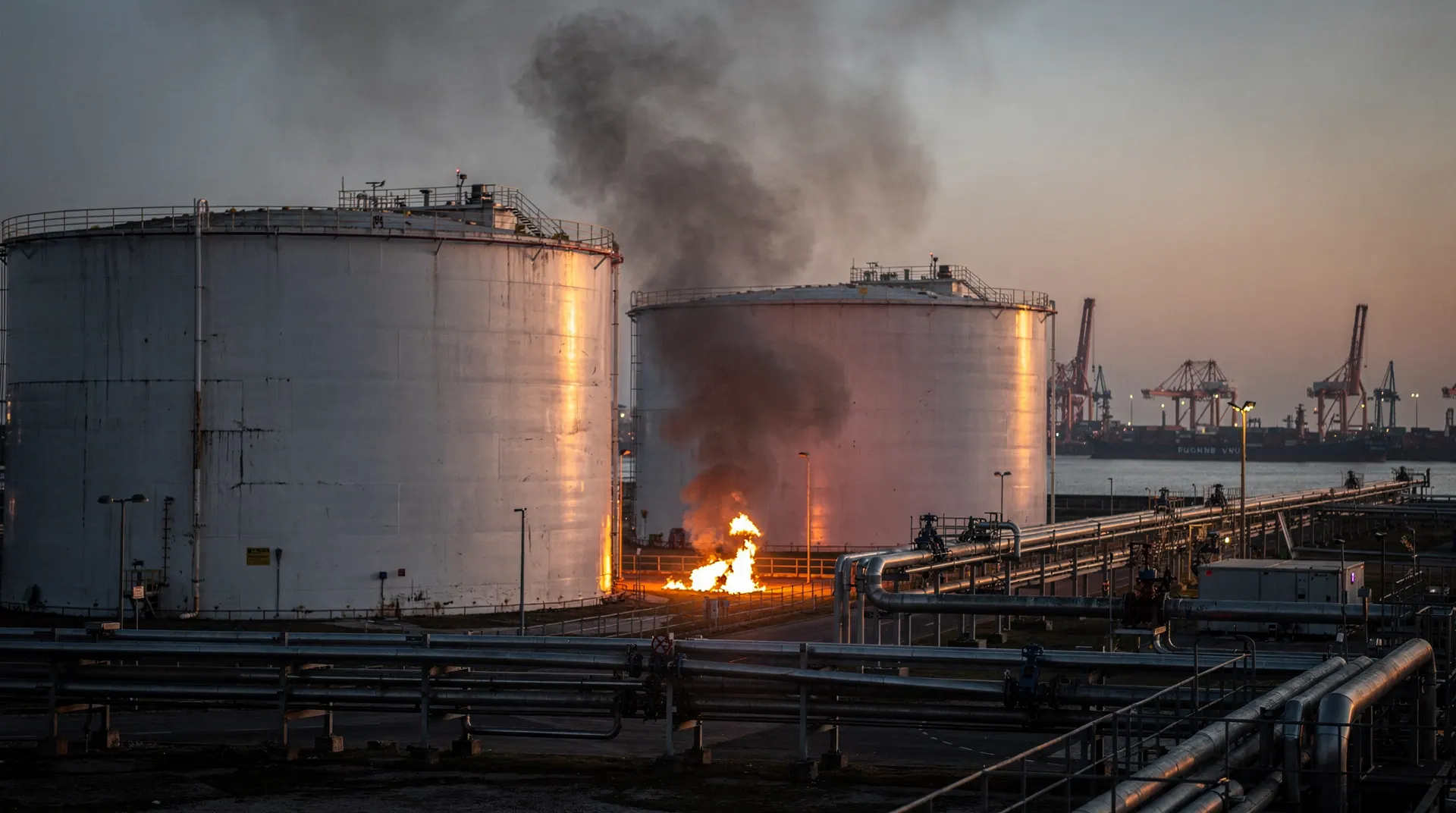
Oil fell on Monday even as Ukraine carried out its largest drone raid of the war against Russian energy infrastructure, setting fires at the Petersburg Oil Terminal and the Ruchyi oil depot in St Petersburg on Oct 18. WTI slipped about 1.7% to near $97.38 a barrel, while Brent eased about 1.8% to near $107.83, according to CNBC. The reason the market looked past the strike: Washington's decision to waive US tariffs and sanctions on Russia, which raised expectations of more Russian fuel exports.
Ukraine's General Staff said it launched the large-scale raid on Oct 18, with Kyiv reporting fires at the Petersburg Oil Terminal, an oil storage and export terminal, and at the Ruchyi oil depot, per AP. St Petersburg Governor Alexander Beglov confirmed emergency services were extinguishing fires at both sites and said one person was killed and five were wounded, with flights at Pulkovo airport restricted. He gave no figures on the capacity taken offline. In a separate statement, President Volodymyr Zelensky said strikes on Russian oil refineries had resumed after a three-day pause.
Related reading: Ukraine's drones put 2 to 4.3 million barrels a day of Russia's refining offline. Diesel cracks are at records..
The raid is the clearest signal yet that the energy ceasefire declared Oct 11 has functionally collapsed. Kyiv resumed strikes on Oct 15 at the Ryazan oil refinery, one of Russia's largest, before hitting the St Petersburg sites on Oct 18. Russia's Defense Ministry has in turn reported repeated strikes on Ukrainian energy and port infrastructure, per CNBC. Neither side's tally in this exchange has been independently verified; Ukraine's claims and Russia's responses are presented side by side, with second-source confirmation of the St Petersburg fires coming through RTE, citing Reuters.
The price reaction is the telling part for traders. Crude barely moved on the strike, and the reason is that the market is pricing a supply offset, not a protection bid. Washington's waiver of tariffs and sanctions on Russia lowered the perceived barrier to more Russian fuel reaching world markets, and that supply-weighted reading overpowered a headline that, on its own, would normally put a fresh geopolitical bid under both benchmarks.
For the broader framework, see our crude oil coverage.
Related reading: Oil prices hold $105 as unverified ceasefire meets fresh Hormuz risk.
Related reading: Brent-WTI Spread Widens to $11.60 as Russia Refinery Strikes Reprice Freight.
Related reading: Volodarskaya Oil Depot Strike: Russia's Fuel Network in Focus as a 51% Refining Claim Meets a Diesel Ban.
The two forces now sit in balance. The strike risk argues for a floor under prices, while the waiver argues for more barrels on the way. For now the second is winning the day's tape, but the ceasefire that was supposed to keep energy calm has already broken, and the next move from either side will decide which force drives crude into the week.
Get daily intelligence delivered
Create a free account for the Daily Brief every weekday and The Week Ahead every Sunday. No card required.