Honda and Toyota recall more than 1.6 million vehicles over Takata airbag rupture risk

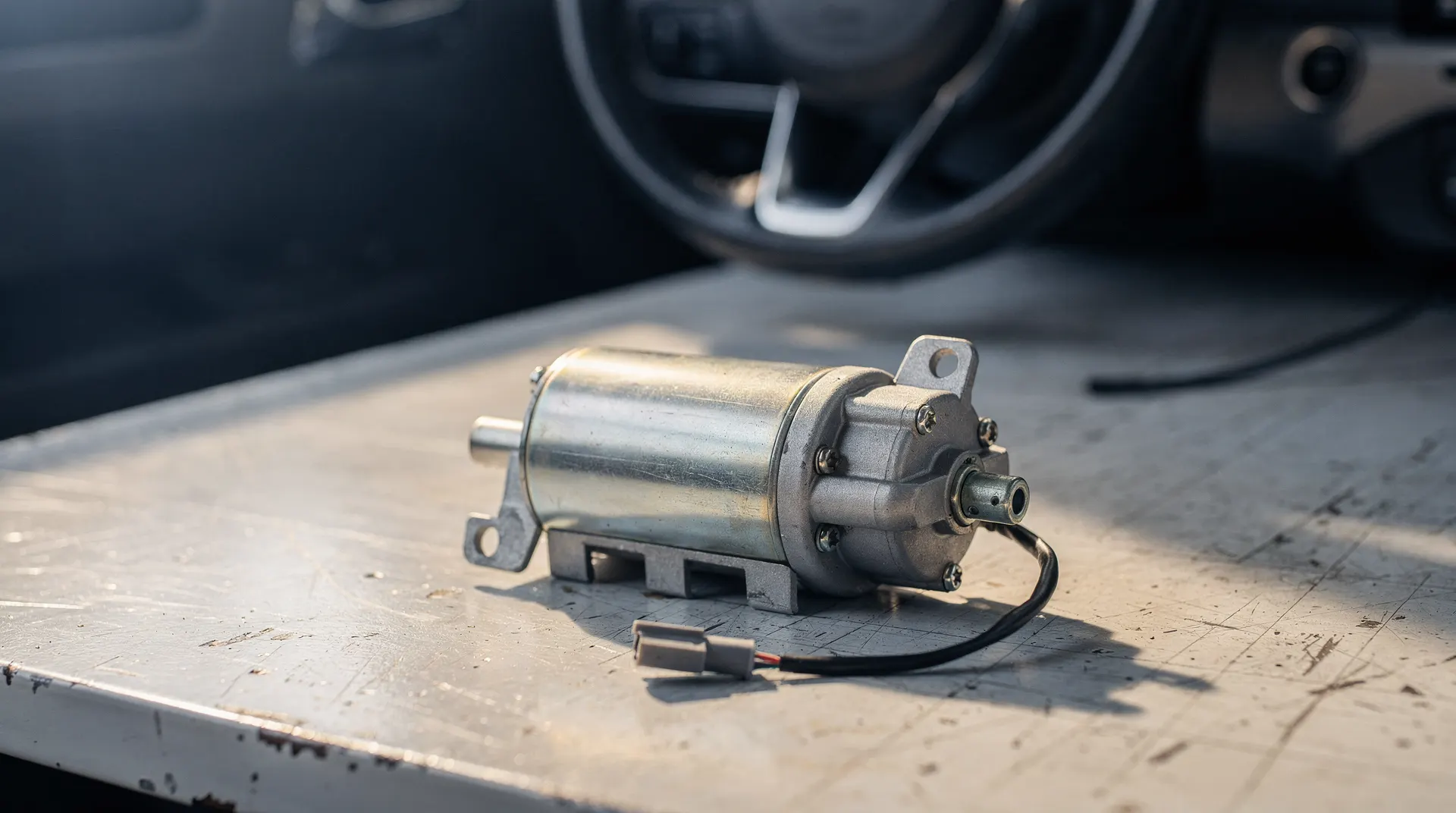
Honda and Toyota said Friday they are recalling about 1.6 million cars, trucks and SUVs to address the risk that replacement Takata airbag inflators could rupture in a crash, an extension of the largest auto recall in U.S. history into a fresh phase of the nearly decade-old safety crisis.
What changed
The two campaigns, filed with the National Highway Traffic Safety Administration, target airbag inflators that Honda and Toyota previously replaced in earlier Takata recalls. NHTSA records show Honda's campaign, numbered 26V765000, was reported to the agency on Nov. 19, and Toyota's, numbered 26V748000, on Nov. 12. The current phase involves inflators that contain a moisture-absorbing material designed to prevent the propellant degradation that drove the original recalls.
Related reading: Waymo pulls driverless taxis off US freeways after California ban.
Honda said long-term monitoring and analysis revealed potential propellant degradation in certain inflators within specific geographic regions over extended periods, and that it has seen no reported crashes or inflator ruptures in the affected vehicles. Toyota said degraded propellant could cause an inflator to rupture if the airbag deploys, which could lead to serious injury, and that the automaker is conducting the recall out of an abundance of caution.
Who is affected
Honda's recall covers 2013 Accord, 2012 and 2013 Civic, 2012 and 2013 CR-V, and 2013 Acura ILX and RDX vehicles sold or registered in 14 states and territories with hot, humid climates or wide temperature swings: Alabama, California, Florida, Georgia, Hawaii, Louisiana, Mississippi, South Carolina, Texas, Puerto Rico, the U.S. Virgin Islands, the Northern Mariana Islands, Guam and American Samoa.
Related reading: Italy Regulator Fines Meta $887 Million Over Android Data Access.
Toyota's recall covers 2003 through 2008 Corolla, 2005 and 2006 Tundra, 2005 through 2007 Sequoia, 2016 and 2017 4Runner, 2002 through 2010 Lexus SC430, 2011 Lexus IS250 and 2017 Lexus GX460. Toyota did not specify which states are covered. Honda said interim notification letters are expected to be mailed Dec. 18, with vehicle identification numbers searchable on nhtsa.gov beginning Nov. 22. Toyota expects owner letters to be mailed beginning Dec. 28 and said replacement inflators should be ready by early 2027.
Who pays and what to watch
The actions extend a safety crisis that began more than a decade ago. At least 28 deaths in the United States and more than 400 injuries have been linked to defective Takata inflators since 2009, and more than 100 million vehicles with those inflators have been recalled worldwide, including roughly 67 million in the United States. The bankrupt inflator maker's replacement parts have themselves become a long-running liability problem: the replacement inflators now being examined still use ammonium nitrate propellant, and regulators have said degradation can develop over years of exposure to heat and humidity.
Related reading: LMT Stock Jumps 7% After Q3 Earnings Beat, Record Backlog.
For the automakers, the recalls add another line of cost and liability to balance sheets already absorbing the original Takata settlements. Honda has set aside billions of dollars over the years to cover inflator replacements and related litigation, and Toyota has absorbed repeated expansion of its own campaigns. For owners of the affected vehicles, the free inspection and replacement is the practical near-term consequence. For parts suppliers, the guarantees of future inflator supply into early 2027 represent a fresh, dated revenue stream, though one tied to remediating a defect rather than new-vehicle content.
Two dated catalysts follow. The first is VIN lookup availability on Nov. 22, which will let owners check whether their vehicles are included and give a sense of how widely the campaigns spread through the tens of thousands of Honda and Toyota vehicles still on the road. The second is the notification cycle later in December, when owners will learn how long their vehicles may need to wait for parts. Watch also whether NHTSA expands the geographic scope: Toyota did not limit its campaign by state, and the agency noted it is using inflator degradation simulation models to flag risk ahead of any reported failures, which leaves room for the campaigns to grow if further testing finds wider exposure.
Related reading: Anthropic prices blockbuster IPO as demand tops expectations.
This content is for informational purposes only and does not constitute financial advice. Past performance is not indicative of future results. Consult a qualified financial advisor before making investment decisions.
Get daily intelligence delivered
Create a free account for the Daily Brief every weekday and The Week Ahead every Sunday. No card required.