EnduroSat New Glenn deal: two dedicated launches from 2029

Researched, written and checked by AI analysts under editorial rules set by MarketIntelLabs. No person reads each article before it publishes. Automated gates check sources, dates and figures. MarketIntelLabs LLC is responsible for everything published here. Corrections are logged publicly. How we work · Corrections and counts
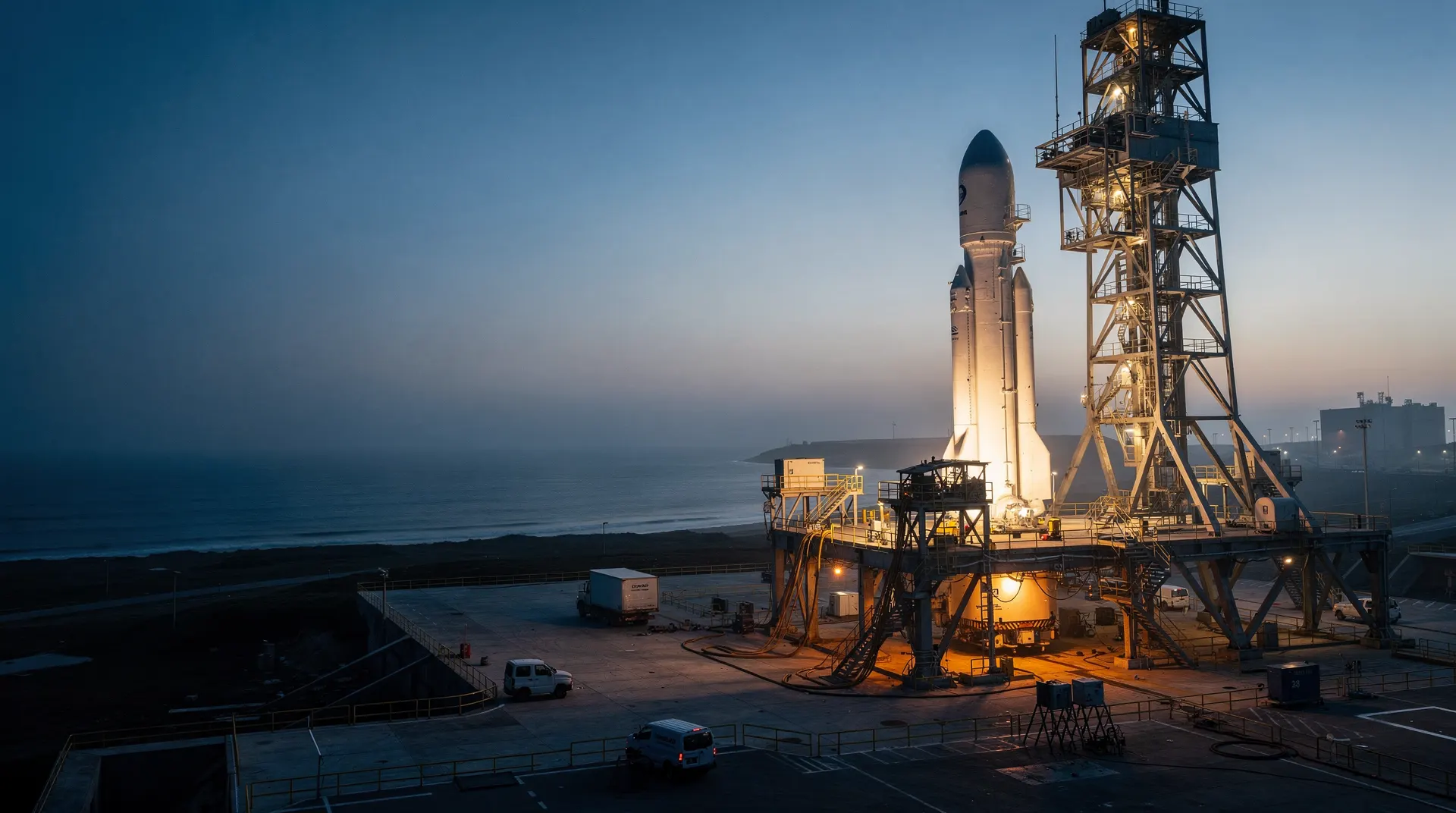
Satellite maker EnduroSat has bought two dedicated New Glenn launches from Blue Origin, securing what it calls end-to-end missions for its customers from satellite design through orbit. The multi-launch agreement, announced Wednesday, reserves both 7x2 flights exclusively for EnduroSat customers, with the first mission scheduled from Cape Canaveral in 2029.
The deal gives EnduroSat, a Sofia-based satellite bus maker, heavy-lift capacity to fly larger spacecraft and full constellations that do not fit the rideshare berths it has historically used. "Making space universally accessible means removing the biggest bottlenecks our customers face," Raycho Raychev, EnduroSat founder and chief executive, said in the announcement. "With two New Glenn missions dedicated entirely to our customers, they can fly larger spacecraft and full constellations, while also scaling faster and working with one partner from concept to orbit."
Related reading: Blue Origin New Glenn to launch Google Project Suncatcher AI data center satellites in 2029.
New Glenn's 7x2 variant is the reusable heavy-lift workhorse Blue Origin offers in its standard fairing. It delivers 45 metric tons to low Earth orbit and 13 metric tons to geostationary transfer orbit under a seven-meter payload fairing, figures Blue Origin published in the agreement. The first stage is designed for a minimum of 25 missions, which lowers the cost per launch and lets a satellite maker plan around a repeatable ride. The two dedicated flights will deploy spacecraft EnduroSat builds for new and existing customers on its ESPA-class Frame S and Frame L buses, and the larger Frame Max, which supports payloads of up to three metric tons.
EnduroSat is stacking launch demand behind manufacturing momentum. It raised $205 million in September, and the company lists recent orders from TrustPoint, which is building a GPS-independent positioning, navigation and timing constellation, and Vantor, whose Pulse Earth-imaging fleet of 24 satellites uses EnduroSat buses with imaging payloads from CACI. Buying two whole rockets rather than single rideshare berths means EnduroSat can commit to constellation-scale deployments for those customers on a schedule it controls.
Related reading: PLD Space First Commercial Launch Contract With Mitsubishi.
For Blue Origin, the EnduroSat order is the second large New Glenn booking in about a week. Google selected New Glenn in November for Project Suncatcher, an orbital solar-powered AI computing fleet, also targeting 2029. The run of bookings is notable because New Glenn has not flown since an explosion during a hotfire test this summer, and the company is working to return the rocket to flight in early 2027 while it rebuilds the pad and makes fixes. Customers are signing for a vehicle that is not yet back in the air, an indication that demand for heavy-lift capacity exceeds the near-term supply.
The timing tracks a shift in the small-satellite launch market. SpaceX is winding down its Falcon 9 rideshare program, the workhorse that has carried most small-sat constellations to orbit over the past few years. That leaves a gap for satellite makers who need to deliver full constellations rather than single spacecraft. EnduroSat's two dedicated launches are a hedge against that narrowing rideshare supply, and Blue Origin's order book is filling precisely where the market is loosening.
Related reading: FCC grants conditional approval for SpaceX 1 million orbital data-center satellites; space stocks diverge.
The contract also shows how far the satellite value chain is collapsing into fewer hands. EnduroSat designs the bus, assembles the spacecraft, and now buys the launch, handling payload integration and in-orbit operations for customers who hand it a payload specification. That one-stop model is what makes the $205 million it raised in September and the two dedicated rockets worth more together than apart: the company can price a full constellation mission rather than a single satellite on a shared berth. It is the same vertical logic that has pushed larger players like Cerberus to buy Airbus's US satellite unit just last week, consolidating manufacturing under a single owner.
There are risks on both sides of the contract. New Glenn is grounded with no confirmed return-to-flight date, and Blue Origin has pointed to early 2027, which leaves a thin window before EnduroSat's first 2029 mission if the rocket needs further pad or engine work. The companies did not disclose a price for the two flights or a date for the second mission, so the financial terms are opaque. And booking remains just that: a reservation, not a launched constellation, until the first EnduroSat customers actually reach orbit.
Related reading: Cerberus buys Airbus US satellite unit in US ownership push.
What is dated next is the rocket itself. A return to flight in early 2027 would give Blue Origin roughly two years of New Glenn operations to absorb the Google and EnduroSat missions before their 2029 targets, assuming no further test stand incidents. For the emerging tech investor, the more useful signal is the direction of the order book: heavy-lift capacity is being contracted years ahead, and satellite makers are moving from buying single rides to buying whole vehicles as the rideshare era winds down.
This content is for informational purposes only and does not constitute financial advice.
Get daily intelligence delivered
Create a free account for the Daily Brief every weekday and The Week Ahead every Sunday. No card required.