Blue Origin New Glenn to launch Google Project Suncatcher AI data center satellites in 2029

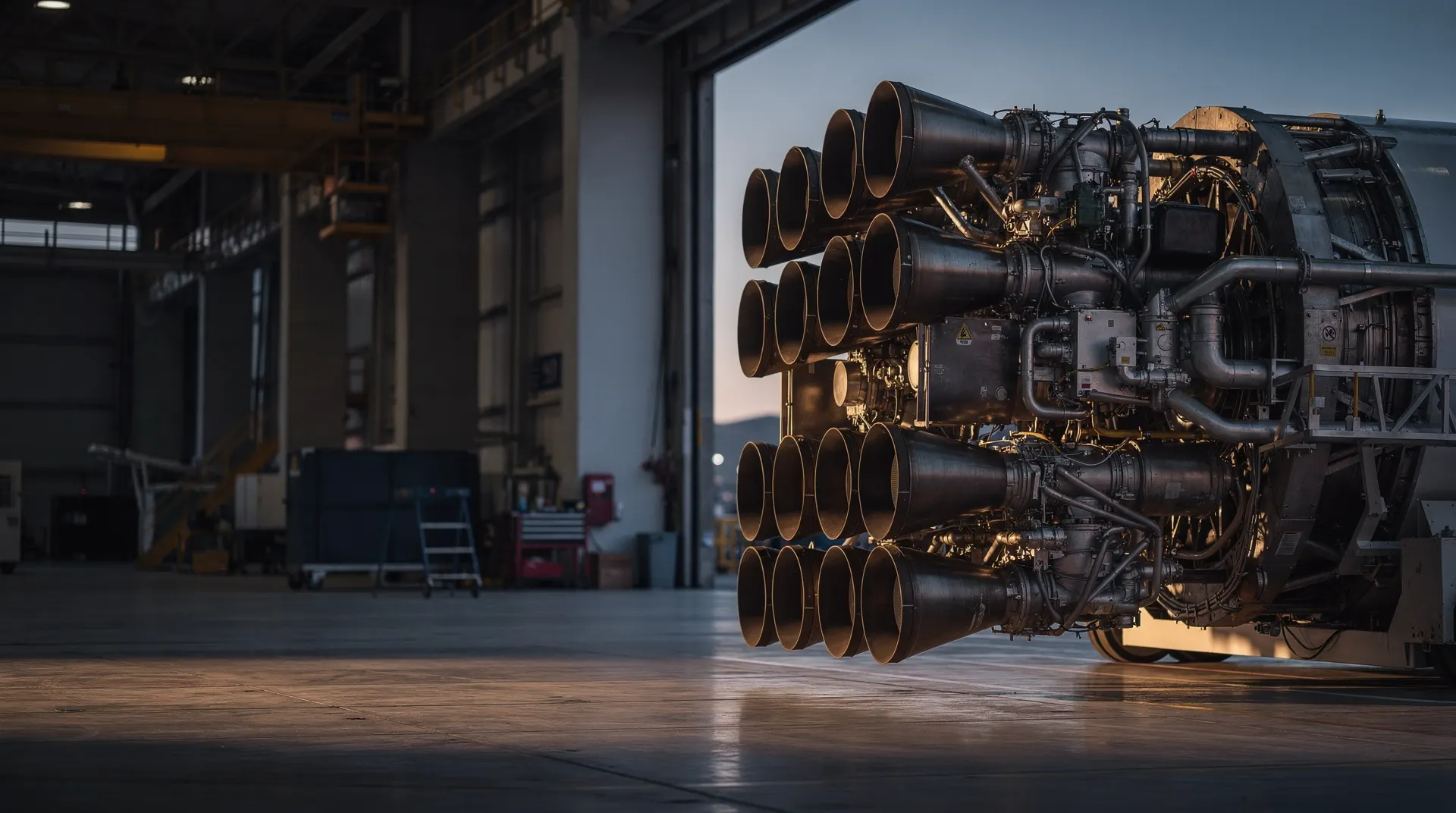
Blue Origin announced Thursday that its New Glenn rocket will launch Google's Project Suncatcher satellites in 2029, the first firm launch contract behind the search giant's plan to run AI data centers in orbit. Google disclosed the Project Suncatcher effort roughly a year ago and has framed it as a research moonshot, and the mission statement lays out the ambition: satellites carrying computing capacity at about the scale of a data center rack, placed in sun-synchronous orbit where they can draw nearly continuous solar energy.
“Project Suncatcher is a long-term moonshot to scale AI infrastructure in space by tapping into the abundant solar power in orbit,” Travis Beals, senior director of Project Suncatcher at Google, said in the release. “This dedicated launch with Blue Origin represents a crucial milestone on our roadmap as we expand the boundaries of what's possible for the future of compute.” The flight will ride the 7 by 2 variant of New Glenn, the smaller version of a rocket that has launched three times to date.
Related reading: Starship Flight 15 launch targets first double catch on Nov 13.
The timing is the story. U.S. commercial heavy-lift rockets, New Glenn included, are filling their launch manifests through 2030, and Google is locking in orbital capacity now rather than competing for leftover slots later. The 2029 mission is best read as a technology demonstration: Google wants to prove it can network solar-powered satellites equipped with AI chips and run machine-learning compute in space. It has not said who will build the satellites, which may weigh on the order of several tons.
The capital math is the hard part. Without ultra-low-cost heavy lift, orbital data centers cannot compete with terrestrial ones on cost, and Google has said its plan depends on the mid-2030s, when it projects launch prices could fall to as little as $200 per kilogram. The only rocket likely to reach those costs within a decade is SpaceX's Starship, and SpaceX has made clear it will keep much of that lift capacity for its own payloads.
Related reading: Trapped Ion Quantum Chips Take a Step Toward Scale: Universal Quantum Launches the iQPU.
That puts Google in a bind the Blue Origin deal only partially solves. A single launch in 2029 covers a demonstration, but a real constellation in the 2030s needs cheap, repeatable rides. Reaching the $200-per-kilogram target would likely require a still larger, fully reusable Starship than the one flying now, and SpaceX has powerful incentives to keep that capacity for itself. New Glenn's cost profile faces a disadvantage against a fully reusable, high-cadence Starship, which is the risk embedded in Google's plan: it is paying years ahead for a ride that may still lose the cost war that matters. Google could end up subsidizing the very market its future competitors will lean on.
The economics have not stopped the build-out. SpaceX has spent more than $15 billion developing Starship, per its 2026 securities filings, and Blue Origin has invested billions in New Glenn, with both companies more than a decade into the work. Smaller entrants like Rocket Lab, Relativity Space and Stoke Space are still working through the growing pains of medium-lift vehicles, so the realistic near-term choice for any company that wants orbital compute is New Glenn, Starship or nothing.
Related reading: SpaceX catches Starship from orbit, a first for an orbital upper stage.
For the cloud and launch-services complex, this is a dated marker on the AI infrastructure race: Google has decided space-based compute is worth a binding rocket contract in 2029, and heavy-lift capacity is scarce enough that it secured years ahead. The next thing to watch is whoever Google picks to build the satellites, and how quickly New Glenn's manifest fills behind this anchor customer. Whether orbital data centers ever pencil out on the $200-per-kilogram math is a 2030s question, but Google just put a launch date on its answer.
Related reading: Nvidia Q4 guidance: zero China revenue, margin guide 71-72%.
This content is for informational purposes only and does not constitute financial advice. Past performance is not indicative of future results. Consult a qualified financial advisor before making investment decisions.
Get daily intelligence delivered
Create a free account for the Daily Brief every weekday and The Week Ahead every Sunday. No card required.