Trump data center tax threat: costs of taxing offshore AI builds

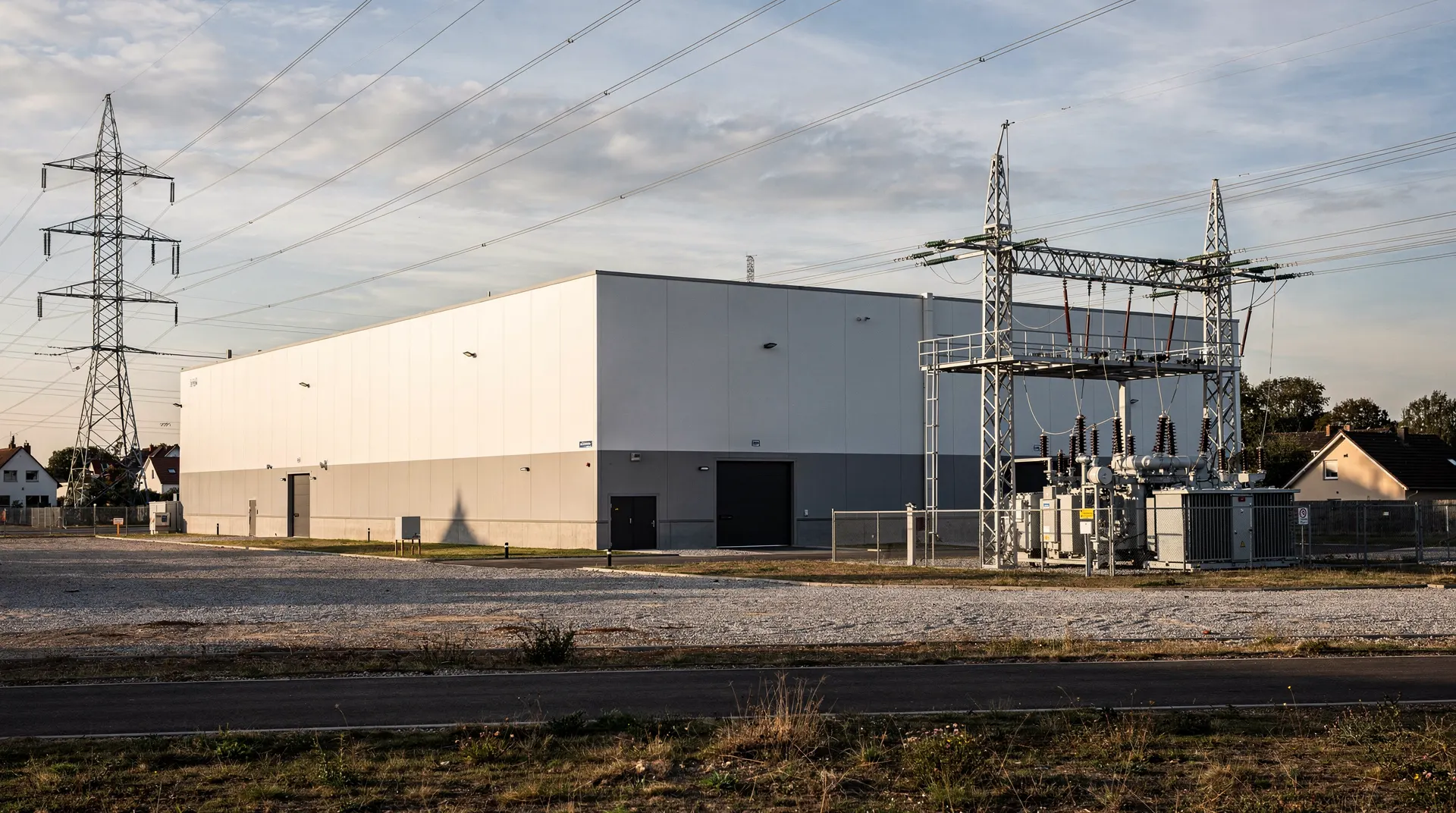
President Trump said on Friday that U.S. companies building data centers outside the country will face a "tremendous tax," a declared policy threat that could pull billions of dollars of AI and cloud investment away from offshore hubs and back into American facilities. That shift, if it comes, carries a household cost: data centers are giant electricity customers, and more of them on U.S. soil means more pressure on the grid, and eventually on power bills.
The president made the remarks at a White House press conference on Friday, November 20. "We're going to fight very hard for the data centers," he said. He seemed to acknowledge the idea had not been fully worked out inside the administration. "I don't know if that's a breaking story," he said. "I haven't even said that to my people. But I'm telling them now they're here." On companies that keep building outside the U.S., he said, "they can, but we're going to put a tremendous tax on them."
Related reading: Senate energy permitting bill passes 62-33, heads to House.
Those are the president's own words at the news conference, as reported by CNBC. Nothing has been filed. There is no executive order, no bill, and no guidance from Treasury or the IRS. The "tremendous tax" is a declared threat from the administration, not an enacted levy, and the size of any penalty, if one ever takes shape, is entirely unspecified.
Who would feel it first: the largest U.S. cloud and AI companies. Alphabet, Amazon, Microsoft, Meta and Oracle all operate data centers outside the United States, often to serve clients in-country and to satisfy local data rules. A tax on new offshore builds would either raise the cost of that expansion or push it home. The domestic winners would be U.S. data-center builders, data-center REITs, and the construction, equipment and chip supply chains that feed them. The companies footing a new tax, and the businesses that buy their cloud capacity at the other end, would carry the cost.
Related reading: Vertiv Named for a Nearly $1B Brunei Data Center. US Superintelligence Exports Reach SE Asia..
For the household reader, the angle is electricity. Data centers are among the fastest-growing loads on the U.S. grid, and shifting more construction inland only adds to that. The average U.S. residential price stood at 18.16 cents per kilowatt-hour in August, according to the U.S. Energy Information Administration, down a touch from 18.44 cents in May as seasonal demand eased. A surge of new data-center construction would put renewed upward pressure on regional rates over time, though no single project moves a national average quickly.
The public opposition is real, and it is part of why this buildout is politically tangled. CNBC's All-America Economic Survey found that 64 percent of registered voters oppose an AI data center within 10 miles of their home, against 13 percent who support one. The administration has already pushed to speed up domestic permitting: a July 2025 White House fact sheet and the accompanying presidential action, "Accelerating Federal Permitting of Data Center Infrastructure," directed federal agencies to fast-track U.S. sites. The offshore-tax threat is the blunt counterpart to that same onshoring drive.
Related reading: Trump Administration Federal Student Loans: 2026 Rules Explained.
What the threat does to capital spending today is create uncertainty rather than a clean pivot. Cloud providers weigh a prospective penalty against the cost of building at home, where land, energy and permitting run higher in the tightest markets. If the tax becomes law, expect more onshoring and higher total build costs, with part of that showing up in cloud and AI prices and, eventually, in the power bills behind them. Until a formal proposal exists, the honest read is that location decisions get paused, not cancelled.
The next catalyst is any step that turns the words into a rule: a formal White House statement, an executive order, Treasury or IRS guidance, or a tax provision in the next congressional bill. Watch for those, and for how the big cloud providers frame international expansion in their next earnings calls. The thresholds that matter to households are whether the pace of U.S. data-center construction accelerates, and what that does to regional electricity demand and the rates utilities then ask regulators to approve.
Related reading: EIA October Outlook: Diesel Fell 18 Cents.
This content is for informational purposes only and does not constitute financial advice. Past performance is not indicative of future results. Consult a qualified financial advisor before making investment decisions.
Get daily intelligence delivered
Create a free account for the Daily Brief every weekday and The Week Ahead every Sunday. No card required.