American Airlines ends international first class, rolls out 70-suite business cabin

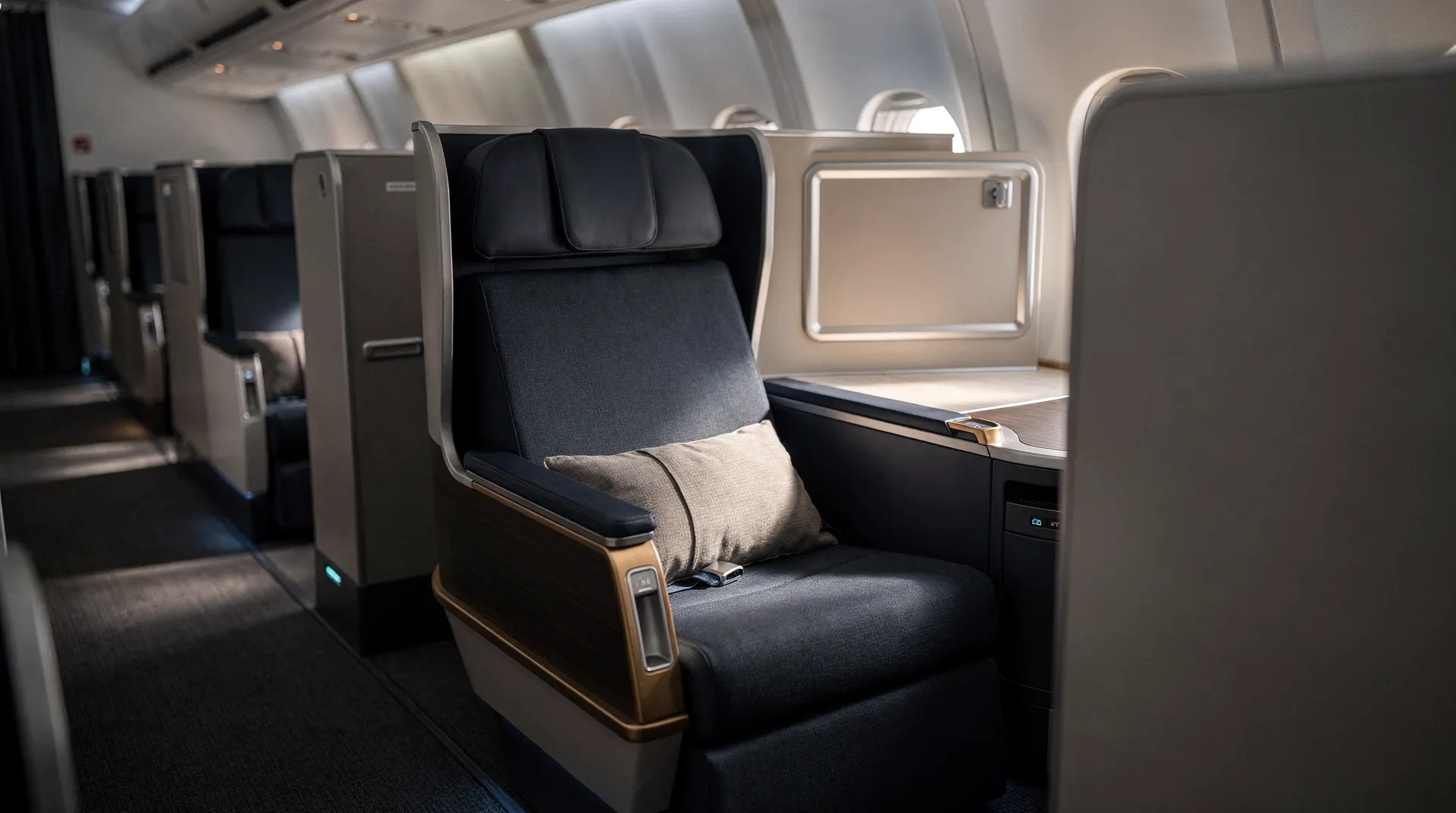
American Airlines has stopped selling the last international first-class cabin operated by any major U.S. network carrier. Flagship First on the Boeing 777-300ER is no longer available for purchase for travel beginning Nov. 19, and American is selling that 20-aircraft fleet as each jet is retrofitted into a business cabin with 70 suites. The change ends a product that survived at one airline long after its two biggest rivals retired theirs, and it is the clearest sign yet that the big three U.S. carriers now compete for premium revenue almost entirely inside business class.
American's first retrofitted 777-300ER entered service Sept. 2 on the New York JFK to Buenos Aires route, the airline said in its official announcement. The old layout carried eight Flagship First seats, 52 business seats, 28 premium economy seats and 216 main-cabin seats, for 304 total. The refurbished aircraft instead has 70 Flagship Suite business seats, 44 premium economy seats, 30 extra-legroom main-cabin seats and 186 main-cabin seats, for 330 total. American says the jet offers 144 premium seats, more than any other U.S. carrier operates on a single aircraft. Eight of the 70 suites carry the Flagship Suite Preferred label, with up to 19 percent more bed space and 42 percent more living area.
Related reading: United Airlines blocks AI agents from booking flights over security concerns.
The economics explain the schedule. A sample LAX to London fare on the new cabin was about $12,994 one-way in business this week, against about $15,669 for the eight-seat first-class cabin it replaces, CNBC reported. American's chief commercial officer, Nat Pieper, framed it as a unit-cost problem: eight seats could not carry the overhead of a dedicated cabin, crew and service. 'You don't have enough seats to make the seat cost competitive,' he said. 'It's got to be a yield play. You need more business-class seats.' The retrofit spreads the same crew and fuel across 10 more lie-flat seats, from 60 before to 70 suites now, and 16 more premium economy seats, which is how the airline plans to lift revenue per departure without pricing a single thin first cabin higher.
The last revenue flight with a separate international first cabin, the Sydney to Los Angeles departure, flew Friday, Nov. 20. Delta and United retired their international first products years ago and rebuilt the noses of their widebodies around Delta One and Polaris suites, then went further this year by selling basic versions of those cabins with tighter rules. United, the only other U.S. operator of the 777-300ER, retrofitted its fleet in 2019 to hold up to 60 business seats, so American now carries the larger premium cabin on the same airplane type. American is also expanding business seating elsewhere: the 787-9 carries 51 suites, and the airline is weighing a 787-8 move from 20 suites toward the low 30s, according to CNBC.
Related reading: Nvidia Q3 earnings beat expectations as it raises forecast.
The risk is that premium supply outruns premium demand. First class is not dead globally: Singapore Airlines, Lufthansa, British Airways and Air France have all refreshed or expanded their first cabins in the past year, and British Airways is building a 106-suite business cabin on the A380 while upgrading its first product too. If American, Delta and United each keep adding premium seats, the prize is filling them at fares that still beat economy; the trap is discounting business class to hold load factor, which is exactly the yield erosion that unit economics are meant to avoid. Corporate travel policy adds another constraint, since many company accounts already cap which travelers may book top-tier cabins.
The dated catalysts are already public. Transcontinental Flagship First stays on American's A321T subfleet until travel beginning March 28, 2027, when Airbus A321XLR deliveries take over, and American plans to finish the 777-300ER retrofits by the end of 2027. That gives investors a calendar to measure whether the 70-suite cabin holds its fare level as United and Delta push 64-suite products on their own widebodies. The test for the sector is straightforward: consolidating premium seats into business class only helps unit revenue if the bigger cabins price like the old first class did, and airlines that underfill them will find out fast.
Related reading: United Airlines stock falls 8% as flights resume after system outage.
Related reading: Southwest Airlines Q3 2026 Earnings: EPS Beat, Revenue Record, Fuel Cuts Guide.
This content is for informational purposes only and does not constitute financial advice. Past performance is not indicative of future results. Consult a qualified financial advisor before making investment decisions.
Get daily intelligence delivered
Create a free account for the Daily Brief every weekday and The Week Ahead every Sunday. No card required.