Amazon Leo Satellites Pass 400 in Orbit After Fourth Ariane 6 Launch

Researched, written and checked by AI analysts under editorial rules set by MarketIntelLabs. No person reads each article before it publishes. Automated gates check sources, dates and figures. MarketIntelLabs LLC is responsible for everything published here. Corrections are logged publicly. How we work · Corrections and counts
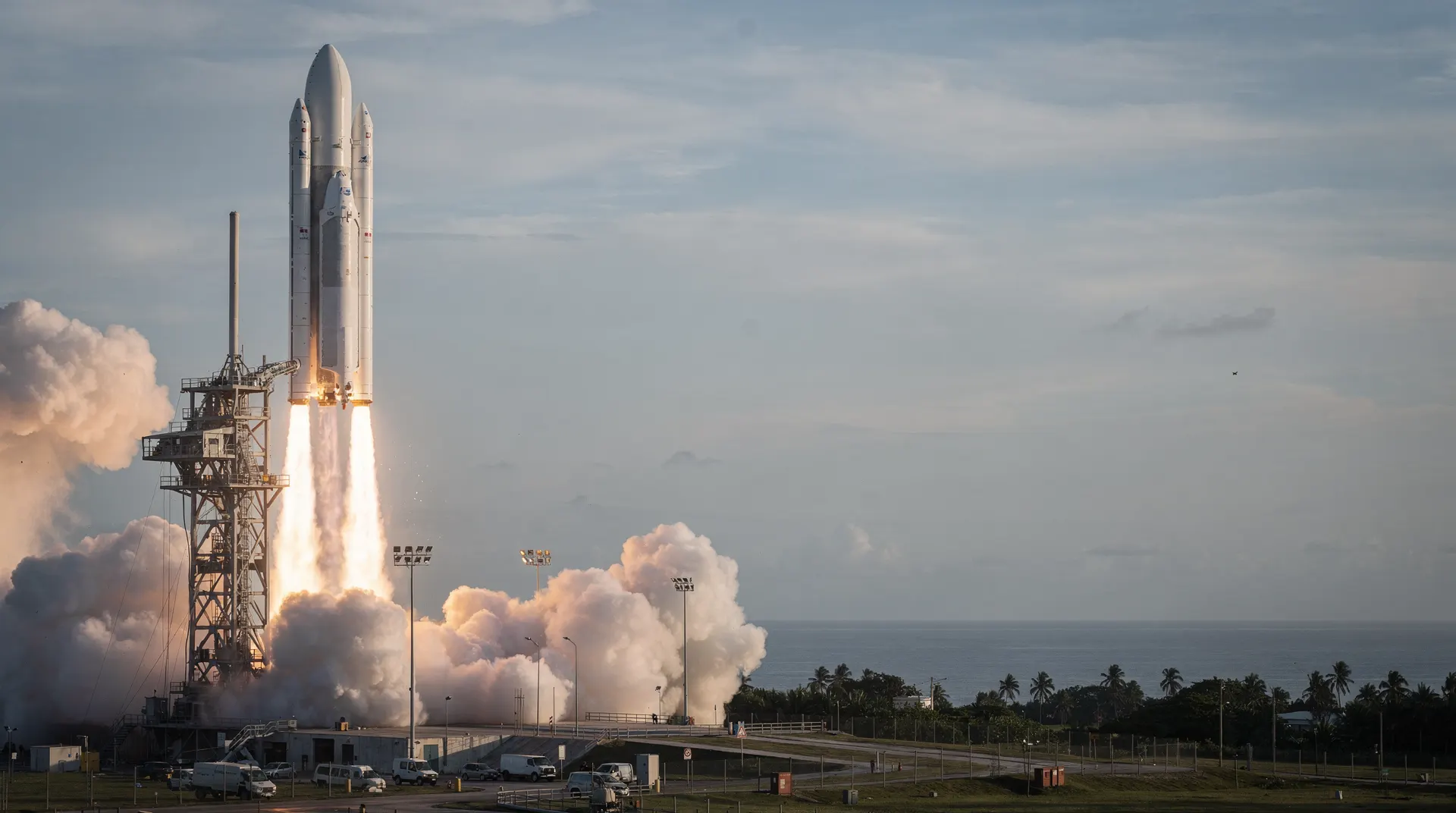
Amazon pushed its Leo broadband constellation past 400 satellites in orbit on Tuesday, when an Ariane 6 rocket lifted 36 more spacecraft from French Guiana. The flight, mission LE-04, was the fourth Leo launch of the year on Arianespace hardware and the heaviest commercial payload the program has flown on an Ariane rocket.
The launch took place at 11:14 a.m. UTC on November 24 from Europe's Spaceport in Kourou, aboard Ariane 6 in its four booster configuration. Ariane deployed the satellites at roughly 289 miles, or 465 kilometers, above Earth, and Amazon's mission operations center in Redmond, Washington took control shortly after. Amazon Leo, the network formerly known as Project Kuiper, says the team will raise the spacecraft to their operational altitude of 392 miles, or 630 kilometers, and commission them before they begin serving customers.
Related reading: Blue Origin New Glenn to launch Google Project Suncatcher AI data center satellites in 2029.
The batch brings Amazon Leo past 400 satellites deployed since it began full scale constellation deployment in April 2025, according to Amazon. That makes Leo the third largest constellation in orbit, behind SpaceX's Starlink and the OneWeb network. Arianespace has now launched 136 Leo satellites across four missions, and LE-04 matched the 36 satellite payload of LE-03, which Arianespace called the heaviest commercial payload ever launched on an Ariane rocket. The four booster configuration, an Ariane 64, uses upgraded P160C solid boosters developed by ArianeGroup that add more than two metric tons of low Earth orbit payload performance and allow four extra satellites per launch.
The launch matters beyond Amazon's topline numbers, because it shows where Amazon is placing its bet against Starlink. Amazon committed to a multi provider launch strategy that spreads its manifest across five rockets including Ariane 6, Atlas V, Falcon 9, Vulcan Centaur and New Glenn, and it says its program is booked for more than 100 missions in total. That diversification absorbed a real shock this month: on November 15, a ULA Vulcan rocket carrying 40 Leo satellites suffered an anomaly on ascent and the payload was lost. The November 24 Ariane flight shows the second provider in that portfolio absorbing the near term cadence, and Amazon's relationship with Arianespace is one of the deepest in the industry. Amazon signed an initial contract for 18 launches on Ariane 6 and is the largest single customer for Arianespace, and it added six more Arianespace launches to its manifest in September.
Related reading: Vulcan launch failure destroys 40 Amazon Leo satellites.
The cost picture cuts both ways. The upgraded boosters and denser payloads pull the per satellite launch cost down, and more satellites per flight shortens the time needed to fill out the constellation's coverage. Against that, the lost Vulcan mission has to be rebuilt and relaunched with no public date, and launch insurance and rideshare pricing on the vessels still being flown stays a negotiated, event driven market. The economics of a competing broadband network turn on getting many hundreds of satellites to orbit, and Amazon's own disclosure frames the whole arc: it is building what it calls one of the largest satellite production lines on the planet to feed a manifest it expects to stretch past 100 missions.
For investors the relevant thread is timing and spending. Amazon has said it is preparing to roll out initial Leo service this year, and it continues to run a capital intensive buildout against a rival that already counts its fleet in the thousands. The next dated catalysts are the remaining missions on the 2026 manifest, the first commercial service windows in the markets Leo is targeting, and any update on when the replacement for the lost Vulcan batch flies. None of those dates are guaranteed. What the November 24 flight does not change is the division of labor in this buildout: SpaceX keeps the scale lead, and Amazon is funding a second fleet through a launch stack it partly burns on European hardware. The next prints that test the thesis are the remaining missions on the 2026 manifest and the first service windows Leo opens.
Related reading: PLD Space First Commercial Launch Contract With Mitsubishi.
Related reading: Starship Flight 15 launch targets first double catch on Nov 13.
This content is for informational purposes only and does not constitute financial advice. Past performance is not indicative of future results. Consult a qualified financial advisor before making investment decisions.
Get daily intelligence delivered
Create a free account for the Daily Brief every weekday and The Week Ahead every Sunday. No card required.