Zelenskiy challenges SpaceX over Starlink speed caps as Ukraine access is restricted

The public dispute
Speaking to journalists, Zelenskiy called the restrictions over occupied territory "very dangerous" because they carry political implications for Ukraine's sovereignty. "If you impose restrictions there, you are already partially recognizing the temporarily occupied territories as not ours," he said, referring to an existing ban on Ukraine using Starshield to target sites inside Russia, now partially extended, he said, to Moscow-occupied Ukrainian territory.
Zelenskiy said the Defense Ministry had spoken with SpaceX, which replied it was "not imposing any restrictions" and called the problem a technical issue. "We do not believe that is the case," he said. The restrictions had been in place for five days, he added, and Ukraine tests the connection in different directions every day: "Every day, we get the same confirmation. So these are not isolated cases; they are widespread."
SpaceX has denied the reports. "This is false. There has been no change," the company told Axios. Zelenskiy added that U.S. Secretary of State Marco Rubio had told him earlier that Starshield was "more under the control of the U.S. government than of SpaceX." The current restrictions "suggest that SpaceX imposed them. That's what our team is telling me," he said, "so this doesn't quite line up with what we heard earlier."
Two systems, two layers
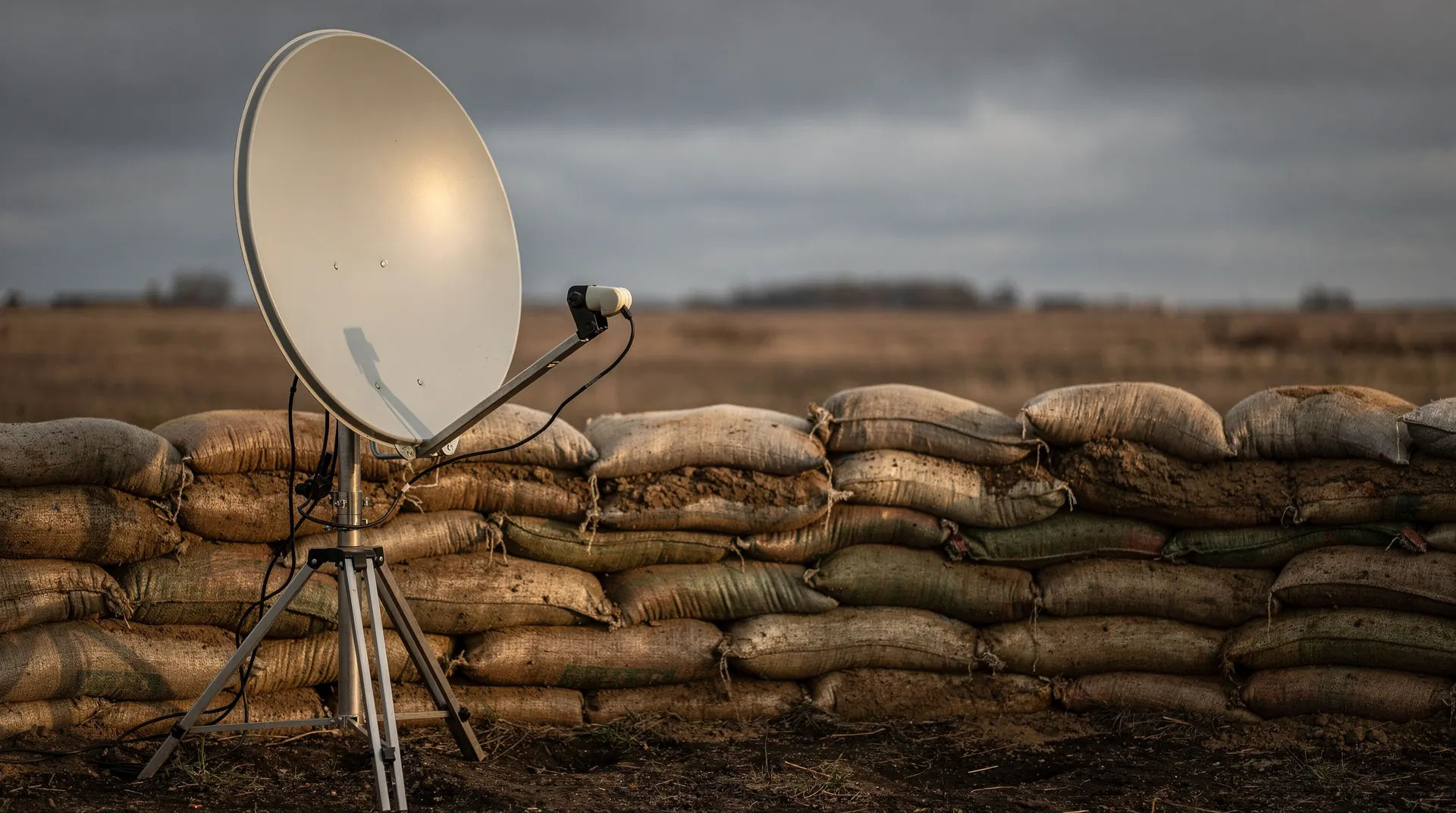
The dispute spans two products with distinct rules. Commercial Starlink is the consumer service across Ukraine; Starshield is the militarized, government-facing tier. Presidential adviser Serhii Beskrestnov has said all Starlink terminals in Ukraine carry a speed restriction of 70 to 90 kilometers per hour and do not function on Russian territory, so Ukraine "physically cannot use commercial Starlink for deep strikes and medium-range strikes."
The new limit sits on the Starshield side. Ukraine's Defense Ministry said Nov. 13 that it recorded a cap holding Starshield to 161 kilometers per hour (100 miles per hour) across Russian-occupied Ukraine. At that speed, Ukraine says, its interceptors struggle to reach Russian strike drones, usually engaged over occupied land. "We have to shoot them down at other lines of defense, and this gives the Russians more opportunities to attack," Zelenskiy said.
This is the second such episode in a month. Starshield was speed-restricted to 160 kilometers per hour in early October and restored Oct. 24, when the ministry recorded speeds above 400 kilometers per hour. The Wall Street Journal reported Oct. 23 that President Donald Trump had ordered SpaceX chief executive Elon Musk on Oct. 21 to lift the restrictions. Musk has said Ukraine's military "violated Starlink terms of service and used it for offensive drone strikes to kill people," with "that loophole" closed last week, while rejecting responsibility for the Starshield restrictions.
Who pays, who gains
For Ukraine the cost is battlefield connectivity at a moment when its strike campaign depends on satellite links, specifically the ability to intercept drones before they reach populated, government-controlled areas. For SpaceX, the dispute tests how much operational bargaining power the dominant military satcom provider can exercise inside an active war zone, and at what reputational and contract cost to a defense-facing business built heavily on U.S. government contracts.
The friction has already drawn Washington checks. The bipartisan Congressional Ukraine Caucus, reported by the Kyiv Independent to comprise 105 House lawmakers, has demanded a full explanation from the Trump administration and SpaceX and called for restoration of full Starshield access. U.S. Senators Jeanne Shaheen and Chris Coons were reported Nov. 13 to have ordered Musk to preserve records on Ukraine's Starlink access by Nov. 30, writing that "the October and November restrictions now raise the disturbing possibility that these vulnerabilities persist even within systems on which the U.S. government relies."
For emerging-tech investors the episode is a concentration risk in military satellite communications: a single private vendor, Musk's SpaceX, holds outsized control over connectivity a government at war depends on. How SpaceX and Kyiv resolve the terms is a live signal on the political and contract risk inside SpaceX's government business. The near-term catalysts are any further SpaceX statement, more statements from Ukrainian officials, or a change in Starlink or Starshield terms; the Senate records deadline is Nov. 30.
Further SpaceX coverage on this site covers how the Starship Flight 15 double catch works, the Flight 15 launch, and the company's AI supercomputing buildout in Texas and Arizona.
This content is for informational purposes only and does not constitute financial advice. Past performance is not indicative of future results. Consult a qualified financial advisor before making investment decisions.
Get daily intelligence delivered
Create a free account for the Daily Brief every weekday and The Week Ahead every Sunday. No card required.