macroboltSpecial Coverage

September Employment Situation: What It Means

Published September 4, 20263 min read
Line chart showing US nonfarm payrolls trend over time
Nonfarm payrolls increased by 190,000 in September, beating expectations of 180,000. — Illustration: MarketIntelLabs

The labor market proved stronger than expected in September. Nonfarm payrolls added 190,000 jobs, beating the 180,000 consensus. Unemployment held at 3.8% versus the 3.9% economists expected.

Average hourly earnings rose 0.3% month over month and accelerated to 4.2% year over year from 4.1%. The data suggests the economy retains hiring momentum even as the Fed maintains its restrictive policy stance.

The payroll beat reduces urgency for Fed rate cuts. Markets had been pricing in a September 2026 easing based on slowing job growth. This report reinforces the Fed's "data dependent" posture where the data keeps pointing toward patience.

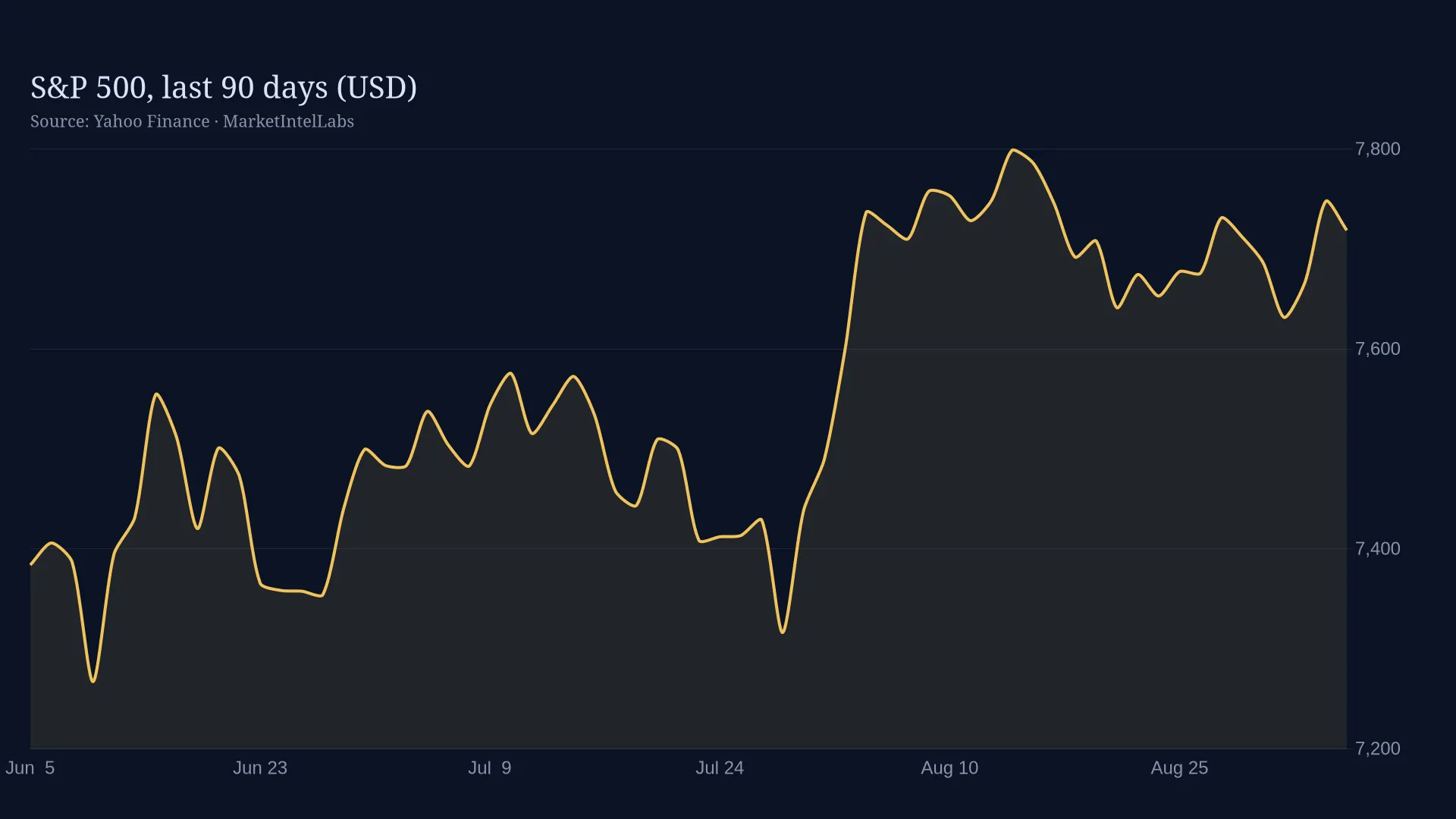
The 10-year Treasury yield ticked up 1 basis point to 4.77%. The S&P 500 slipped 0.4% on the news. Gold sold off 0.9% as higher real yields pressured the yellow metal.

Under the surface, the report carries more nuance. July payrolls were revised upward by 10,000 to 175,000. This suggests the underlying trend may be stronger than initially reported.

Labor force participation rose to 62.7%, the highest level in three months. This matters because it means the unemployment rate held steady not because people dropped out. More people entered and found work. That is a healthier labor market signal than the headline alone captures.

Wage growth bears watching. The 0.3% monthly gain was in line with expectations, but the year-over-year acceleration to 4.2% is not. Higher wages support consumer spending and corporate earnings. They also complicate the Fed's inflation calculus.

The central bank has been guiding that inflation will return to 2% over time. Persistent wage pressure above 4% keeps core services inflation elevated. The Fed's framework requires stable prices AND maximum employment. Right now, labor market data is doing its part on the second mandate while inflation still requires work.

The market reaction was muted compared to typical payroll surprises. When payrolls beat by 10,000, equities usually sell off more sharply on the implications for higher rates. The fact that the S&P 500 declined just 0.4% suggests markets may already be positioned for a "higher for longer" scenario.

That positioning could change if subsequent reports show this month was an outlier rather than a new trend.

For traders focused on sectors, the data favors value over growth. Higher rates pressure long-duration growth stocks. Financials benefit from a steeper yield curve.

Small caps (IWM) were essentially flat, gaining 0.1%, suggesting some rotation into cyclicals on the growth outlook. The Nasdaq-100's 0.03% move reflects its lower sensitivity to labor data relative to the broader market.

What comes next matters more than today's headline. The Fed meets in two weeks, and Chair Powell has emphasized that rates will stay restrictive until inflation is clearly trending toward 2%. This report does not accelerate that timeline.

If October payrolls come in below 150,000, the calculus shifts. But for now, the data supports holding rates steady.

The risks to this view are not symmetrical. A weaker labor market would force the Fed to pivot quickly to protect employment, potentially at the cost of letting inflation run hot. A stronger labor market could push wage growth above 5% and force the Fed into further hikes to defend its inflation credibility.

The current path is where the labor market cools gradually without a sharp deterioration. That is the narrow band the Fed is managing.

Three weeks from now, markets will be parsing this report alongside the October CPI print. The combination will set the narrative for the year's final months.

For now, the message from the labor market is clear. The economy is not rolling over, and the Fed has room to stay patient. That is good news for the soft-landing scenario. The easy gains in risk assets from expecting an imminent rate cut are gone.

Related Reading

Get daily intelligence delivered

Create a free account for the Daily Brief every weekday and The Week Ahead every Sunday. No card required.