SAP planqc quantum link: hardware tests planned for 2027

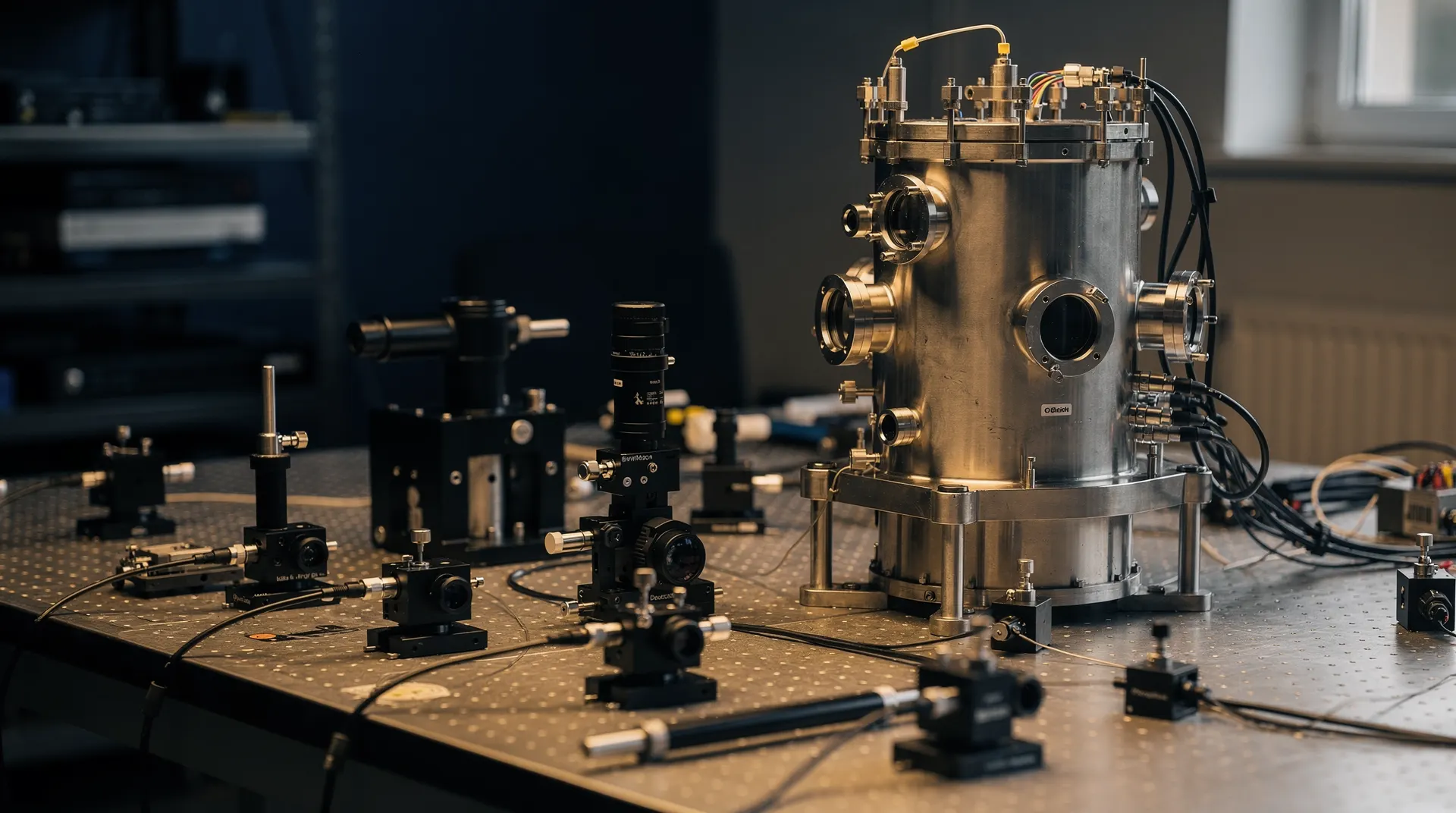
On Thursday at Quantum Day Munich, SAP and planqc demonstrated the first live link between a neutral-atom quantum computer and an SAP enterprise environment. The integration ran a delivery-truck loading problem end to end, from an SAP logistics workflow into planqc's quantum stack and back. From 2027 the two companies plan to test business scenarios on planqc's real quantum hardware, moving past the simulator used in the demo.
The system works on a hybrid model. A cloud interface lets SAP software hand optimization jobs to planqc's environment, which combines classical solvers, quantum simulators and real quantum hardware behind the same connection. The demonstration task, loading beverage delivery trucks for kiosk, supermarket and food-service customers, is a bin-packing problem whose possible configurations grow exponentially with each added order. A quantum simulator worked out a loading plan and sent it back into the SAP process.
Related reading: Q-CTRL raises US$290 million, minting a quantum unicorn.
Neither company disclosed financial terms or hardware performance figures. No qubit counts were given, and the companies said further testing will show whether quantum methods beat classical solvers on real workloads. The honest reading of a Thursday release is that this is a technology milestone with a 2027 test target, not a committed revenue pipeline for either side.
The customer story matters for planqc. The Munich maker of neutral-atom machines is private, so a listed enterprise software giant testing its hardware inside a live logistics workflow is the kind of validation a startup shows a follow-on round. planqc said on Nov 23 that it is opening a UK subsidiary with an assembly and commissioning lab in Cambridge, a separate step in the same commercialization push. SAP adds a second signal: the company is standing up its first Quantum Agents on the same base and building a dedicated quantum team in Munich, with Carsten Polenz, SAP's global head of quantum, pointing to neutral-atom machines as a promising route to scalable systems.
Related reading: D-Wave Quantum lands up to $100 million in CHIPS funding for its next quantum machines.
For investors the fresh number is what the public quantum names did on the news. IonQ rose 0.26%, while Rigetti fell 5.76%, D-Wave (QBTS) fell 8.97% and the Defiance Quantum ETF (QTUM) was down 5.63%, per the live quote cache on Nov 27. Enterprise-software validation is the kind of catalyst the sector has lacked, yet the listed names did not rally on a headline that pointed at 2027.
A few caveats separate Thursday's demo from a commercial milestone. The loading problem ran on a simulator, not on real neutral-atom hardware. The companies gave no cost curve, no error-rate data and no timeline beyond a 2027 start for business-scenario tests. Quantum optimization still has to prove it beats strong classical solvers on production workloads, and the loading problem chosen is one where classical methods are already competent, so the bar is real hardware beating a good knob-tuned baseline, not just completing the task.
Related reading: Trapped Ion Quantum Chips Take a Step Toward Scale: Universal Quantum Launches the iQPU.
The dated catalyst to watch is the 2027 hardware tests. If those run on planqc machines inside an SAP customer account and beat classical solutions on measured cost, it becomes a first line of evidence that neutral-atom hardware has a harness in enterprise logistics. Until then the deal reads as SAP buying optionality and planqc earning a reference customer, a partnership both sides can show at the next financing event.
Why this matters for the frontier markets you already track: the step is planqc moving from research hardware to a harness a global software company can wire into a live process. Neutral-atom machines use arrays of atoms held in laser-created optical lattices, a design planqc and its peers argue scales more cheaply than the superconducting qubits behind IonQ and other rivals. That architecture debate is exactly the kind of thing an enterprise-proof test on real hardware will start to resolve, which is why the quantum complex bears watching even though the listed names have not rallied on the news.
Related reading: Quantum co-design: IBM, NVIDIA, Fermilab plan modular.
The comparison a careful reader wants is to earlier enterprise-quantum hookups. IBM and the other cloud vendors already expose quantum services over API, and banks and pharma have run pilots on them for years. What separates Thursday's demo is the venue, an end-to-end workflow inside SAP's own logistics module rather than a standalone quantum job, and the explicit plan to move that workflow onto real neutral-atom hardware. The distribution channel is the point: SAP touches the loading-planning problem for thousands of enterprises, and if the 2027 tests show a measurable win, the addressable surface for quantum optimization widens overnight.
On the bear side, neutral-atom hardware is younger than the superconducting line and has yet to publish the kind of error-rate and coherence numbers that benchmark exercises reward. The founding laboratory behind planqc has strong European academic backing, but the company has not quoted a customer production deployment, and a 2027 test plan leaves room for the hardware to fall short of the classical baseline. Investors should read Thursday as a validation event for a private firm, not as a confirmed performance curve.
This content is for informational purposes only and does not constitute financial advice.
Get daily intelligence delivered
Create a free account for the Daily Brief every weekday and The Week Ahead every Sunday. No card required.