Real income report: October pay up 0.5% as saving rate jumps


October was the month paychecks finally beat prices, and households banked the difference. Real disposable income rose 0.5%, its strongest month since January, after dipping 0.2% in September, according to the U.S. Bureau of Economic Analysis report released Wednesday. The personal consumption expenditures price index ran at a 3.8% annual pace, up from 3.7% in September, though the monthly increase slowed to 0.3% from 0.5%.
Here is what changed in dollars, not just index points. After inflation, the disposable income a typical household could actually spend rose 0.5% in one month. That reverses two straight months of flat-to-lower real pay, and it arrived alongside a slower pace of price increases, which is the combination a budget feels as breathing room. The one number that stood out is how much of that gain households kept. The personal saving rate climbed to 4.1% from September's 3.6%, the steepest one-month jump since January, and real spending was essentially flat.
Related reading: August PCE Spending Surged 0.9% as Real Income Stalled.
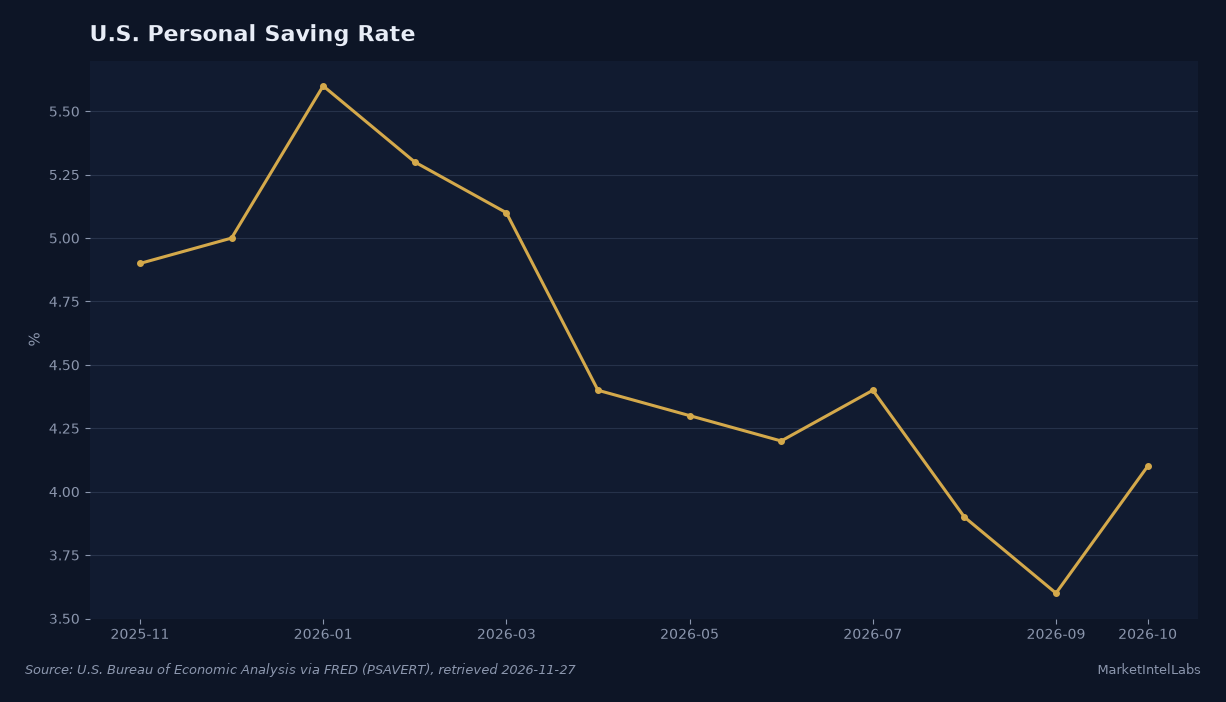
The income gains were broad, the BEA report shows. Current-dollar personal income rose $201.8 billion, or 0.7%, in October, led by compensation, government social benefits and dividend income. Disposable personal income, what is left after taxes, rose $200.5 billion, or 0.8%. The gain in real terms, after accounting for prices, was the 0.5%. A one-time Medicare Improvement Fund premium rebate boosted government social benefits in the month, a factor that will not repeat in November, so part of the surge is a seasonal one-off rather than a new wage trend.
The inflation side moved in the same direction. The PCE price index rose 0.3% in October, down from 0.5% in September, the BEA said. Strip out food and energy, and core prices rose 0.3% on the month and 3.3% from a year ago. For a household, the annual number is the one that sets the baseline: at a 3.8% yearly rate, a grocery and gas basket that cost $800 a year ago now runs about $30 a month higher. That is still faster than the roughly 2% pace the Federal Reserve targets, but it is no longer accelerating, and it is what let real pay show a gain.
For the broader framework, see our Fed policy coverage.
Related reading: Why Are Home Prices Falling in Real Terms for 16 Months?.
What the saving rate jump means
The story most households will feel is not the headline inflation number but the saving rate. After falling through much of 2026, from 5.6% in January to a low of 3.6% in September, the rate rebounded to 4.1% in October. Real personal consumption expenditures were flat, rising less than 0.1%, the BEA said. When a household holds spending flat while pay rises, the cushion grows, and October was the first month in months that cushion got materially bigger.
There are two ways to read that hold-back. The hopeful one is that with prices cooling and pay rising, families chose to rebuild reserves. The cautious one is that households are still guarding against higher bills on the way, which keeps demand soft and helps the Federal Reserve keep inflation from re-accelerating. Either way, the combination a shopper sees is the same: moderating price increases in the monthly index with a saving buffer that finally grew.
Related reading: Average hourly earnings top $38 but buy 0.6% less: the October real-pay squeeze.
What is coming
The next BEA income and spending report, for November, arrives December 23, after the Federal Reserve's next rate decision. Watch two things in it. First, whether real income holds its gain now that the Medicare premium rebate has dropped out of the income line. Second, whether the saving rate stays near 4% or slips back toward the September low. If real pay keeps its October pace while inflation holds near 3.8%, households keep the advantage; if the income gain was a one-off and prices stay at the current annual pace, the squeeze returns.
A closer look at the composition matters for what comes next. Compensation, by far the biggest slice of household income, kept growing, and dividend income rose as well, so the October gain was not only transfers. That mix matters: when pay itself drives real income higher, the gain leans toward durable; when one-off checks do the lifting, the next report can snap back. The October report had a bit of both, which is why December's numbers will be the real test of whether the budget math has genuinely turned in the family's favor.
Related reading: Why are US home prices still up 2.1% year over year?.
There is also a regional read worth naming. National averages still hide wide differences: cities where rents and services prices are stickiest saw real pay stretch less far, while the fall in gasoline prices this month gave a larger lift to households that drive more. The October national data cannot capture each metro, but it is the frame the Fed and the bond market use, and for the typical household it finally points the right way on the month.
For now, the October report is the first in months to put households ahead on the month, and the saving rate says they noticed. The immediate practical read: with prices still rising near 4% a year, keeping real pay ahead of that line remains the whole game, and this month the game went the family's way. This content is for informational purposes only and does not constitute financial advice.
Get daily intelligence delivered
Create a free account for the Daily Brief every weekday and The Week Ahead every Sunday. No card required.