Oil prices pull back from six-month highs: Houthi strike risk meets Qatari de-escalation chatter as a $20/bbl premium keeps the crude curve bid

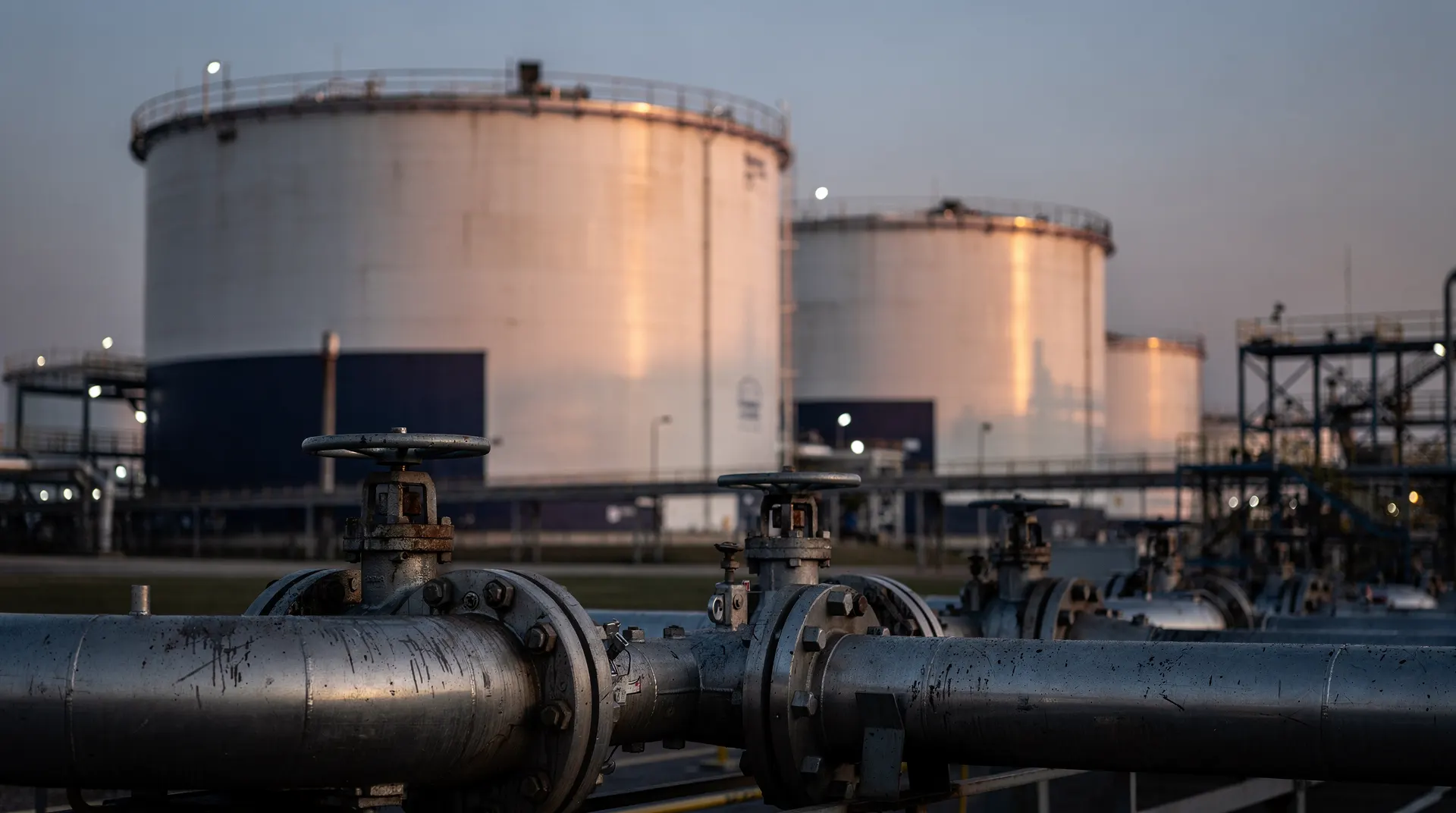
Oil retreated from six-month highs in Monday trading, with WTI easing about 2% to roughly $101 a barrel and Brent about 1.8% to near $114.5, as a Reuters report of Qatari-brokered de-escalation talks in Tehran cooled the conflict bid even while fresh Houthi strike risk on Saudi energy infrastructure kept supply fears alive (CNBC, Oct 26). The move is not a breakdown. It is the market taking a breath inside a two-sided range where a trader's estimate of a $20 a barrel geopolitical premium is doing most of the heavy lifting.
Last week set the stage. Brent climbed about 6% to a six-month high as reported Houthi strikes on Saudi Arabia's Shaybah field and threats to its East-West pipeline and refining assets tightened supply expectations, with WTI adding roughly $3 in Friday's session (CNBC, Oct 26; Daily Beirut, Oct 26). The strikes and the pipeline threats are reported developments, not confirmed outages, and they carry no broader tracking detail beyond what the reports state.
Related reading: Brent Oil Price Jumps Toward $111 as US-Israel Iran Strike Plans and Houthi Shaybah Attack Return.
Monday's counterweight was political. A Reuters report, carried by CNBC, said Qatari mediators were in Tehran working on de-escalation in coordination with the United States, and that channel cooled the conflict premium. Two supply-side signals reinforced the pullback: the Department of Energy's Friday authorization to release 400,000 barrels from the Strategic Petroleum Reserve to address a Louisiana refinery interruption, and reported Saudi plans to store crude in Singapore. All three point the same way, toward easing near-term tightness rather than more.
The offset is the premium itself. A trader told CNBC the geopolitical risk is worth roughly $20 a barrel, and the structural angle argues that bid is not spent: refinery damage, the brief notes, could persist into 2027, which means the market is pricing a supply gap that repairs may not close quickly. That is why the front of the curve has held instead of unwinding.
For the broader framework, see our crude oil coverage.
Related reading: Crude gave back $12 of its war premium on de-escalation talk. The distillate crack at $96.5 says the tightness never left..
The level work keeps crude in a defined box. WTI sits in a two-sided roughly $96 to $110 range with headline risk to the upside; front-month Brent finds support near $110 to $114 and the bear case only bites on a push toward $120 to $130, the zone where price itself destroys demand. Traders are watching whether the Tehran channel produces an actual de-escalation or collapses back into escalation headlines, and whether any new strike report lands with confirmed damage rather than threat.
The fundamentals underneath are still tightening. EIA weekly data for the week ending October 16 showed commercial crude down 3.06 million barrels and gasoline down 2.95 million barrels against a 1.68 million barrel distillate build, a second straight week of draws that does not support a clean bearish unwind (EIA). With FOMC decision day Wednesday and the geopolitics unresolved, oil looks likely to stay rangebound until the de-escalation channel either converts chatter into a concrete step or fails.
Related reading: Oil prices hold $105 as unverified ceasefire meets fresh Hormuz risk.
Sources
CNBC: Oil prices today: WTI, Brent (Oct 26, 2026)
Moneycontrol: Commodity Corner, oil prices ease (Oct 26, 2026)
Related reading: Brent price near $115 as Hormuz conflict premium holds: Brent-WTI spread stays near $13.7.
Daily Beirut: Oil slips from six-month peak (Oct 26, 2026)
EIA: weekly petroleum and storage data, week ending Oct 16
Disclaimer: This content is for informational purposes only and does not constitute financial advice. Past performance is not indicative of future results. Consult a qualified financial advisor before making investment decisions.
Get daily intelligence delivered
Create a free account for the Daily Brief every weekday and The Week Ahead every Sunday. No card required.