commodities

Oil Prices Edge Higher as OPEC+ Holds Steady

Published September 4, 20262 min read
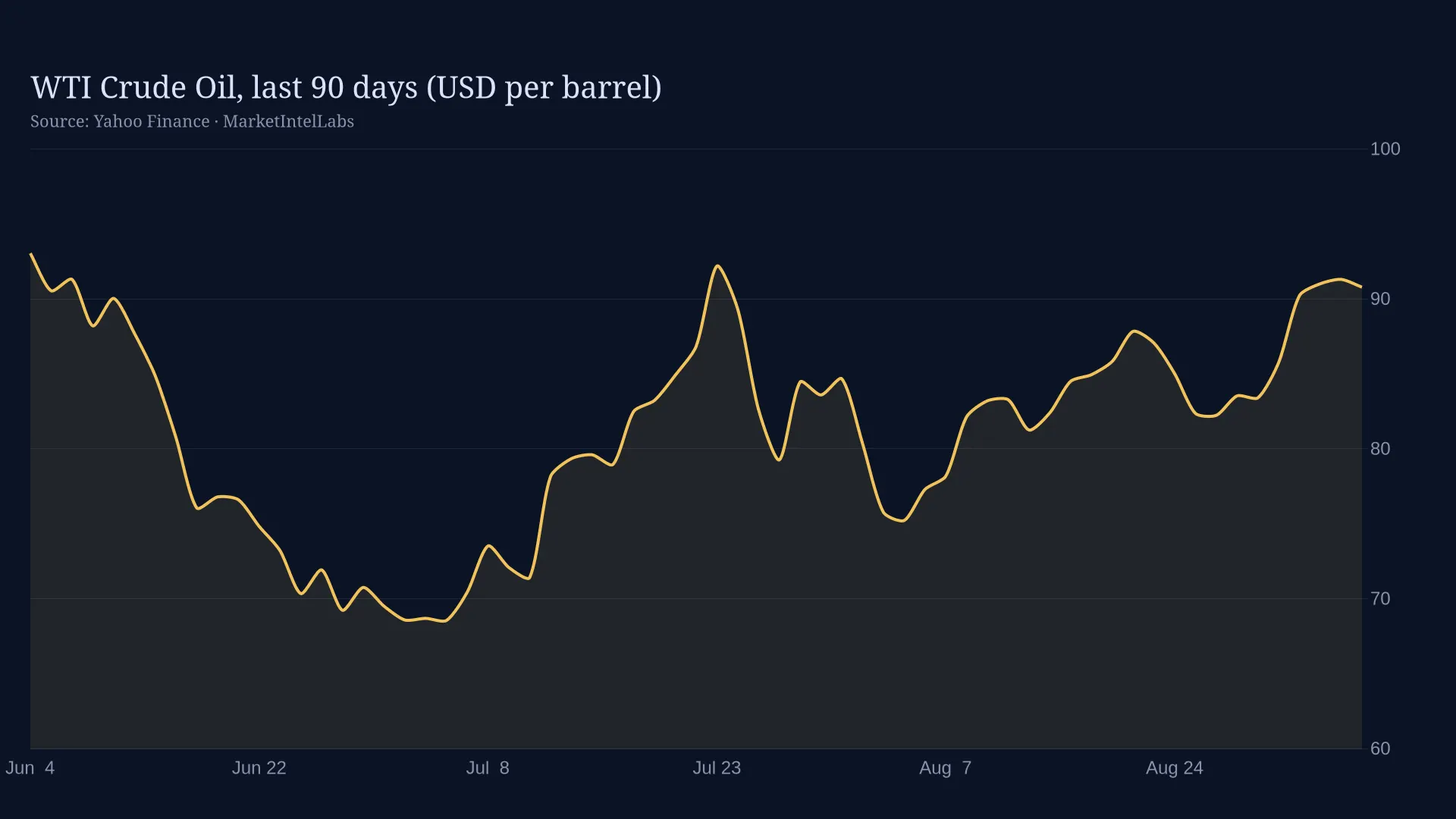
Line chart of WTI Crude Oil, last 90 days (USD per barrel) on a dark background
Crude edges higher as OPEC+ holds output steady, while gold and silver show a widening split between futures and physical ETF demand. — Illustration: MarketIntelLabs

Oil Prices Edge Higher as OPEC+ Holds Steady

Crude oil futures nudged up 0.1% to $91.39 on September 4, finding support from escalating U.S.-Iran tensions even as the market faces bearish inventory pressures. The modest gain comes as OPEC+ maintains steady production levels, leaving supply discipline intact but failing to offset growing concerns about demand softness.

Related reading: Macro Landscape: Inflation Moderates, Growth Holds Steady, Gold and Silver Break Out as Geopolitical Tensions Intensify, Asset Signals Roundup: Precious Metals Shine, Equities Tread Water.

The oil market is caught between two competing forces right now. On one side, geopolitical risk is providing a floor under prices after recent strikes on Iranian radar systems. This type of tension historically adds a $3-$5 premium to crude as traders price in potential supply disruptions. On the other side, fundamentals are weakening. CFTC positioning data shows non-commercial shorts outnumbering longs, with traders positioning for inventory builds and slowing global demand.

The divergence in precious metals markets offers a telling contrast to oil's mixed signals. Gold futures slipped 0.5% to $4,518, but the physically-backed GLD ETF surged 1.9%. That gap between paper and physical markets tells you something important: real buyers, specifically central banks and ETFs, are absorbing selling pressure from futures traders. Silver showed a similar pattern, with futures down 0.6% but the SLV ETF jumping 2.5%. This is retail and institutional accumulation in action.

CFTC data confirms the bullish sentiment in precious metals. Gold non-commercial longs exceed shorts by an 8.2-to-1 ratio, the most bullish positioning since early 2025. That kind of extreme often precedes a short-squeeze rally, especially if gold can break above the $4,500-$4,520 resistance zone. Central bank activity remains a tailwind too, as the Netherlands is moving billions in gold to London in what officials are calling a "crisis-preparedness" measure.

The cross-asset picture suggests markets are betting on easier monetary policy ahead. Gold's strength despite a flat dollar implies real-interest-rate expectations are falling, which aligns with growing consensus that the Fed will cut rates in Q4. A gold breakout above $4,500 would reinforce the commodities-over-equities theme that's been developing.

But risks lurk beneath the surface. The extreme long positioning in gold is itself a vulnerability. A hawkish Fed surprise or sudden dollar strength could trigger a sharp unwinding. Silver's industrial component makes it sensitive to a global recession that would hammer manufacturing demand. And oil's geopolitical premium could vanish quickly if U.S.-Iran tensions de-escalate, exposing the underlying inventory glut.

For traders watching these markets, the levels to watch are clear: gold at $4,500, silver at $68, and crude in the $89-$93 range. Breaks above or below these levels will tell you which narrative, specifically geopolitical risk versus fundamentals or physical demand versus paper selling, wins out.

**This content is for informational purposes only and does not constitute financial advice. Past performance is not indicative of future results. Consult a qualified financial advisor before making investment decisions.**

For more analysis, see our oil coverage.

Get daily intelligence delivered

Create a free account for the Daily Brief every weekday and The Week Ahead every Sunday. No card required.