Iran Sanctions Target 17 Shadow Fleet Tankers as Operation Economic Outcast Escalates

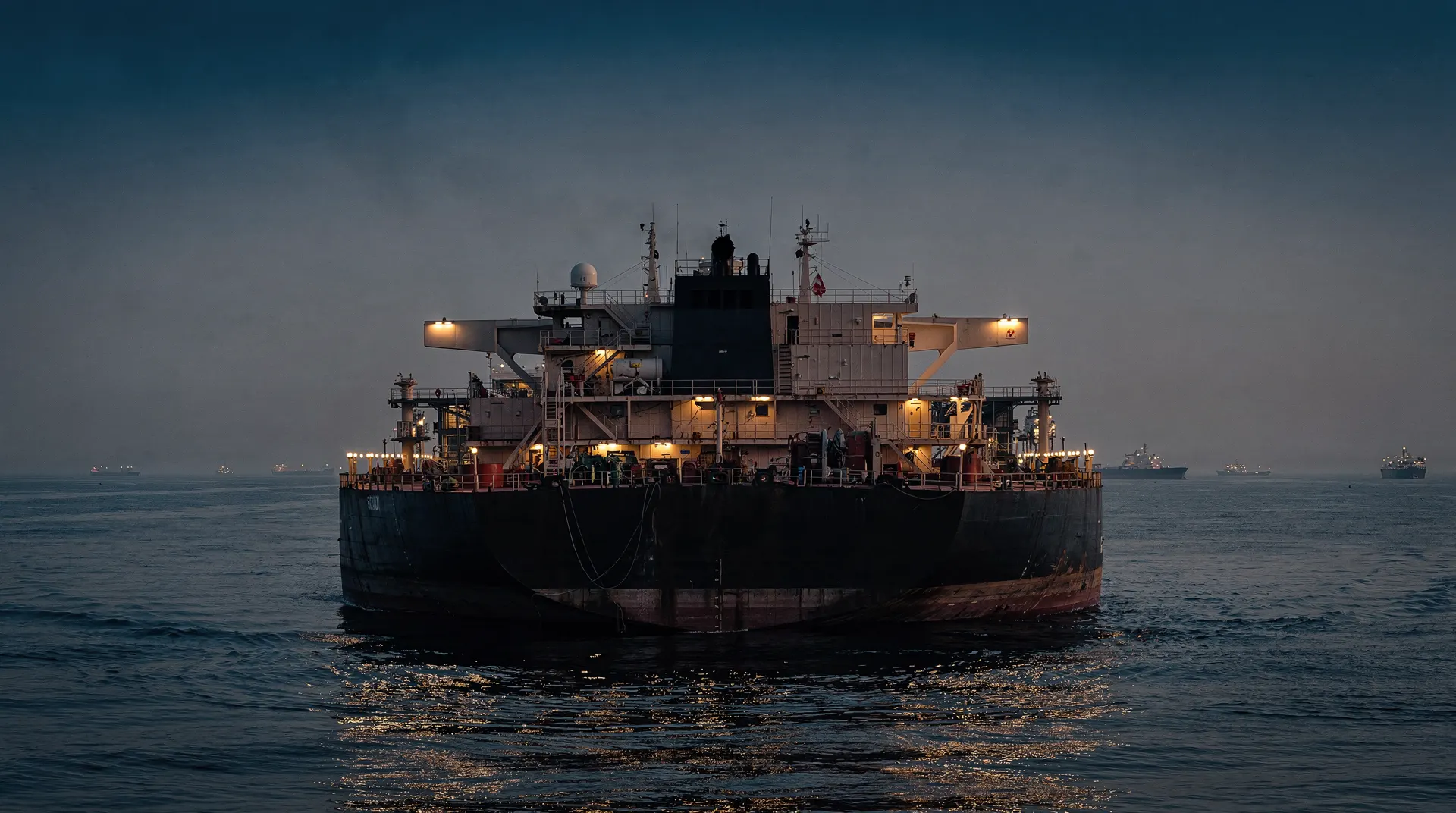
On Oct 8 the U.S. Treasury moved to cut the ships themselves out of Iran's oil trade, not just the barrels. The Office of Foreign Assets Control designated 17 tankers and their owner companies under Executive Order 13902 as part of Operation Economic Outcast, saying the action “effectively neutralizes the vast majority” of Iran's remaining illicit oil-transport network. It is the latest escalation of a campaign Washington has run on the economic channel rather than the military one, and for an oil market already bid near $100 it lands directly on the supply side.
What the designations hit
The 17 vessels and their owner companies are flagged across more than a dozen jurisdictions, including Comoros, Panama, the Bahamas, Mongolia, Palau, Cameroon, Zanzibar, Sierra Leone, Vanuatu, Hong Kong, San Marino and Gambia. That flag spread is the signature of a shadow fleet: multiple registries, layered ownership and itineraries designed to hide origin and destination. Treasury's release attaches a transported volume to each vessel, and the stated figures show the scale of the traffic.
Related reading: Strait of Hormuz oil shipping: crude flows recover to 10.3M bpd, attacks keep freight at $1M a day.
Among the examples in the release, the STARWAY (IMO 9273246) has moved over three million barrels of Iranian naphtha since 2025, the SHENZHEN (IMO 9276561) has carried more than 3.5 million barrels of Iranian crude oil since November 2025, and the TINA 5 (IMO 9237761) transported over 1.5 million barrels in August 2026 alone. Across the fleet the products span the range Iran sells into Asia: crude, naphtha, liquefied petroleum gas, methanol, high-sulfur fuel oil and bitumen. Cutting these ships off from the dollar system raises the cost and risk of moving every one of those barrels.
The no-oil channel is the active lever
Operation Economic Outcast dates to Aug 24, when Treasury Secretary Bessent announced it, and this tranche extends it. The sanctions sit alongside a U.S. naval blockade, and a U.S. Treasury official was reported by Reuters on Oct 8 saying Iran has now stopped both loading and offloading of crude oil vessels because of the blockade and the sanctions. That is an attributed one-source claim from an unnamed official, so treat it as directionally indicative rather than confirmed, but it matches a market already pricing a tight physical supply picture.
For the broader framework, see our crude oil coverage.
Related reading: Treasury's A7 designation blocks a $91.5B shadow payment web tied to Iran oil.
Washington has signaled the economic channel is the one it will keep using. Ahead of the Nov 3 U.S. midterms, the administration has said it will not strike Iran militarily, which leaves sanctions, blockade enforcement and tanker designations as the active levers. That framing matters for positioning: the risk premium in energy is being driven by policy steps and enforcement, which are countable and dated, rather than by an open-ended military escalation.
The direct read is a firmer supply-side bid. Crude and refined products both tightened, with diesel cracks already near a record on top of prior refinery and export disruption elsewhere. Every barrel Iran has difficulty shipping is a barrel the market's clearing mechanism has to source elsewhere, and the freight that connects those barrels keeps getting more expensive. Tanker and war-risk rates were already elevated and this keeps pressure under them.
Related reading: Treasury targets Iran auto and rail giants as oil revenue nears zero.
The session context was already hot. Brent and WTI surged above $104 intraday on Oct 8 on escalating tanker attacks in the Strait of Hormuz and on Hurricane Isaias closing in on the U.S. Gulf Coast, with CNBC reporting oil up about 5% in the session. U.S. equities fell on higher yields as the energy bid fed into the rates complex, the inverse that has characterized most of this stretch of high oil prices.
What to watch
The next dated catalyst is the Nov 3 U.S. midterms, after which policy assumptions about both the sanctions channel and the blockade may shift. Within the sanctions program, watch for further Operation Economic Outcast tranches, since Treasury describes this as neutralizing the vast majority of the network, a phrase that leaves room for follow-on designations of the remainder. The two sides of the ledger worth tracking are Iranian retaliation on shipping, which would add to war-risk premia and could push crude higher, and whether oil holds above $100; a sustained break below on demand worries would temper the same premium.
Related reading: Brent Holds $101 as the 100M-Barrel G7 Release Meets a $20-25 War Premium.
This is a policy story with a market transmission, not a trade call. The barrels, the vessels and the enforcement calendar are the facts; the price reaction is where the risk lives in both directions.
This content is for informational purposes only and does not constitute financial advice. Past performance is not indicative of future results. Consult a qualified financial advisor before making investment decisions.
Get daily intelligence delivered
Create a free account for the Daily Brief every weekday and The Week Ahead every Sunday. No card required.