Treasury targets Iran auto and rail giants as oil revenue nears zero

WASHINGTON: The Treasury's OFAC on October 1, 2026 issued two new sectoral determinations under Executive Order 13902 that bring Iran's automotive and rail sectors under the same blanket authority Washington already applies to its petroleum industry, and it named companies and individuals across those sectors plus steel, iron and metal procurement networks under E.O. 13871. Per the Treasury Department, this is the second major strike of Operation Economic Outcast, the sanctions push first announced on August 24, 2026 as Washington targets the last of Iran's non-oil industrial lifelines while a U.S. maritime blockade pushes Iranian oil revenue toward zero.
The step change is the breadth of the authority. E.O. 13902 already covers Iran's energy sector; these two new determinations extend the same statutory reach to the automotive and rail sectors, which Treasury describes as among the largest remaining sources of regime revenue and logistical capacity. In the same package OFAC designated firms under E.O. 13871, the authority targeting Iran's iron, steel, aluminum and copper sectors. That combination means an operator in either newly covered sector, or in metals, can now be blocked simply for being in the sector, not just for a specific transaction.
The automotive names are the biggest. Iran Khodro Company (IKCO) and SAIPA together produce nearly 1,500,000 vehicles a year and control more than 90 percent of the domestic market, per the Treasury release, which also says the sector loses over $1 billion annually yet remains a revenue source the regime and the Islamic Revolutionary Guard Corps draw on. OFAC designated IKCO, SAIPA, Iran Khodro Diesel, Pars Khodro, Zamyad, and the Niroo Motor motorcycle group as companies operating in the automotive sector. It also went after the foreign suppliers feeding them, including Indonesia-based PT Golden Motorcycle International, UAE-based Integrated Auto Parts LLC, Turkey-based Troy Trading, and Hong Kong-based Hessenberg Co., Limited (also known as Jedburgh) and Tanex Global Trading Hong Kong Limited.
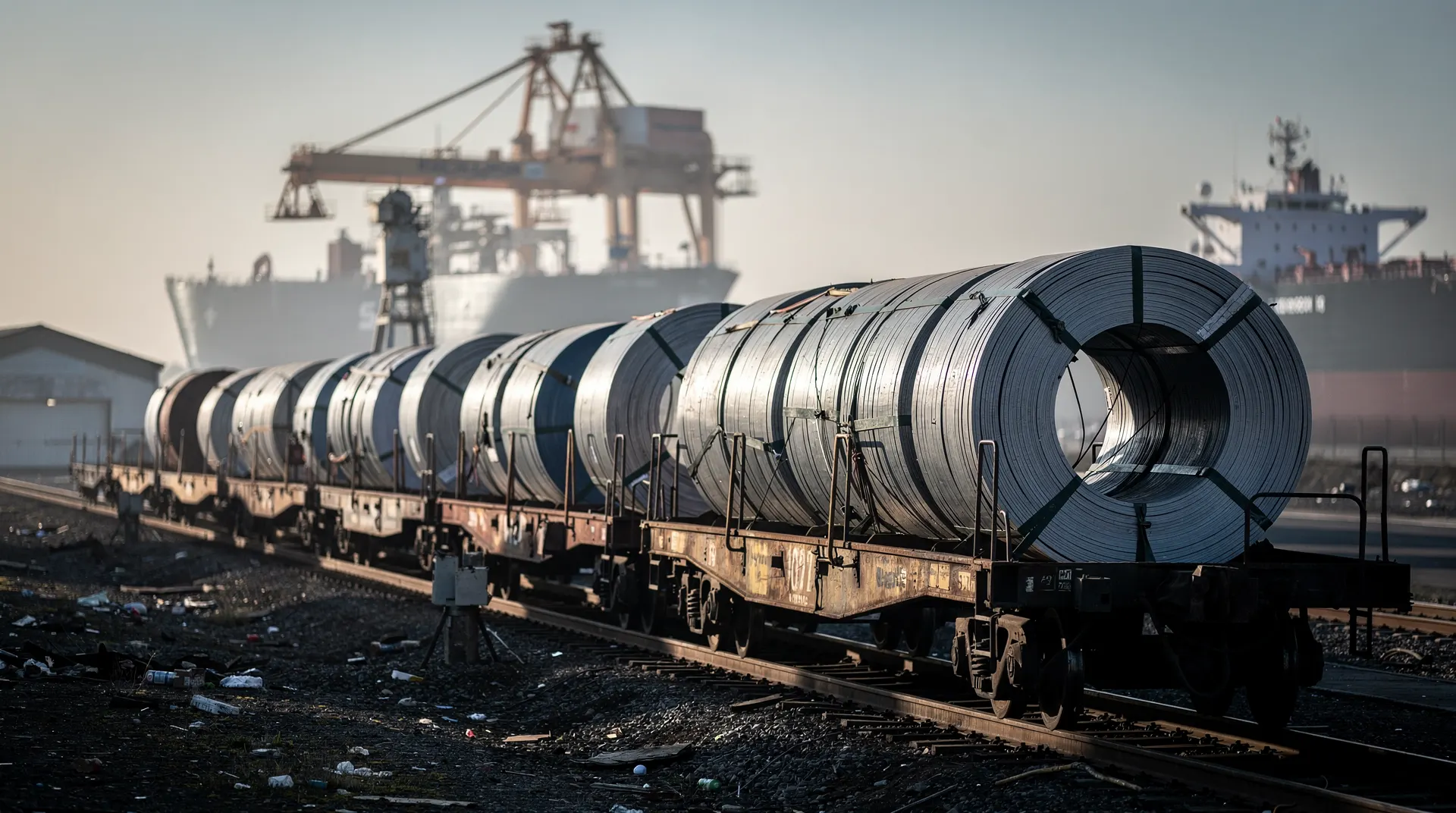
The rail side took in the Islamic Republic of Iran Railway Company, the state-owned freight and passenger operator, plus Raja Passenger Trains Company and freight firm Sherkat-E Rah Ahan-E Khamle-O-Naghle. In metals, Treasury designated Heavy Equipment Production Company (HEPCO), one of the Middle East's largest makers of mining and road construction machinery, along with its Chinese subsidiary HEPCO Shanghai, and moved on steel procurement with designations tied to Germany-based Tech-Trade International Impex and UAE-based Silver Line Metal Trading and Traco International FZE.
The pattern that matters for markets is the reach into third-country facilitators. The Treasury release names Hong Kong-based and China-based shell companies used in what it calls Iran's shadow banking system, plus a network around Hong Kong and Dominican businessman Ramin Keshvardoust that it says moved Iranian steel and oil worth tens of millions of dollars. Beyond the entity blocks, the release warns that foreign financial institutions doing significant business with anyone designated today risk secondary sanctions, the same compliance-lever pattern as OFAC’s September 28 Venezuela oil licenses, and that any entity facilitating money laundering or sanctions evasion for Iran risks being cut off from the U.S. financial system.
For commodities the transmission is indirect but real. Iran's oil income was already the primary target of this campaign; the new action does not add barrels of supply or remove them, so it is not a crude-balance story. What it does is widen the compliance and legal surface for anyone handling Iran-linked cargo, payments or procurement, which keeps war-risk and shipping premia elevated (the pattern we flagged in Diesel Holds a 4.5% Bid as Crude Gives Back Its War Premium) and supports the oil bid even as Gulf supply returns, more of the war-risk bid we traced in Oil Rebounds Past $94 After Trump Rejects Hormuz Offer. Brent traded roughly 5.5% higher intraday on war fears as this package landed, a move driven more by the broader risk backdrop than by this specific designation list. For context on the supply side, see our crude oil coverage.
None of this carries a direct U.S. rate or dollar implication, per our macro desk. The near-term watch items are first political, then market. Iranian officials are due to read the American counterproposal on the nuclear file, and any Iranian retaliation against the widening sanctions would re-tighten crude quickly. On the data calendar, Friday's September Employment Situation is the next scheduled catalyst, so expect the geopolitical bid and the jobs print to fight for the tape into the weekend.
We are reporting the action with the Treasury's own attribution: the quoted claims about sector size, revenue and IRGC patronage are Secretary Bessent's and his department's, presented as the U.S. rationale without independent verification of the underlying assertions.
This content is for informational purposes only and does not constitute financial advice. Past performance is not indicative of future results. Consult a qualified financial advisor before making investment decisions.
Sources: U.S. Department of the Treasury press release, "Operation Economic Outcast Targets Iran's Remaining Industrial Lifelines," October 1, 2026, at home.treasury.gov/news/press-releases/sb0643/; OFAC Recent Actions, October 1, 2026, Iran-related designations at ofac.treasury.gov/recent-actions/20261001.
Get daily intelligence delivered
Create a free account for the Daily Brief every weekday and The Week Ahead every Sunday. No card required.