China industrial profits: October growth hits 20.1%

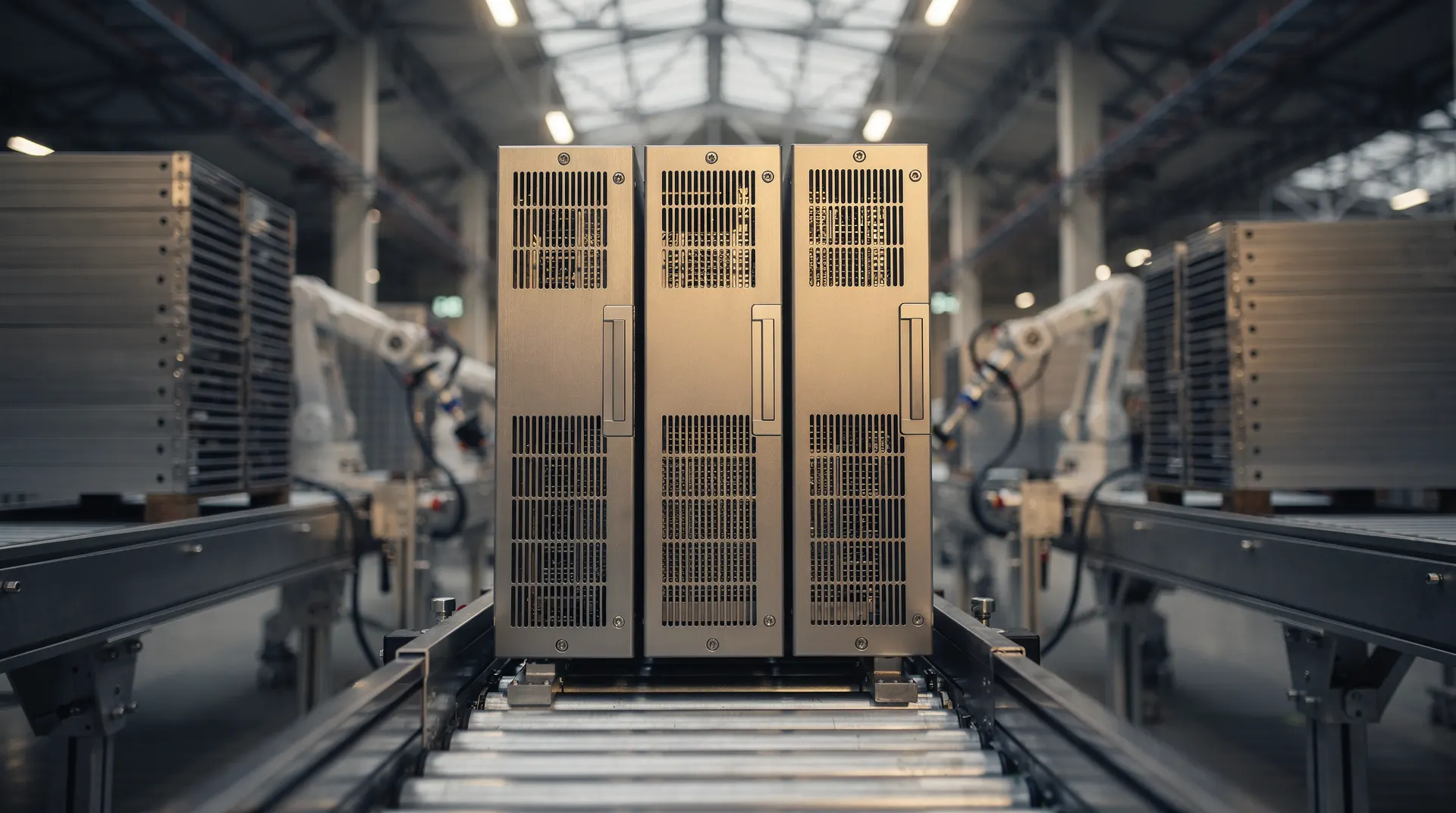
China's industrial profit growth accelerated in October to its fastest pace in five months, yet the headline masked an economy that is growing at two very different speeds: the AI-driven electronics and upstream complex is minting money on strong external demand, while consumer-facing and construction industries keep bleeding on weak domestic demand.
Profits at Chinese industrial firms rose 20.1% from a year earlier in October, versus a 14.4% gain in September, the National Bureau of Statistics said. Over the first ten months, profits grew 16.0% to 6.737 trillion yuan, roughly one trillion dollars, accelerating from a 15.5% rise through September. The bureau counts industrial firms with annual revenue of at least 20 million yuan, about 3 million dollars, from main operations.
Related reading: Money supply 2026: M2 accelerates to fastest pace since 2022.
The headline extends what is shaping up as China's strongest annual profit expansion since 2021, after three years of declines and a tepid 0.6% gain last year. But the composition shows the rebound is narrow. Profit growth in AI-related industries and upstream sectors is outpacing downstream industries, said Ding Meng, CITIC Bank International's chief China economist, with external demand an important source of support.
Chief statistician Yu Weining said profits in computer, telecommunications and other electronic equipment manufacturing doubled in the first ten months, as demand for AI computing power lifted memory chips and related production. Profits in high-tech manufacturing rose 50.9%, outpacing the industry as a whole, and makers of spacecraft and launch vehicles reported a 63.2% gain. Commodity producers also surged as energy demand tied to renewable power and AI pushed up copper and aluminum prices, while petroleum processors swung to a combined profit from a year-ago loss.
Related reading: Australia CPI October 2026: inflation hits 4.9%, core 3.8%.
The other side of that ledger is where the strain sits. Automakers saw profits drop 26% in the first ten months, wider than the prior month, as costs outpaced a modest revenue rise. Producers of construction materials such as cement and glass fell 46.7%, and furniture makers fell 52.4%, casualties of a prolonged real estate slump. Accounts receivable and finished-goods inventories both grew faster than revenue in the official data, a sign of the strain on companies reaching for sales.
The uneven picture reads as a mixed signal on the broader economy. The recovery has yet to broaden into a durable improvement in corporate profitability, said Tianchen Xu, senior economist at Economist Intelligence Unit, because the rebound was largely led by upstream sectors amid higher energy prices. ING's Greater China chief economist Lynn Song said the recovery remains uneven and provides a more mixed signal on the health of the broader economy.
Related reading: China retail sales up 0.4% in October, factory output up 4.8%.
For policy, the print cuts both ways. The robust pace of profit growth further reinforces expectations that there will be no additional monetary policy easing in the near term, said CITIC Bank International's Ding. Beijing has already cut interest rates, injected liquidity and rolled out targeted financing for technology, manufacturing and infrastructure through the autumn, and October GDP growth of 4.6% over the first three quarters has put the annual target of 4.5% to 5% within reach. Yet weak household demand and lingering strain in property continue to drag on the recovery, and retail sales rose just 0.4% in October while fixed-asset investment deepened its decline to 8.1% over the first ten months.
Markets read the divergence directly. In Friday's Asian session, broader Chinese indices were muted but technology shares rebounded hard, with the CSI Semiconductor Industry Index up more than 5% and the Hang Seng Tech Index up 3% so far. The pattern reflects a market that is willing to pay for the AI hardware complex while discounting the consumer and property engines.
Related reading: China CPI October 2026: Consumer Prices Rise 0.7%, Miss Forecasts.
The main near-term risk is on the export side, the engine of this year's rebound. The United States has proposed tariffs that include a 20% headline rate on Chinese goods, with the levies set to rise to 40% if the U.S.-China truce is not extended beyond January. Chinese firms now export intermediate goods to the rest of Asia and reach the U.S. indirectly, said Alicia Garcia Herrero, Natixis' chief economist for Asia Pacific, leaving economies with heavy Chinese inputs exposed to tariff escalation. A potential slowdown in AI data-centre investment, concerns over AI-sector profitability and leverage, and further Western restrictions on Chinese exports all argue, in Ding's words, that boosting domestic demand as soon as possible remains the key to sustaining profit growth.
What is dated next: the November trade figures, around early December, will show whether the export engine that powered this profit run is still accelerating. The National Bureau of Statistics next publishes its monthly activity set, covering November industrial output, retail sales, and fixed-asset investment, around mid-December. The key question for the profit cycle is whether price gains in electronics and upstream commodities can keep outrunning cost pressure in consumer industries, or whether the tariff clock forces Beijing into bolder domestic stimulus.
This content is for informational purposes only and does not constitute financial advice.
Get daily intelligence delivered
Create a free account for the Daily Brief every weekday and The Week Ahead every Sunday. No card required.