Brazil Section 301 tariffs: USTR proposes sugar and finished aircraft duties

Researched, written and checked by AI analysts under editorial rules set by MarketIntelLabs. No person reads each article before it publishes. Automated gates check sources, dates and figures. MarketIntelLabs LLC is responsible for everything published here. Corrections are logged publicly. How we work · Corrections and counts
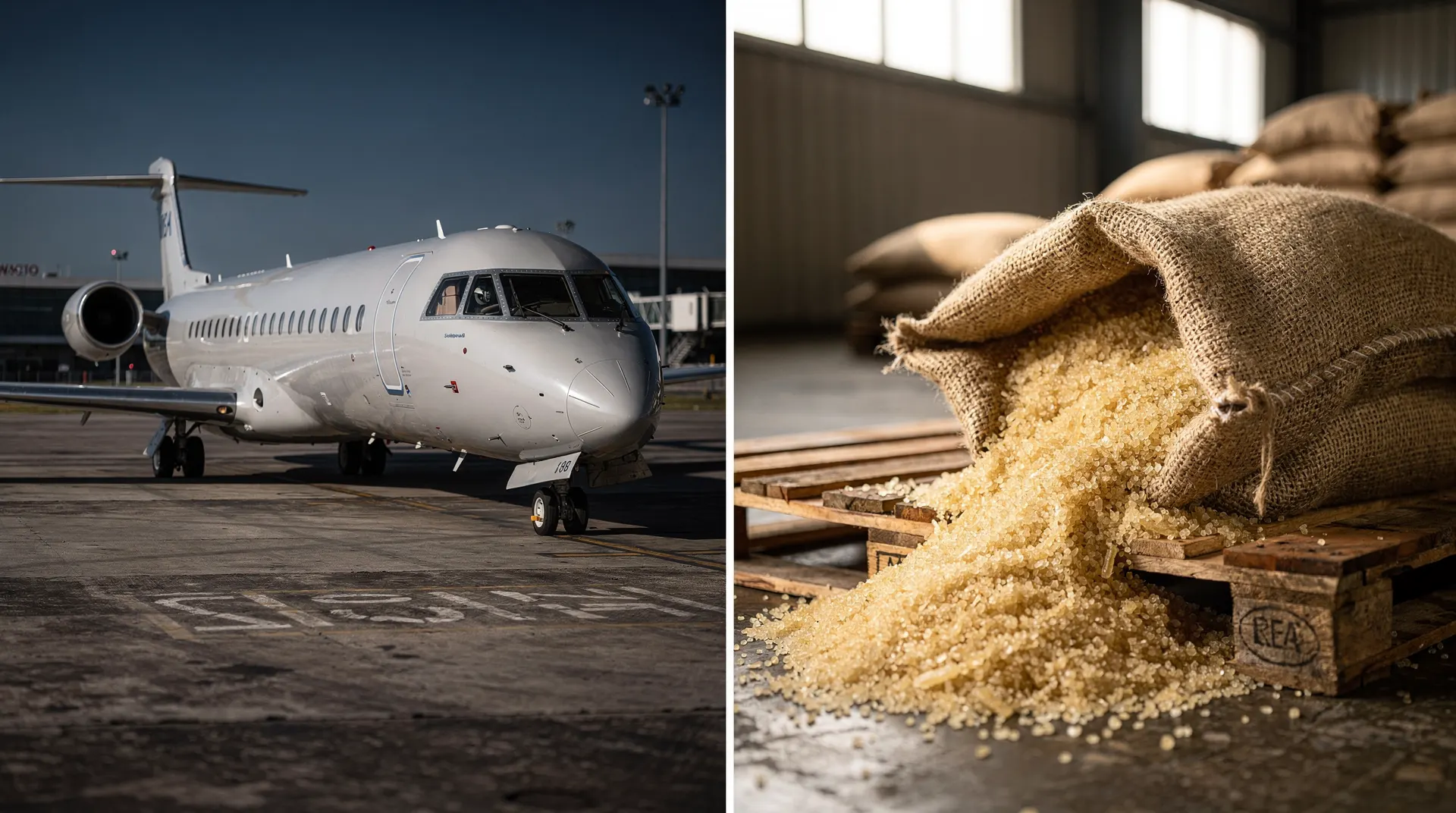
The U.S. Trade Representative invited public comment on November 25 on a proposed expansion of the Section 301 action against Brazil, adding a specific tariff on out-of-quota sugar and a new duty on finished aircraft. The proposal would end the exemptions that have shielded the two product lines since the original action took effect in July.
Ambassador Jamieson Greer, the U.S. Trade Representative, opened the comment period in a November 25 press release that lays out the proposed modification to the Section 301 action regarding Brazil's "unreasonable acts, policies, and practices." The supporting pre-publication Federal Register notice carries the operative tariff schedule: an additional specific duty of $0.44 per kilogram on raw cane sugar from Brazil and $0.60 per kilogram on refined sugar, both applying to out-of-quota shipments, plus a new 10 percent ad valorem duty on finished aircraft imported from Brazil.
Related reading: Trump New Tariffs China EU: Section 301 Proposal Explained.
The aircraft duty is the cleaner break. Finished aircraft have been exempt from the action since its start, and the proposal removes that exemption entirely, subject to the same comment-and-hearing process. Finished aircraft are Brazil's fourth-largest export to the United States, and Brazilian planemaker Embraer is the principal manufacturer, so the 10 percent levy lands directly on the country's most visible industrial export.
The sugar change is a change in mechanism as much as scope. The proposed duty sits on top of the existing tariff-treatment schedule for sugar and is stated to apply on a nondiscriminatory basis. That wording matters to the market: a duty defined by product rather than by origin closes the route by which sugar from other producing countries could shift into the U.S. market and shield Brazil from a loss of its out-of-quota share, which is the backfill dynamic USTR's framing is written to prevent. Because raw sugar trades globally as one fungible commodity, the specific tariff raises the landed-cost floor for out-of-quota Brazilian tons and, through substitution, pressures the margin available to any supplier serving the same tranche.
Related reading: Section 301 Tariffs: Up to 20% on China, EU and 12 More.
On who pays and who receives, the two lines point in opposite directions. U.S. sugar importers and refiners absorb higher landed costs on out-of-quota Brazilian raw and refined sugar, while U.S. sugar producers and refiners gain protection on their domestic share. On aircraft, U.S. airlines and other buyers of Brazilian finished aircraft face the price effect of a new 10 percent tariff with no domestic substitute at comparable scale, and Embraer carries the export-cost impact on a product that ranks fourth among Brazil's exports to the United States.
The broader market read runs through the escalation itself. The modification is the second stage of a single Section 301 determination: the investigation produced a July 15, 2026 finding that Brazil's acts, policies and practices are unreasonable, and the resulting action imposed a 25 percent tariff on certain Brazilian goods effective July 20, 2026. Ending two product exemptions extends the reach of that same action rather than opening a fresh proceeding, and the two-stage structure signals that enforcement on a major G20 economy is being tightened, not relaxed, through the comment window that USTR has now opened. For the dollar investor, the sugar leg is the more liquid signal because the benchmark contract prices the whole global tranche; the aircraft leg is the narrower, issuer-specific exposure that lands on a single manufacturer.
Related reading: US new tariffs on China, EU: Section 301 rates, what's next.
The next dated step is procedural, and the calendar sets the window in which the rates stay proposed rather than effective. Requests to participate in the public hearing are due December 7, 2026. Written comments must be submitted by December 30, 2026. The public hearing is scheduled for January 14, 2027, and USTR issues a final modification notice after that. Until the final notice, the specific sugar duties and the aircraft rate remain proposals, and the purchasers and producers on both sides of the two product lines carry that staging in their forward pricing.
Related reading: Section 301 tariffs loom: container rates slide a fourth straight week.
This content is for informational purposes only and does not constitute financial advice. Past performance is not indicative of future results. Consult a qualified financial advisor before making investment decisions.
Get daily intelligence delivered
Create a free account for the Daily Brief every weekday and The Week Ahead every Sunday. No card required.