ASML Q3 2026: AI Demand Exceeds Planned Tool Supply

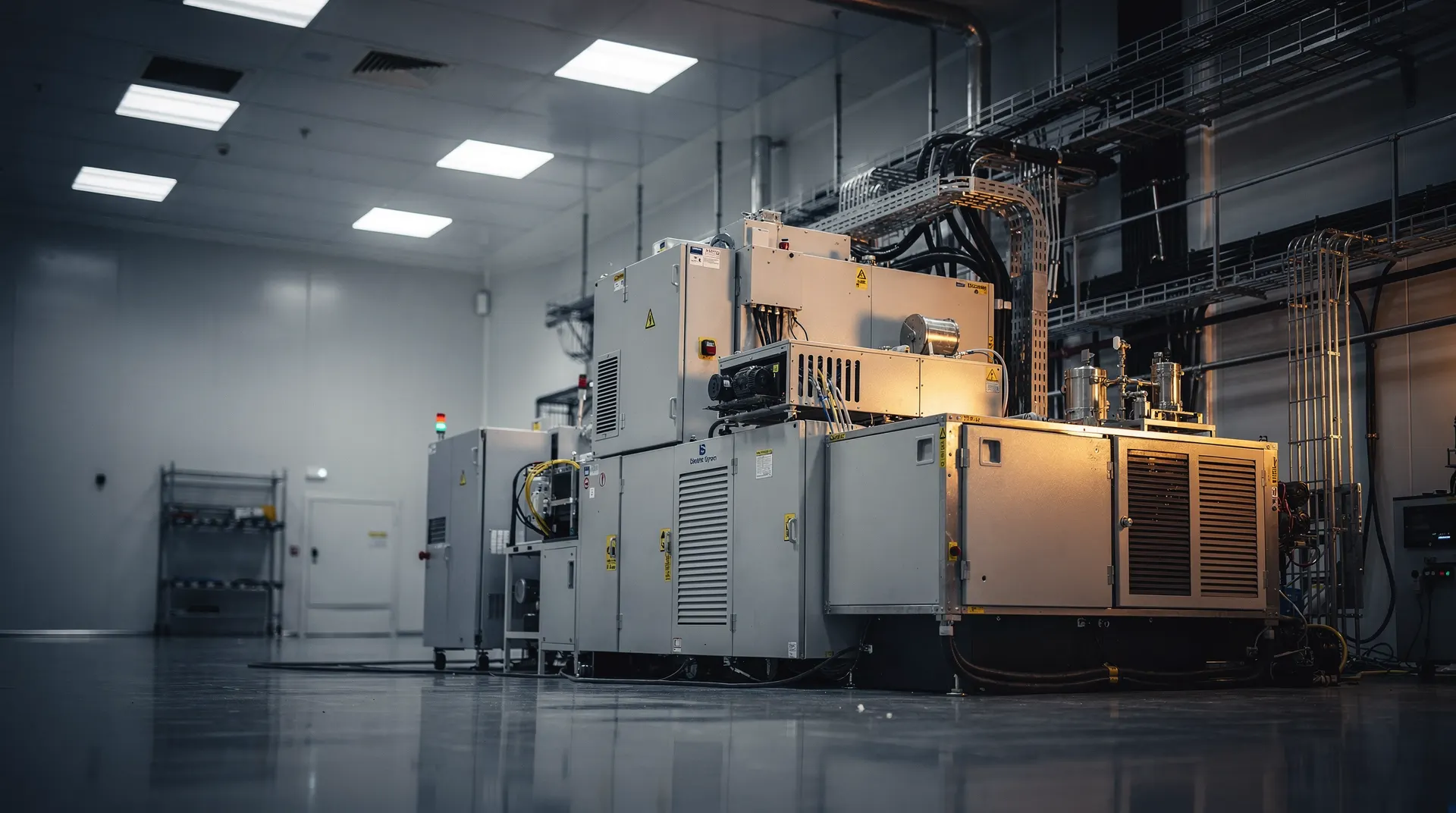
ASML’s October 14, 2026 release says planned supply for 2027 and 2028 will not meet customer demand forecasts. The company is investigating more 2028 capacity, but has not committed to a new number. The key distinction is between rising AI-linked forecasts and firm equipment orders.
ASML’s October 14, 2026 third-quarter release says its currently planned supply for both 2027 and 2028 will not meet customers’ forecasts. The company is now studying a further increase to 2028 capacity beyond the 30% expansion it had already been investigating. The supply warning matters more to AI infrastructure planning than the sales beat. Customers may want more tools than ASML can deliver in the next two years, limiting how fast new wafer capacity comes online.
Related reading: AMD Plans More AI Chip Supply in 2027, but Demand Still Leads.
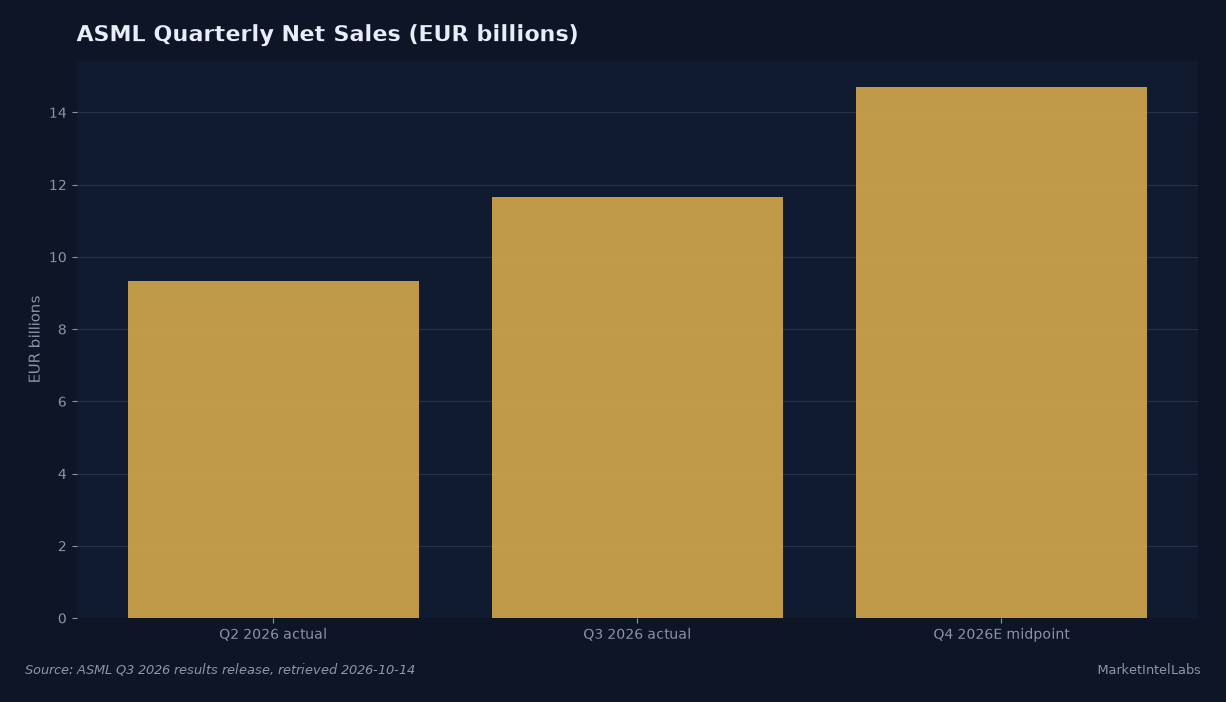
The figures show why management is making that distinction. ASML reported Q3 2026 net sales of €11.662 billion and gross margin of 57.5%, up from €9.326 billion and 54.0% in Q2 2026, according to its October 14 release. Net income rose to €4.960 billion from €2.918 billion. Those are results already recognized.
Quarterly sales rose from €9.326 billion in Q2 to €11.662 billion in Q3; ASML’s Q4 forecast midpoint is €14.7 billion. The chart shows the reported results and management’s Q4 range midpoint, not a completed quarter.
Related reading: AI chip demand: Samsung and Micron results set the bar for TSMC.
The forward-looking signal is the higher forecast for equipment demand in the years ahead.
ASML supplies lithography systems and related services used by chipmakers to pattern integrated circuits. Its October 14 release attributes customers’ higher short- and medium-term equipment forecasts primarily to their view of the size and duration of AI investment.
Related reading: AI Data Center Orders Reach 100 MW, but Plans Are Not Demand.
Some customers have expressed interest in orders for 2029 and 2030, the company said. That is evidence of discussions and planning, not booked orders or a guarantee that spending will happen on schedule.
The supply comment needs careful reading. In its Q2 2026 results, ASML said it planned to increase 2026 low-NA EUV capacity by 30% in 2027 and was investigating another 30% increase for 2028. It also planned a 30% increase in 2027 for DUV immersion capacity, with a further 30% for 2028 under investigation. The Q3 release says those plans, as they stand, would still leave supply short of customer demand in both years.
Related reading: One Week of Memory Inventory Left Before Micron's Test.
ASML is investigating further 2028 capacity, but has not quantified or committed to an additional expansion.
Equipment demand and semiconductor output are not interchangeable. A customer forecast for lithography tools does not translate one-for-one into AI accelerators shipped. Chipmakers must fund and build fabs, secure process materials, qualify equipment, and coordinate advanced packaging and memory. Then cloud providers must install servers, obtain power and cooling, and sell enough AI services to justify their investment.
ASML’s release offers a strong upstream demand signal. It does not by itself establish the return on downstream AI spending.
The operational mix also matters. ASML sold 113 new lithography systems in Q3 2026, compared with 86 in Q2, while Installed Base Management sales, its measure of service and field-option sales, reached €3.289 billion from €2.762 billion, per the same release. Management said productivity upgrades drove Installed Base Management above guidance. Upgrades can expand effective wafer output from tools already installed.
That may ease some pressure without waiting for new system capacity. The release does not quantify how much wafer capacity upgrades add.
Investors should not treat the release as an unconditional AI spending forecast. ASML reported a Q3 2026 order book momentum that it said increased quarter on quarter, but the excerpt does not quantify order intake in the headline table. Customer interest in 2029 and 2030 may not become firm orders. New equipment production depends on specialized components, labor and factory throughput.
Export controls can restrict shipments.
Delays in customer projects could also push demand out of ASML’s planning periods.
The company’s near-term outlook is firmer than its long-range capacity language. For Q4 2026, ASML guided to net sales between €14.2 billion and €15.2 billion and gross margin around 57%. For full-year 2026, it expects sales between €44 billion and €45 billion with gross margin around 56%, according to the October 14 release. These are company forecasts, not completed results.
The planned Q4 sales range implies a larger quarter than Q3. Delivery timing and product mix still matter to the result.
For AI investors, the release points to a supply bottleneck, not an unqualified boom. If AI-related chip demand persists, equipment supply and upgrades become economically valuable because they determine how quickly customers can add output. That can support spending by chipmakers even when cloud operators are scrutinizing returns.
A capacity shortfall can limit near-term chip supply and shift revenue recognition across quarters. A bigger equipment backlog is not the same as more AI revenue today.
ASML’s investor call is scheduled for October 14, 2026 at 15:00 Central European Time, or 09:00 US Eastern Time, according to the release. Listen for a number on possible added 2028 capacity, clarity on forecasts versus firm orders, and an estimate of the output unlocked by productivity upgrades. Until then, the defensible conclusion is narrow: ASML’s Q3 results confirm strong equipment demand and its current supply plan does not cover the demand it sees for 2027 and 2028. The next evidence is whether that forecast converts into orders, deliveries and added wafer output.
This content is for informational purposes only and does not constitute financial advice. Past performance is not indicative of future results. Consult a qualified financial advisor before making investment decisions.
Get daily intelligence delivered
Create a free account for the Daily Brief every weekday and The Week Ahead every Sunday. No card required.